

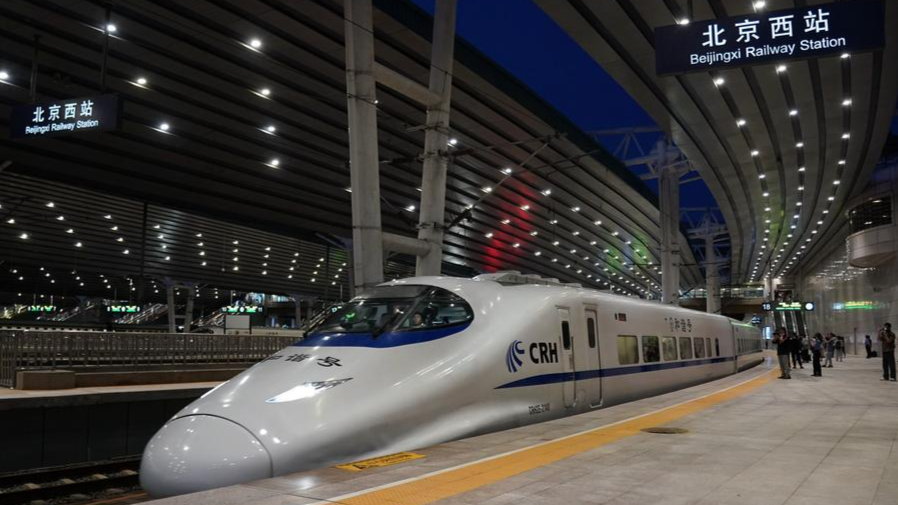
The Beijing Kowloon Railway marked 30 years of full operation on Tuesday after carrying 1.77 billion passenger trips and transporting 1.05 billion metric tons of freight, according to the China State Railway Group.
The 2,397 kilometre railway stretches from Beijing West Railway Station through eight provincial level regions before reaching Shenzhen in Guangdong province. From Shenzhen, rail services connect with Hong Kong, giving the route an important role in the movement of people and goods between northern China and the southern part of the country.
When the railway opened on September 1, 1996, it was the largest railway project in China at the time. Three decades later, the route remains an important part of the country's conventional railway network, serving passengers and freight operators while working alongside newer high speed rail services.
A railway built to connect north and south
The Beijing Kowloon Railway was developed to strengthen China's north south transport network and improve connections between major cities and less accessible areas.
Its route passes through eight provincial level regions, linking Beijing with central and southern parts of the country before reaching Shenzhen. The line also brought regular railway services to areas including the Dabie Mountains and southern Jiangxi province.
Before the railway was completed, transport connections across some of these areas were more limited. The new line opened a direct rail route for passengers, agricultural products, industrial goods and other cargo moving between regions.
Its role became even more significant as economic activity expanded in southern China and the Guangdong Hong Kong Macao Greater Bay Area developed into one of the country's major economic centres.
The railway has provided a conventional rail connection between communities in northern and central China and the southern border area, allowing people and goods to travel long distances without relying entirely on road transport.
Travel times cut sharply after speed improvements
The railway has undergone five rounds of speed improvements since it entered service.
Passenger trains initially operated at a maximum speed of 60 kilometres per hour. That figure has since risen to 160 kilometres per hour.
The improvements have had a substantial effect on long distance travel. A journey between Beijing and Shenzhen that once took about 49 hours can now be completed in less than 22 hours.
The reduction has made rail travel more practical for passengers travelling between the capital and southern Guangdong. It has also helped the railway handle growing demand as more people travel between different parts of the country for work, education, family visits and other purposes.
The latest passenger figures show how much usage has changed since the early years of the line.
In 2025, the railway carried 95.1 million passenger trips. That was more than four times the number recorded during its early period of operation.
The increase reflects greater population mobility and the expansion of economic activity along the route. Railway stations that once served mainly as transport points have become part of larger regional networks connecting conventional rail, high speed services and local transportation.
Freight traffic remains a major part of the route
Passenger services are only one part of the railway's role.
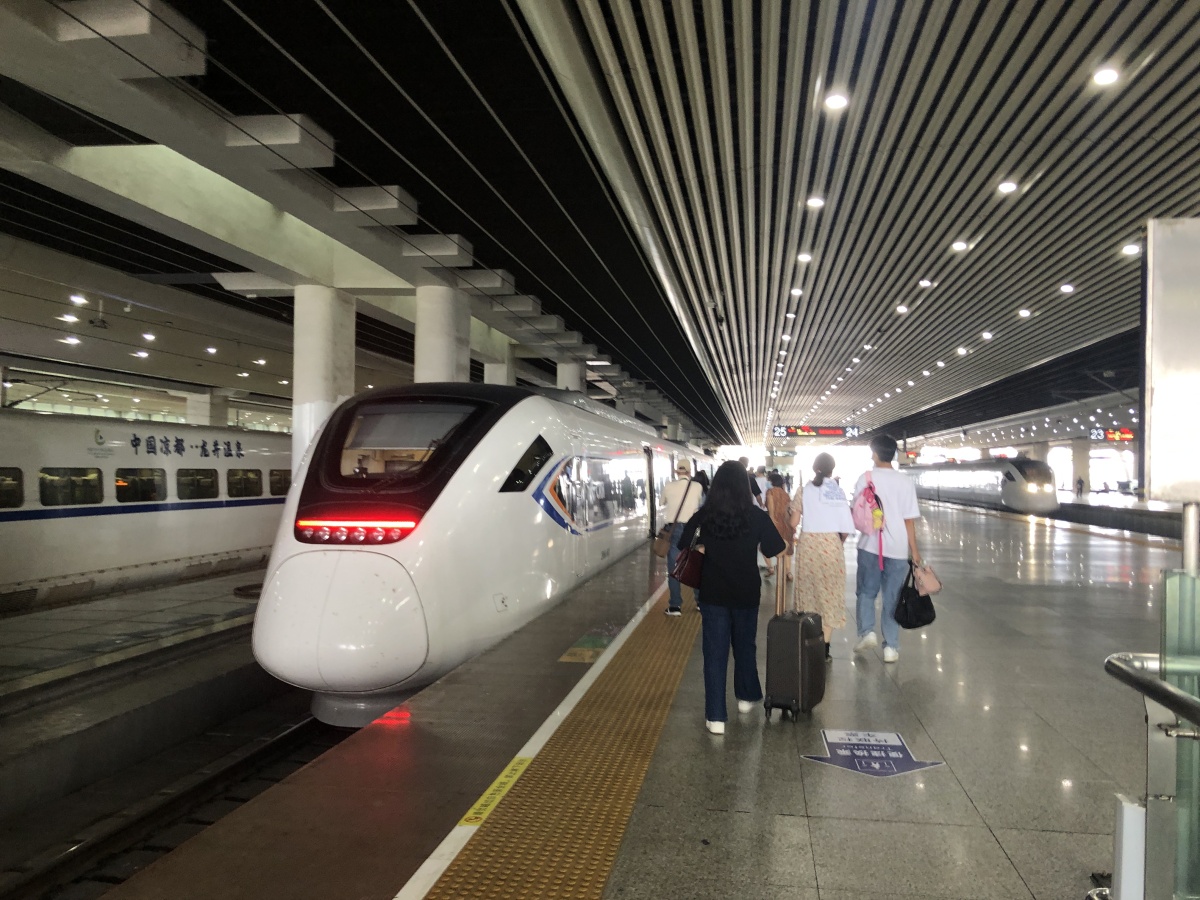
The Beijing Kowloon route has also developed into an important corridor for freight, moving large quantities of goods between northern China, central regions and the south.
A notable example is Ganzhou International Land Port in Jiangxi province. The facility has handled more than 1,700 China Europe freight trains, connecting with more than 100 cities in over 20 countries.
The figures show how a railway originally designed primarily as a national north south connection has become linked to international freight networks.
Goods arriving at or departing from inland manufacturing and commercial centres can be moved by rail toward ports and other transport hubs. Rail freight can also provide an alternative to longer road journeys for cargo travelling considerable distances across the country.
For cities and industrial areas along the railway, reliable freight services can support the movement of raw materials, manufactured products and consumer goods.
Stronger links with Hong Kong
The southern end of the railway connects with Shenzhen, placing it close to Hong Kong and the wider Greater Bay Area.
The connection has helped support passenger and freight movement between the mainland and Hong Kong while forming part of a much broader regional railway system.
The expansion of high speed rail has added another layer to these connections.
In recent years, more sections of the Beijing Hong Kong high speed rail corridor have entered service. Conventional railway lines and high speed routes now work alongside each other, giving passengers and freight operators more options and increasing the overall capacity available along the north south corridor.
The development means the original railway has not simply been replaced by newer infrastructure. Instead, conventional and high speed services can serve different travel requirements.
High speed trains are suited to passengers seeking shorter journey times, while conventional railway services continue to provide capacity for passengers and freight across a wide range of destinations.
A changing railway network
The history of the Beijing Kowloon Railway mirrors the rapid expansion of China's railway system over the past three decades.
When the line opened in 1996, long distance rail journeys depended heavily on conventional trains. Since then, China has built an extensive high speed network connecting major cities across the country.
That transformation has changed how people travel.
Routes that once required many hours can now be completed much faster on high speed services. At the same time, conventional railways continue to serve communities that may not sit directly on high speed routes and remain important for freight transport.
The Beijing Kowloon Railway has therefore adapted as the wider network has expanded.
Its original function as a major north south route remains, but its role now exists within a much larger system in which conventional rail and high speed rail operate together.
Supporting regional development
Railway infrastructure can have effects beyond the stations and tracks themselves.
Improved rail access can make it easier for workers to travel, allow businesses to reach suppliers and customers in other regions and provide manufacturers with additional options for moving goods.
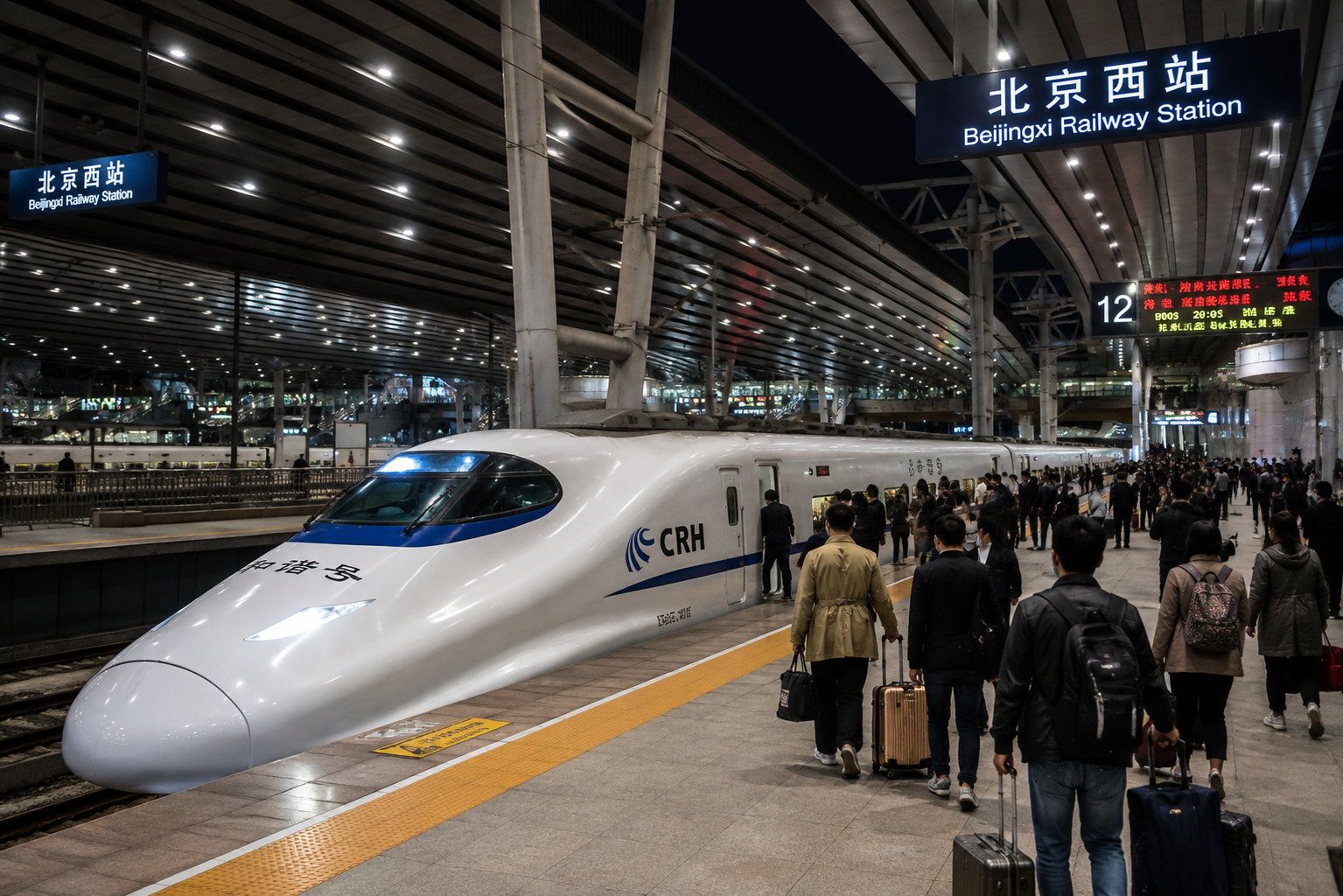
The Beijing Kowloon Railway's route through the Dabie Mountains and southern Jiangxi province helped bring rail services to areas that previously had fewer direct railway connections.
For communities along the route, the arrival of regular trains provided a new connection to larger cities and regional markets.
The railway also strengthened links between northern China and the economic centres of the south. Shenzhen, in particular, has developed into a major technology, manufacturing and commercial centre, while the Greater Bay Area has become one of China's most economically active regions.
The railway's long operating history means generations of passengers have used it for journeys between these areas.
Three decades of growing passenger demand
The scale of passenger use has changed considerably since the railway opened.
The 95.1 million passenger trips recorded in 2025 show how demand has grown as China's transport network and economy have expanded.
The number is also evidence of the continued role of conventional rail despite the rapid growth of high speed services.
Not every passenger needs the fastest available journey. Ticket availability, destination coverage, travel schedules and price can all influence the choice of railway service.
A large conventional network can therefore continue to carry significant passenger numbers even when faster alternatives become available.
For the Beijing Kowloon Railway, the increase in annual passenger traffic has come alongside continued freight operations and the development of new connections at both ends of the route.
A major transport corridor after 30 years
Three decades after its opening, the Beijing Kowloon Railway remains closely tied to China's national transport system.
It has carried 1.77 billion passenger trips, moved 1.05 billion metric tons of freight and undergone five rounds of speed improvements.
The journey between Beijing and Shenzhen has been cut from about 49 hours to less than 22 hours, while annual passenger use reached 95.1 million trips in 2025.
Its connection with Shenzhen and services to Hong Kong has also given the railway a continuing role in cross regional transport, particularly as the Greater Bay Area has expanded and new high speed routes have been added.
The railway that opened as China's largest project of its kind in 1996 now forms one part of a far bigger national rail system. Yet its core purpose remains unchanged: carrying people and goods between the north and south of China.
As new high speed sections continue to expand the country's rail network, the Beijing Kowloon Railway is set to remain part of that system, combining long established conventional services with newer routes to meet demand across one of China's busiest north south corridors.