


Trade ministers from China and all ten ASEAN member states gathered in Kuala Lumpur on Tuesday to sign the China-ASEAN Comprehensive Digital Trade Agreement (CADTA), the culmination of three years of negotiations and the most expansive digital trade framework concluded between China and any regional bloc. The agreement, which enters into force after ratification by individual member states, will govern cross-border e-commerce, digital payments, data flows, intellectual property in digital contexts, and cybersecurity cooperation across a market of 1.97 billion people.
Core Provisions and Commitments
CADTA establishes a unified e-commerce framework eliminating customs duties on electronic transmissions, a commitment that removes significant cost barriers for digital content, software and cloud services trade between the signatories. Cross-border e-commerce platforms will be subject to harmonised consumer protection standards, dispute resolution procedures, and product liability frameworks, replacing a patchwork of inconsistent national regulations that have impeded the growth of digital retail across the region.
For digital payments, the agreement mandates interoperability between domestic payment systems across all signatory states within three years of ratification. This commitment, if implemented, would allow consumers in Vietnam, Indonesia, Thailand and eight other ASEAN members to make and receive payments using Chinese payment platforms including Alipay and WeChat Pay, and vice versa, without conversion through international card networks.

CADTA covers a combined market of 1.97 billion people across China and all ten ASEAN member states.
Data Flow Architecture
The agreement's data flow provisions have been the most technically complex element of negotiations. Rather than adopting the free data flow model preferred by the United States and the EU's adequacy framework, CADTA establishes a tiered data flow architecture. Non-sensitive commercial data flows freely between signatories. Data in defined sensitive categories, including financial records, health information, and government-related data, is subject to bilateral data-sharing gateway arrangements with specific technical safeguards.
This model represents a pragmatic compromise that accommodates China's data localisation requirements under the Data Security Law and the Personal Information Protection Law while providing ASEAN member states meaningful access to Chinese digital markets. Digital trade experts have described the architecture as a "data corridor" model that may prove more replicable across Asia than the comprehensive free flow standard espoused by Western digital trade agreements.
Small Business Benefits
A dedicated small and medium enterprise chapter provides streamlined certification procedures, capacity building programmes and preferential access to digital trade facilitation platforms for smaller businesses seeking to participate in cross-border e-commerce. China has committed to admitting 50,000 ASEAN-based SME sellers to its major e-commerce platforms including JD.com and Tmall Global under an expedited merchant qualification process.
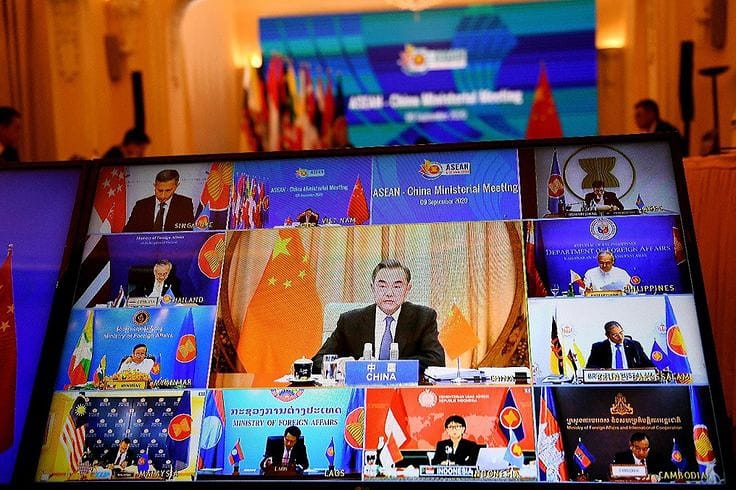
The agreement establishes cross-border payment interoperability and streamlined procedures for ASEAN small businesses accessing Chinese e-commerce platforms.
Geopolitical Significance
The conclusion of CADTA is widely interpreted as a significant strategic success for China's diplomacy in Southeast Asia at a time of heightened competition with the United States for regional influence. The agreement deepens supply chain and commercial interdependence between China and ASEAN at a moment when Western governments are encouraging their private sectors to reduce exposure to Chinese supply chains.
ASEAN Secretary-General Kao Kim Hourn described the agreement as "a testament to ASEAN centrality and ASEAN's capacity to shape the digital economy rules of our region in partnership with our largest trading partner." Total China-ASEAN trade reached 6.4 trillion yuan in 2025, with digital economy transactions accounting for a rapidly growing share estimated at 890 billion yuan.
Implementation Timeline
Individual ASEAN member states must ratify CADTA through their domestic legislative processes before its provisions take effect nationally. Vietnam, Singapore and Malaysia are expected to complete ratification within six months. Indonesia and the Philippines, where legislative calendars are more congested, may require up to 18 months. China will implement its obligations simultaneously with the first wave of ASEAN ratifications.
A joint implementation committee, meeting quarterly and reporting annually to trade ministers, will oversee the agreement's progressive entry into force and address any disputes or implementation challenges that arise during the transition period.