

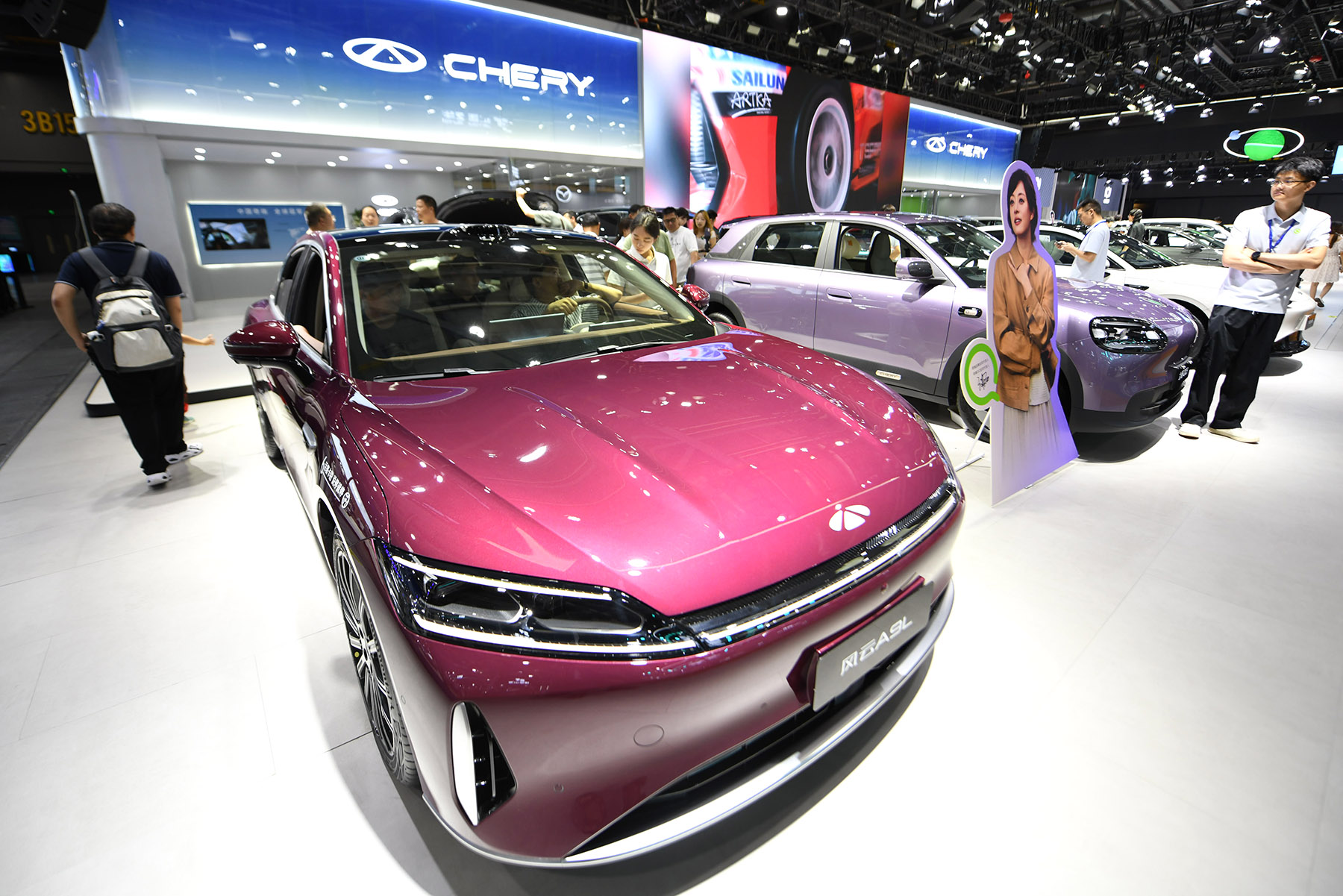
China's new energy vehicle (NEV) market reached a fresh milestone in September, with electric and other new energy powered vehicles accounting for a record 61.6% of monthly new car sales. The share remained above 60% for the third consecutive month, while strong export growth and rising production reinforced China's position as a major force in the global automotive industry.
Data released by the China Association of Automobile Manufacturers (CAAM) on Monday showed that the NEV share of China's new vehicle sales reached 53.6% during the first three quarters of 2026. The figures point to a growing role for new energy vehicles in the world's largest car market, even as overall vehicle production and sales recorded slight declines over the January to September period.
NEV Production and Sales Continue to Grow
China produced 12.483 million new energy vehicles in the first nine months of 2026 and sold 12.472 million units, according to CAAM. Both figures increased by more than 10% compared with the same period a year earlier.
September contributed significantly to that growth. Monthly NEV production reached 1.814 million units, while sales totalled 1.823 million. Production increased by 12.2% year on year, and sales rose by 13.6%.
The figures indicate that demand for new energy vehicles continues to expand, with monthly sales exceeding production during September. The difference between the two figures was relatively small, but it reflected the scale of activity in China's rapidly growing NEV sector.
The record 61.6% sales share also marked a significant point in the transition of China's automotive market. New energy vehicles accounted for more than three in every five new cars sold during the month, placing them ahead of conventional vehicles in the overall market.
The September result followed two consecutive months in which NEVs had already captured more than 60% of monthly new car sales. Maintaining that level over three months suggests that the shift is not limited to a single period of unusually strong demand.
Overall Car Market Shows Mixed Performance
While NEVs continued to gain ground, China's broader automotive market presented a more mixed picture.
Total vehicle production reached 2.99 million units in September, while sales stood at 2.956 million. Compared with August, production increased by 11.4% and sales rose by 9%.
However, the cumulative figures for the first three quarters showed a slight year on year decline. China's total vehicle production amounted to 23.246 million units between January and September, while sales reached 23.271 million.
This contrast between monthly growth and a small cumulative decline suggests that the market's performance varied across the reporting period. September's increases provided a stronger monthly result, but they had not fully changed the overall year to date picture.
The growing contribution of NEVs is particularly notable against this background. Although total vehicle production and sales remained slightly below their levels from the same period in 2025, NEV production and sales both recorded double digit growth.
The data therefore show two developments taking place at the same time: expansion in the new energy segment and a more subdued performance across the wider automotive market.
Vehicle Exports Surge in September
China's export performance provided another major source of growth for the industry.
Automakers exported 1.053 million vehicles in September, an increase of 61.4% compared with the same month last year. New energy vehicles accounted for 571,000 of those exports, more than double the figure recorded a year earlier.
NEVs represented more than half of China's total vehicle exports for the fourth consecutive month. Their growing share indicates that the expansion of China's electric vehicle industry extends beyond domestic consumers and into international markets.
The January to September figures were similarly strong. China's vehicle exports totalled 8.205 million units during the first three quarters, including more than four million NEVs. NEV exports were more than twice the level recorded in the corresponding period of the previous year.
The figures place overseas demand among the key contributors to the industry's performance in 2026. Export growth has provided Chinese manufacturers with an additional market for their vehicles at a time when overall domestic automotive production and sales have shown limited year to date growth.
The data do not, however, identify how exports were distributed among individual manufacturers or destination markets. They also do not establish how much of the increase came from particular countries, vehicle models or price segments.
Nevertheless, the scale of the reported increase shows that international sales have become an important part of China's NEV expansion.

Industry Association Points to Resilience
Chen Shihua, deputy secretary general of CAAM, said Chinese vehicle exports had continued to grow rapidly despite a complex and difficult external environment.
He also pointed to the gradual emergence of new sources of domestic growth and the increasing share of NEVs in vehicle sales.
Chen's assessment reflects the two main trends in the September data: strong export growth and the continued expansion of new energy vehicles within China.
For manufacturers, overseas sales offer an opportunity to reach customers beyond the domestic market. At home, the rising NEV share shows that new energy models have become a major part of new vehicle purchases rather than a smaller alternative to conventional cars.
The data alone do not explain the factors behind the increase in NEV demand. Nor do they establish whether the export pace recorded in September will continue at the same rate. Those questions will depend on market conditions and the performance of the industry in the months ahead.
Fourth Quarter Outlook
Looking towards the final three months of 2026, Chen said China's automotive industry was expected to maintain steady operations.
The outlook comes after a period in which NEV production and sales increased by more than 10% year on year, while vehicle exports recorded substantial gains. The September figures also showed that new energy vehicles had maintained a majority share of monthly new car sales for a third consecutive month.
Still, the slight year on year declines in total vehicle production and sales during the first three quarters indicate that growth has not been uniform across the entire automotive sector.
The next set of industry figures will help establish whether September's stronger monthly performance continues into the final quarter and whether exports maintain their rapid pace.
For now, the clearest measure of the market's changing direction is the NEV sales share. At 61.6% in September, it reached a record level and remained above 60% for the third month in a row.
Will China's NEV makers sustain this growth through the end of 2026, and how will their expanding export business shape competition in global car markets?