

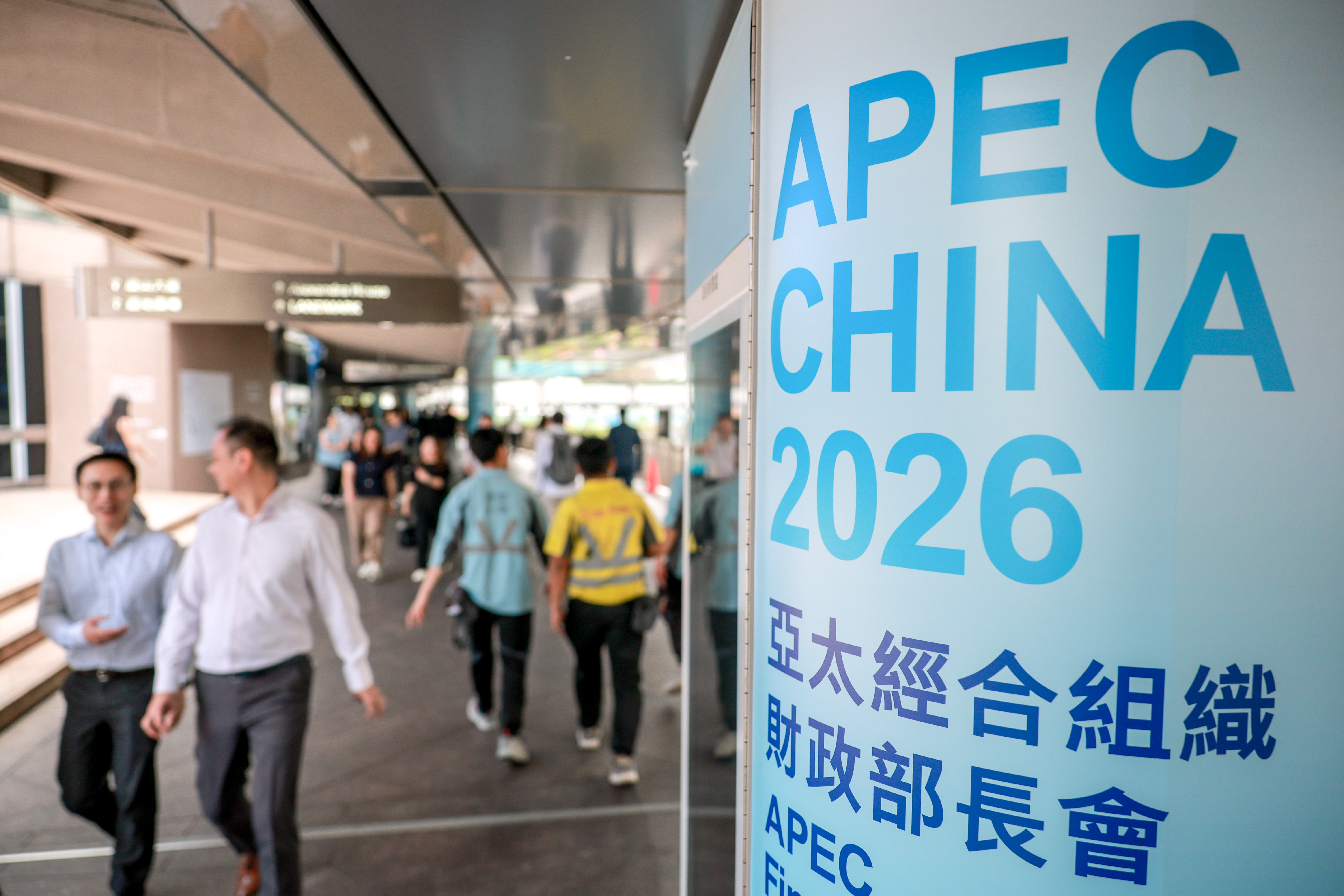
China plans to use its year as host of the Asia-Pacific Economic Cooperation (APEC) forum to strengthen economic coordination among member economies, with officials calling for closer cooperation on fiscal policy, regional supply chains and sustainable growth ahead of a key ministerial meeting in Hong Kong.
A senior official from China’s Ministry of Finance outlined the country’s priorities on Wednesday, saying Beijing would work with other APEC economies to uphold multilateralism, improve macroeconomic policy coordination and support the stable operation of regional industrial and supply chains. The official also stressed the need to promote long-term growth and advance the development of an Asia-Pacific community with a shared future.
The remarks came ahead of the APEC Finance Ministerial Meeting, scheduled to take place in Hong Kong on October 20 and 21. China’s Minister of Finance Lan Fo’an will lead the Chinese delegation and chair the meeting, while Vice-Minister of Finance Liao Min will deliver remarks on behalf of China, according to the ministry.
The meeting is expected to give participating economies an opportunity to discuss shared economic challenges, exchange policy experience and identify areas for closer cooperation. Its outcomes could also help shape discussions on fiscal and financial priorities across the Asia-Pacific region.
Hong Kong meeting sets the stage for regional talks
China is hosting APEC in 2026, placing Hong Kong and Shenzhen at the centre of a series of major regional economic gatherings. The finance ministers will meet in Hong Kong on October 20 and 21, followed by the 33rd APEC Economic Leaders’ Meeting in Shenzhen, Guangdong province, on November 18 and 19.
The finance ministerial meeting is one of the major ministerial gatherings within the APEC framework. It provides a forum for member economies to discuss macroeconomic policies and strengthen cooperation on fiscal and financial matters.
These discussions carry practical significance for economies with closely connected trade, manufacturing and financial systems. Changes in demand, financing conditions and government spending can affect businesses and workers across borders, while disruptions to industrial and supply chains can create wider economic pressures.
China’s stated priorities reflect an emphasis on coordination rather than isolated national policy decisions. By encouraging economies to exchange views and share experience, Beijing hopes to support a more stable regional economic environment and create conditions for sustained growth.
The meeting’s chairmanship will also give China an opportunity to present its approach to fiscal cooperation during its APEC host year. However, the extent of any progress will depend on the positions of participating economies and the agreements they are prepared to support.
China outlines theme and three priorities for 2026
China has selected “Building an Asia-Pacific Community to Prosper Together” as the theme for its APEC year. The country has identified openness, innovation and cooperation as the three priorities guiding its work.
The theme reflects Beijing’s stated ambition to promote shared economic opportunities and closer regional ties. In comments reported by the Ministry of Finance, the senior official said China intended to remain committed to APEC’s original goal of supporting economic growth and improving people’s well-being.
The official also said China would continue to share opportunities through open development, pursue mutually beneficial outcomes and promote inclusive economic globalisation.
These objectives place economic cooperation at the centre of China’s approach to the forum. Openness concerns the ability of economies to participate in regional trade and development, while innovation can support new infrastructure and business activity. Cooperation, meanwhile, provides a channel for governments to discuss policy differences and work towards common objectives.
The three priorities also provide the framework for discussions across APEC’s various workstreams. For finance ministers, that means examining how public spending, financing arrangements and financial services can contribute to economic development while addressing the needs of different groups.
Although the priorities establish the direction of China’s host year, their practical impact will depend on the proposals adopted by participating economies and the measures they subsequently pursue.
Four fiscal topics put forward for discussion
China has proposed four main topics for the APEC fiscal channel in response to what its official described as a new stage of economic development in the Asia-Pacific.
The topics are fiscal policies that support people’s livelihoods, financing for digital infrastructure, approaches to promoting inclusive financial development, and exchanges involving young financial professionals.
The first topic concerns the role of fiscal policy in supporting people’s well-being. Government budgets influence the resources available for public services and other measures that affect households. Discussions among APEC economies could allow officials to compare approaches to spending priorities and consider how fiscal policies can support broader economic participation.
The second topic focuses on financing digital infrastructure. Digital systems increasingly support commercial activity, communication and public services, but developing and maintaining the infrastructure behind them requires investment. By placing financing on the agenda, China is proposing a discussion about the financial support needed for digital development across the region.
The third area concerns inclusive financial development. Access to suitable financial services can affect whether individuals and businesses are able to save, borrow, make payments and participate in economic activity. The proposal calls for approaches adapted to different circumstances, rather than assuming that a single model will work equally well across all economies.
The fourth topic is the exchange of young financial talent. Professional exchanges can give younger officials and finance specialists opportunities to learn from the experience of their counterparts in other economies. Such contact can also help build professional relationships that support future communication and cooperation.
Together, the four topics connect government spending with infrastructure investment, access to finance and the development of future financial professionals. They also give finance officials several specific areas around which to organise discussions, instead of relying solely on broad statements about regional cooperation.
Expected outcomes focus on policy exchange
Representatives from participating economies are expected to hold further discussions on the proposed topics and work towards consensus documents and other meeting outcomes, according to the Chinese official.
China hopes those outcomes will record useful experiences from participating economies, encourage policy exchanges and support the sharing of practical knowledge. The stated objective is to provide a basis for deeper fiscal and financial cooperation in the Asia-Pacific and contribute to regional economic growth.
Consensus documents can help record areas where participating economies agree, although their contents and significance depend on the language negotiated by the representatives. The ministry’s comments did not specify the final wording of the expected documents or announce binding commitments by individual economies.
The meeting will therefore be an opportunity to establish common ground on policy questions that affect economies across the region. Discussions may also help officials understand how different governments approach similar challenges, including public spending, infrastructure financing and access to financial services.
For businesses and households, the importance of such discussions lies in whether policy cooperation eventually supports more stable economic conditions and broader access to opportunities. Regional commitments alone do not guarantee those results; implementation by individual economies remains important.
China has presented the finance ministerial meeting as part of a wider effort to promote multilateral cooperation and shared development during its APEC host year. The gathering in Hong Kong will provide a forum for finance officials to assess that agenda and determine which proposals can attract wider support.
APEC’s wider economic agenda continues in Shenzhen
The Hong Kong meeting will be followed by the APEC Economic Leaders’ Meeting in Shenzhen on November 18 and 19. The sequence places finance ministers’ discussions ahead of the gathering of economic leaders, creating an opportunity for fiscal and financial issues to feed into the forum’s broader agenda.
The two meetings serve different roles within the APEC process. Finance ministers focus on economic policy coordination and financial cooperation, while the leaders’ gathering brings together senior political figures to address wider regional priorities.
China’s emphasis on multilateralism, supply chain stability and sustainable growth is intended to connect these discussions to its wider vision for Asia-Pacific cooperation. The fiscal topics proposed for Hong Kong offer a more specific agenda, covering livelihoods, digital infrastructure, financial inclusion and professional exchanges.
The results will depend on the positions taken by the participating economies and the areas where they can reach agreement. The meeting’s practical value will ultimately rest on whether its discussions produce useful policy exchanges and a clearer basis for future cooperation.
As finance officials prepare to meet in Hong Kong, which of the four proposed priorities should APEC economies address first to support more inclusive and sustainable growth across the Asia-Pacific?