

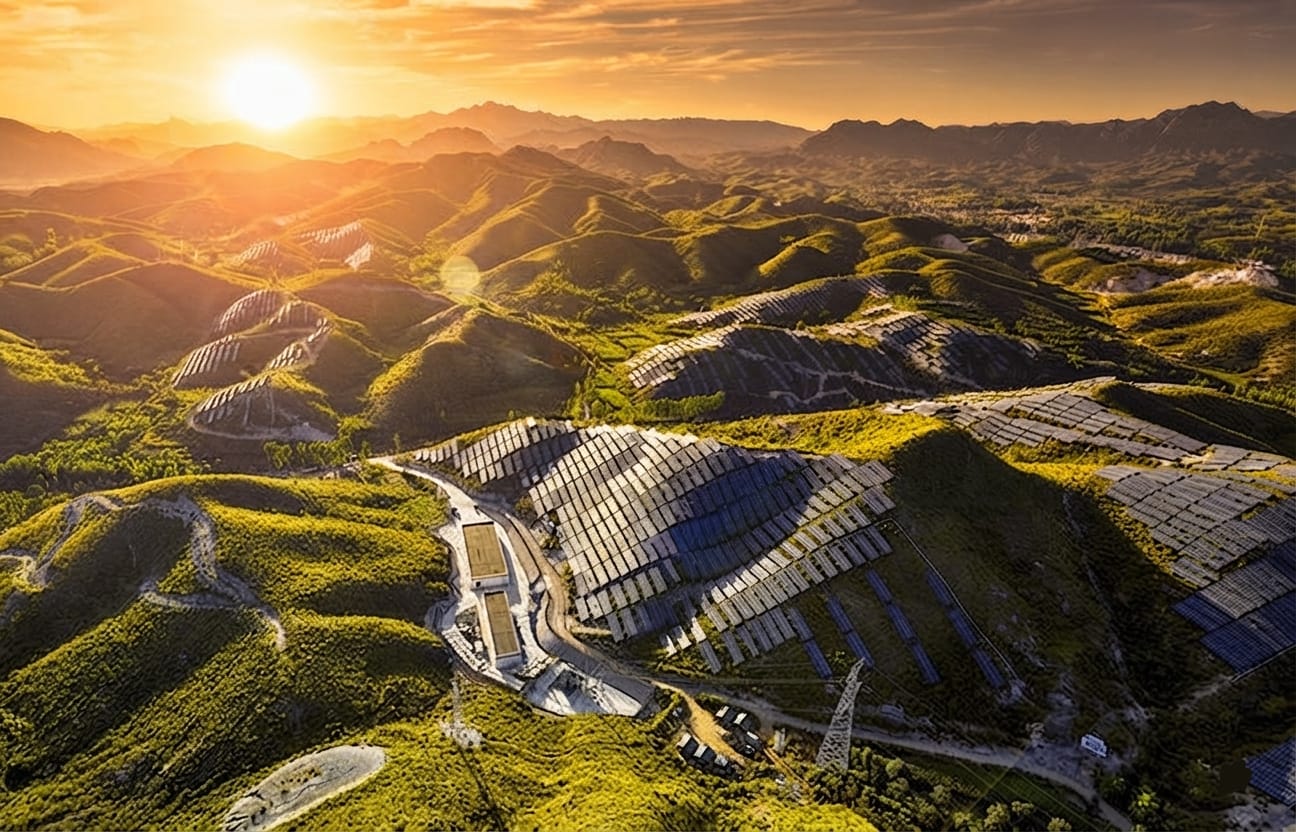
The National Energy Administration confirmed on Monday that China's total installed renewable energy capacity crossed the two-terawatt threshold at the end of June 2026, making China the first nation in history to achieve this milestone and cementing its position as the world's dominant force in clean energy development. Solar photovoltaic installations account for 1.1 terawatts and wind power for 0.74 terawatts, with hydropower and other sources comprising the remaining capacity.
The Scale of the Achievement
To contextualise the magnitude of China's renewable buildout, two terawatts represents more renewable capacity than the entire electricity generating fleets of the United States, the European Union, and Japan combined. Over the past twelve months alone, China installed 410 gigawatts of new renewable capacity, a rate equivalent to adding approximately one nuclear power plant's worth of capacity every 12 hours.
The acceleration has been driven by dramatic cost reductions in solar panel manufacturing, a sector in which Chinese companies now control over 80 percent of global supply chain capacity. The average levelised cost of electricity from new utility-scale solar installations in China fell to 1.8 US cents per kilowatt-hour in 2025, less than one-quarter of the cost of coal-fired generation in most provinces and competitive with virtually every form of electricity generation globally.
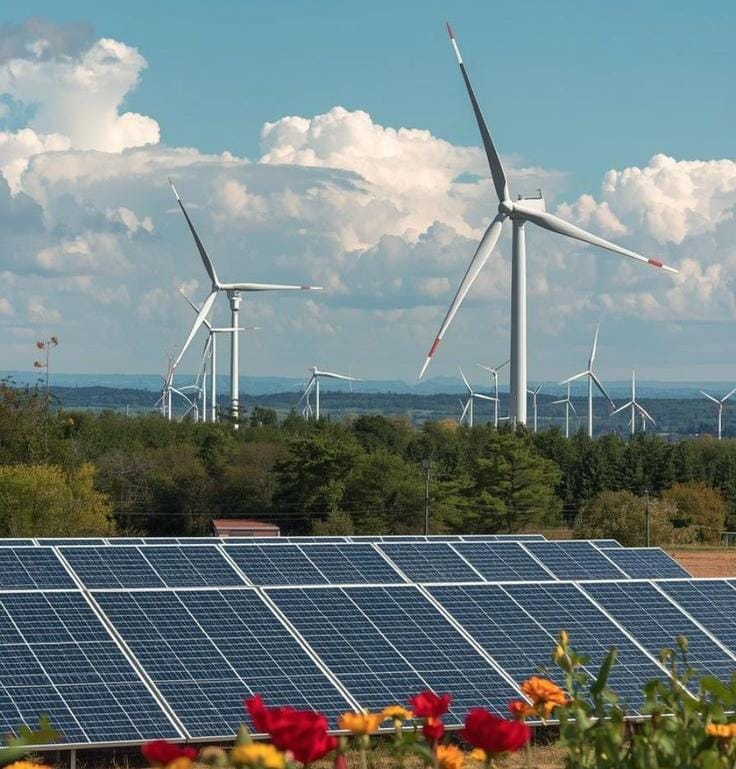
China's solar installations alone exceed 1.1 terawatts, with annual additions approaching 300 gigawatts as costs continue to fall.
Grid Integration Challenges
Despite the headline achievement, energy sector analysts caution that the rapid buildout has created significant grid integration challenges. Curtailment of renewable generation, where grid operators are forced to shut down solar and wind installations because transmission infrastructure cannot absorb the electricity they produce, reached 5.3 percent of potential renewable output in 2025, representing wasted clean energy equivalent to the total electricity consumption of the Netherlands.
The State Grid Corporation of China has announced a 2.8-trillion-yuan investment programme through 2030 to build out ultra-high-voltage direct current transmission corridors connecting renewable-rich interior provinces such as Xinjiang, Inner Mongolia and Gansu with demand centres in coastal provinces. Simultaneously, the government is accelerating the construction of pumped hydro storage facilities, with 340 gigawatts of new pumped storage capacity approved over the past two years.
Provincial Leaders in the Energy Transition
Qinghai province became the first in China to generate over 90 percent of its electricity from renewable sources in 2025, a milestone achieved through a combination of extensive solar and wind installations and the large-scale Longyangxia pumped hydro storage facility on the Yellow River. Yunnan and Sichuan, endowed with abundant hydropower resources, also consistently achieve renewable shares above 80 percent in wet seasons.
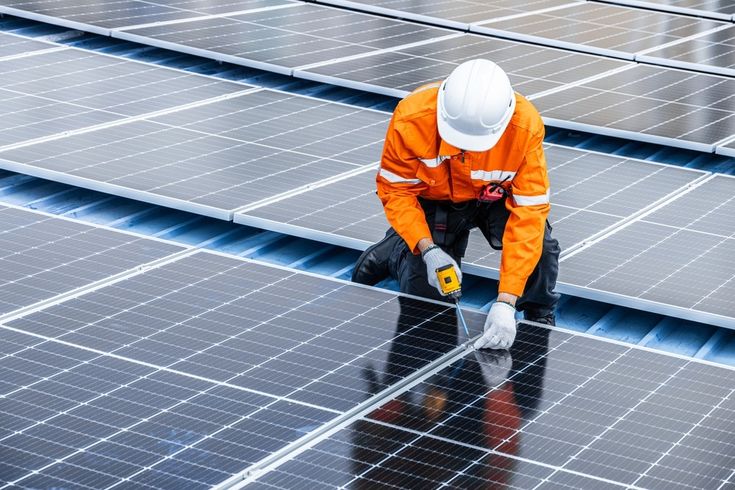
Wind power capacity in China has reached 740 gigawatts, with offshore wind farms along the eastern seaboard expanding rapidly.
Industrial Policy and Export Strategy
China's dominance in renewable energy equipment manufacturing has become a major geopolitical flashpoint. The European Commission and the Biden administration's Inflation Reduction Act successors in the United States have both introduced measures designed to reduce dependence on Chinese solar panels and battery technology, citing concerns about subsidised competition and strategic supply chain vulnerability.
Chinese manufacturers have responded by accelerating the establishment of manufacturing facilities in Southeast Asia, the Middle East and Europe, with BYD, Longi Green Energy and CATL all commissioning overseas factories that will produce panels, batteries and inverters under non-Chinese content rules.
Implications for Global Climate Goals
Climate scientists and energy policy analysts broadly agree that China's renewable buildout rate is essential to any scenario in which global temperature rise is limited to 1.5 degrees Celsius above pre-industrial levels. The International Energy Agency's 2026 World Energy Outlook notes that achieving this target requires global renewable capacity to reach 11 terawatts by 2030, a target that is mathematically impossible without China maintaining or accelerating its current installation pace.
China's nationally determined contribution under the Paris Agreement commits to peaking carbon emissions before 2030 and achieving carbon neutrality by 2060. Energy ministry officials have indicated that the current trajectory of renewable deployment puts China on course to peak emissions at least five years ahead of the committed deadline, a development that would represent one of the most consequential contributions to global climate action in history.