

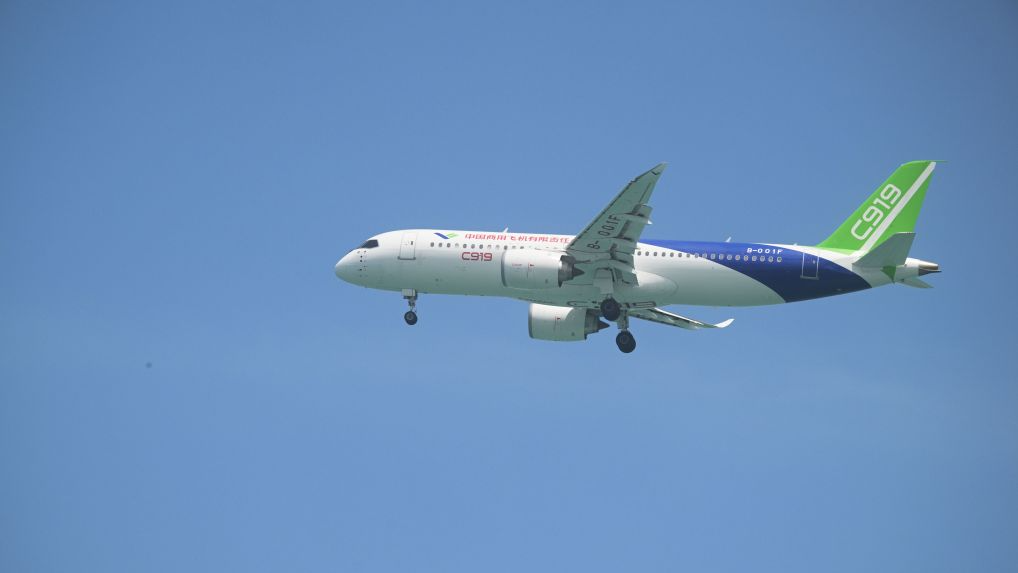
China’s homegrown C919 passenger jet has carried more than 8.4 million passengers and served 27 cities since entering commercial service, marking another milestone in the country’s effort to build a competitive domestic aircraft industry. The figures, announced by Commercial Aircraft Corporation of China (COMAC) President Shen Bo on Thursday, came as the manufacturer continued expanding operations of its C919 mainline jet and C909 regional aircraft.
Speaking at an industry conference in Dunhuang, Gansu province, in northwestern China, Shen also reported that the C909 had safely transported more than 41 million passengers since its commercial debut. The two aircraft serve different parts of the market, with the C919 designed for mainline routes and the C909 intended for regional connections.
Their growing passenger totals reflect the expanding role of domestically developed aircraft in China's aviation system. They also come as the country works to improve regional connectivity, increase the capacity of its transport network and develop its own commercial aerospace industry.
For COMAC, the next stage involves building on its operational record while expanding the routes served by its aircraft. Passenger numbers provide one measure of progress, although long-term success will also depend on reliability, airline demand, production capacity, maintenance support and the ability to compete in international markets.
C919 expands its commercial operations
The C919 is China's first independently developed trunk jetliner designed to meet international airworthiness standards and incorporating independently owned intellectual property rights, according to the supplied report.
Its baseline configuration accommodates between 158 and 192 passengers, depending on the cabin layout, and has a stated range of 4,075 to 5,555 kilometres. These specifications place the aircraft in the single-aisle passenger jet category commonly used for domestic services and regional international routes.
The aircraft completed its first commercial flight in May 2023. Since then, it has operated on multiple domestic routes, allowing airlines to introduce it into their schedules and build experience with the aircraft in regular passenger service.
The announcement that the C919 has served 27 cities indicates the geographical reach it has established since entering commercial operations. However, the figure does not necessarily mean that all 27 cities are connected by direct C919 flights or that the aircraft serves every destination daily.
Expanding operations requires airlines to consider passenger demand, flight frequency, airport facilities and aircraft availability. Carriers must also coordinate crew training, maintenance arrangements and spare-parts support to keep aircraft operating according to schedule.
The C919 completed its first scheduled international commercial passenger flight in August 2026, according to the supplied report. The milestone marked an expansion beyond its domestic operating network and provided a new setting in which the aircraft could demonstrate its capabilities.
International operations bring additional requirements, including coordination with foreign aviation authorities, compliance with applicable regulations and arrangements for maintenance and operational support outside China.
The aircraft's international debut is therefore an important operational development, but it should not be confused with broad international regulatory acceptance. Airlines considering a new aircraft type must evaluate its certification status, operating costs, reliability and support arrangements before committing to wider use.
For COMAC, establishing a sustained international presence will require more than completing individual flights. The manufacturer must demonstrate that airlines can operate the aircraft reliably over time and obtain the technical assistance needed to maintain their schedules.
C909 strengthens regional connections
While the C919 targets mainline passenger services, COMAC's C909 plays a different role in the domestic aviation market.
The aircraft, previously known as the ARJ21, entered commercial service in 2016. It is designed to support regional and sub-hub airports, establish connections between smaller cities and supplement the transport capacity of major aviation hubs.
Shen said the C909 had safely carried more than 41 million passengers since its commercial introduction. Its accumulated passenger total is substantially higher than the C919's, reflecting its earlier entry into service and longer period of commercial operation.
Regional aircraft can help airlines serve routes that do not generate enough demand for larger jets or that require more frequent connections between smaller population centres. They can also connect passengers from regional airports to major hubs, where travellers can transfer to domestic and international services.
For passengers, these links may reduce the need to travel long distances by road or rail to reach a larger airport. For businesses, improved air connections can make regional destinations more accessible to employees, customers and visitors.
The C909's role in this network depends on airlines identifying routes that can support regular services. Factors such as local demand, operating costs, airport infrastructure and competition from other transport options influence whether a route remains commercially viable.
Wang Changshun, chairman of the China Air Transport Association, said China's regional aviation fleet had undergone rapid changes in recent years, with domestically developed aircraft accounting for a substantially larger share.
Wang described the C919 as accelerating its expansion in commercial operations and the C909 as an established aircraft in the regional aviation market. He said both were contributing to the development of China's regional aviation sector.
The two aircraft serve complementary purposes. The C919 is intended for higher-volume mainline services, while the C909 can help airlines build connections between smaller centres and larger transport hubs.
Together, they form part of China's effort to develop an aviation system supported by aircraft produced by its own aerospace industry.
China's aviation market continues to grow
The expansion of COMAC's passenger operations comes amid continued growth in China's civil aviation market.
The Civil Aviation Administration of China reported that the country recorded 770 million passenger trips in 2025, an increase of 5.5 percent from the previous year.
The figure reflects the scale of the domestic market and the demand airlines must serve across a geographically extensive country. Passenger traffic creates opportunities for aircraft manufacturers, but it also places pressure on airlines and airports to maintain capacity, improve service and manage costs.
As traffic grows, airlines must decide how to distribute aircraft across different routes. Busy city pairs may support larger aircraft and more frequent services, while smaller markets can require regional jets and carefully planned schedules.
Airport capacity is another consideration. Expanding air travel requires investment in terminals, runways, ground-handling facilities and air traffic management. Improvements in these areas can help airlines operate more efficiently and give passengers a smoother journey.
China's 2026-2030 civil aviation development plan calls for improvements to transport infrastructure, operational efficiency and services. It also emphasises independent innovation and closer integration across the aviation industry.
The plan sets a goal for China to reach world-class standards in aviation safety, service capacity and infrastructure by 2030.
Achieving that goal will involve more than manufacturing aircraft. The wider system includes airlines, airports, maintenance providers, component manufacturers, training organisations and aviation regulators. Their performance affects the reliability and cost of air travel as much as the aircraft themselves.
The growing use of domestically produced jets could support industrial development by creating demand for engineering expertise, manufacturing services and maintenance capabilities. However, the scale of those benefits will depend on the industry's ability to build a stable and competitive supply chain.
Manufacturing is only one part of the challenge
Developing a commercial passenger aircraft is a complex industrial undertaking. Manufacturers must design and assemble the aircraft, establish production processes, meet certification requirements and support airlines throughout the aircraft's operating life.
After an aircraft enters service, its manufacturer must continue supplying technical documentation, spare parts and engineering assistance. Airlines also need access to maintenance facilities and trained personnel who can respond to faults and carry out scheduled inspections.
Reliability becomes particularly important as fleets expand. An aircraft that performs well in initial operations must continue meeting airline requirements as flight hours accumulate and it serves a wider range of routes.
Production capacity presents another test. Airlines need manufacturers to deliver aircraft on agreed schedules so that they can plan fleet expansion, replace older planes and introduce new services. Delays can affect route plans and increase operating costs.
International growth adds further complexity. Foreign airlines and regulators assess aircraft against their own requirements, while operators consider whether the aircraft can be supported at their destinations. Establishing these arrangements can take considerable time and investment.
The C919's first scheduled international commercial passenger flight in August 2026 offers an initial step in extending its operational reach. Further expansion will depend on the destinations served, the demand from airlines and the regulatory arrangements governing each market.
The C909 faces its own commercial tests as regional aviation develops. Airlines must determine where regional jets offer an advantage over larger aircraft, high-speed rail and other forms of transport. Routes need enough passenger demand to justify regular service while remaining affordable to operate.
For both aircraft, passenger totals provide evidence of accumulated use, but they do not reveal profitability, average load factors, operating costs or the number of aircraft in active service. Those measures would provide a fuller picture of commercial performance.
A longer-term test for COMAC
The latest figures give COMAC a clear measure of the distance its two aircraft have travelled since their respective commercial introductions. The C909 has accumulated more than 41 million passenger journeys since 2016, while the newer C919 has surpassed 8.4 million passengers since beginning commercial service in 2023.
Their continued operation also places China's aircraft industry within a broader effort to improve domestic transport links and strengthen industrial capabilities.
For passengers, the practical benefits will be measured through reliable schedules, accessible routes, safe operations and competitive fares. Airlines will judge the aircraft by their performance, costs and suitability for the markets they serve.
For COMAC, expanding the passenger base is only one part of building a lasting commercial aircraft business. The company must continue supporting aircraft already in service, meet future delivery requirements and demonstrate that its products can satisfy airlines over many years of operation.
As China pursues its 2030 aviation development goals, can COMAC turn the growing use of the C919 and C909 into sustained demand from airlines at home and abroad?