

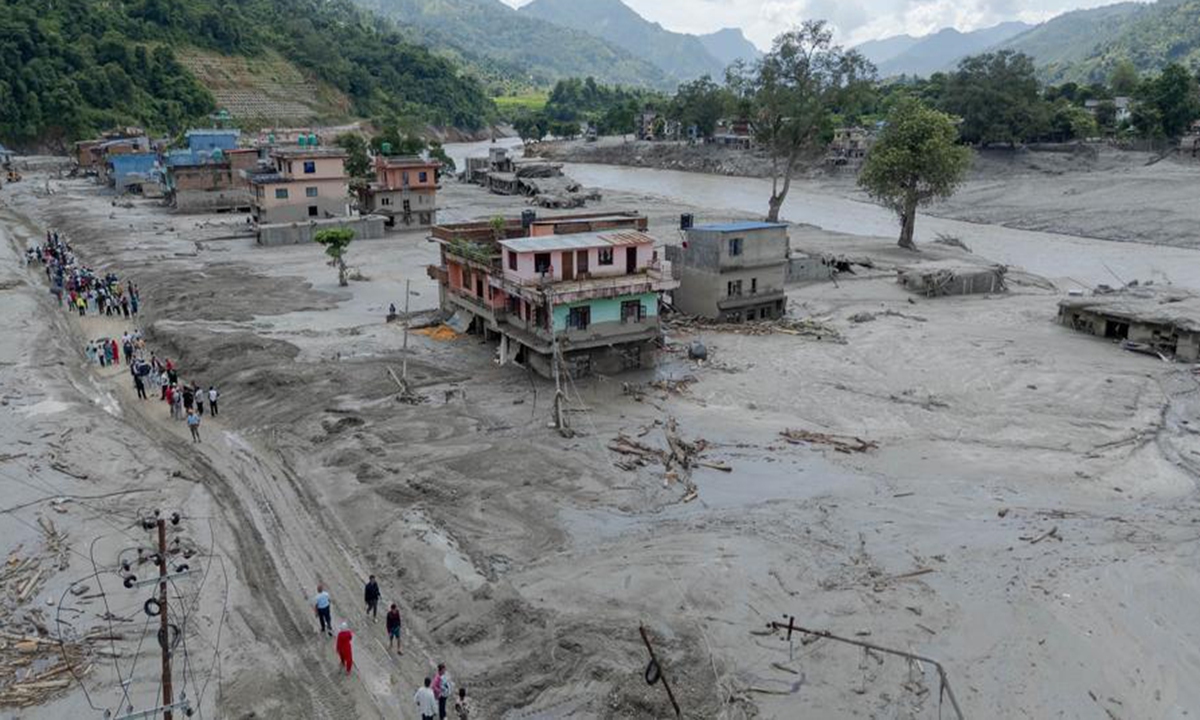
China has sent emergency aid, rescue specialists and disaster monitoring information to Nepal after a glacial collapse along the China Nepal border triggered major mudslides, leaving hundreds dead and thousands missing.
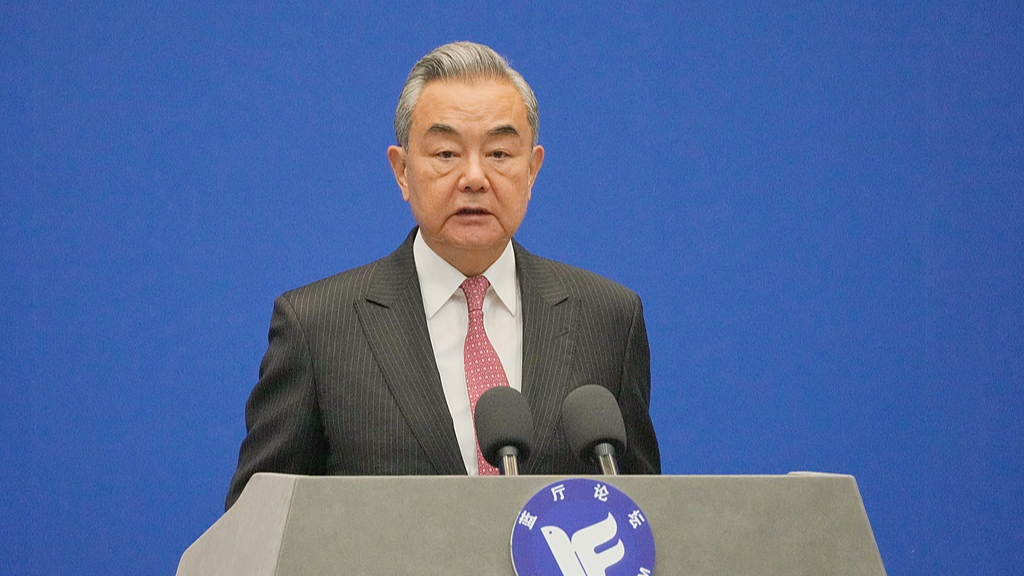
Chinese Foreign Minister Wang Yi said Saturday that Beijing was preparing a package of assistance for Nepal that includes emergency cash support and humanitarian supplies. The move comes as rescue teams on both sides of the Himalayas continue searching for people caught in the disaster.
Wang made the announcement during a telephone conversation with Nepal’s Foreign Minister Shisir Khanal. He said Chinese disaster relief supplies would soon reach Kathmandu as Nepal faced the difficult task of responding to a disaster that has affected communities on both sides of the border.
The glacial collapse caused large mudslides and resulted in significant casualties, with people still unaccounted for in both China and Nepal. Wang described the incident as the most serious cross border disaster between the two countries in recent years.
He said the scale and complexity of the rescue and relief work were unprecedented, placing heavy demands on emergency teams working in difficult Himalayan terrain.
China deploys rescue specialists
China has divided a group of tunnel rescue specialists into two teams. One team has been sent directly to the disaster affected area, while the other has been deployed to Kathmandu to support coordination and rescue work.
The specialists are expected to assist with emergency operations as authorities continue efforts to locate missing people and provide support to those affected by the mudslides.
China has also supplied Nepal with information gathered from the disaster zone. According to Wang, Beijing has shared imagery, satellite information and hydrological data with Nepali authorities.
The information is intended to help officials assess conditions in areas affected by the collapse and mudslides. China has also provided early warning information concerning barrier lakes located upstream, which could pose additional risks if water levels rise or unstable formations give way.
The sharing of satellite and hydrological information adds another layer to the emergency response, particularly in a mountainous region where changing water conditions can quickly affect communities downstream.
While Chinese authorities have been conducting emergency operations on their own side of the border, Wang said Beijing moved quickly to assist Nepal as well.
Wang said China had immediately extended assistance to Nepal’s relief efforts while conducting emergency rescue operations on its own side.
Chinese citizens receive assistance
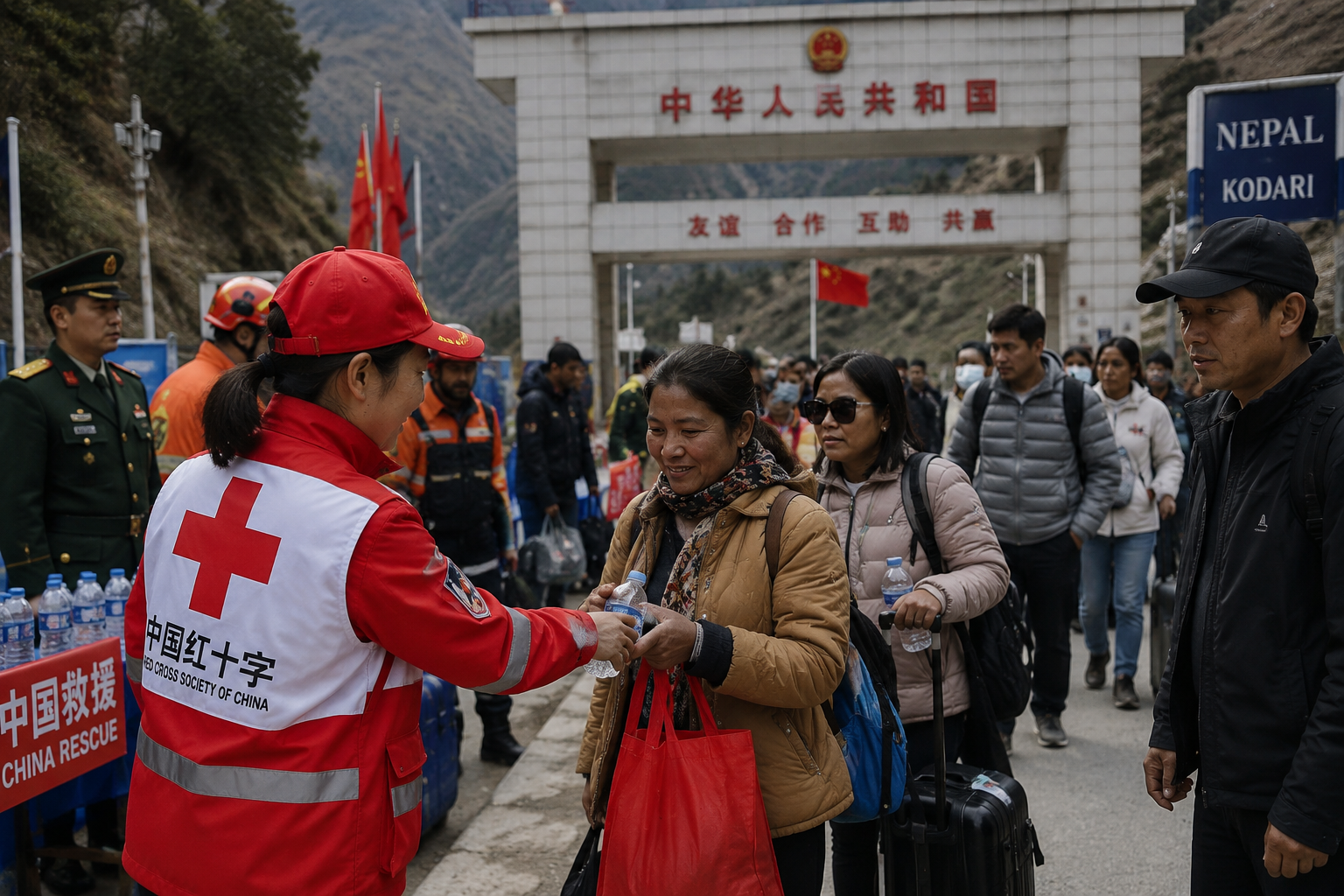
The disaster has also affected Nepali citizens who were stranded on the Chinese side of the border.
Wang said China had made appropriate arrangements for those people and would assist them in returning to Nepal as soon as possible.
He also thanked Nepal for its efforts to rescue and evacuate Chinese citizens in the country. Wang asked Nepali authorities to continue those efforts as rescue teams work to account for people who remain trapped or missing.
The movement of people across the border adds another challenge to an already complicated emergency response. Rescue authorities must deal not only with casualties and missing residents but also with people displaced by the disaster and foreign nationals caught in affected areas.
Wang called for China and Nepal to cooperate closely during the emergency. He said the two countries should stand together, coordinate their efforts and overcome the difficulties caused by the disaster through practical action.
He also referred to the long standing friendship between the two Himalayan neighbours, saying the response to the disaster should reflect that relationship.
Nepal thanks China for emergency assistance
Khanal expressed gratitude for China’s decision to provide immediate humanitarian assistance despite the fact that Chinese territory had also been affected.
He said both countries were dealing with the consequences of the disaster, yet China had responded quickly by expressing sympathy and sending assistance to Nepal.
According to Khanal, the response demonstrated the strength of relations between Nepal and China.
Nepal has pledged to continue working with Chinese authorities as rescue operations proceed. Khanal said Nepal would make every effort to locate Chinese nationals who remain trapped or missing and would also cooperate in efforts to find missing foreign nationals.
The two sides are also looking beyond the immediate rescue operation.
Khanal said Nepal was prepared to strengthen cooperation with China on reconstruction after the disaster, as well as disaster prevention and mitigation. He also said the two countries could expand cooperation on climate change response.
Those areas could become an important part of the recovery process as authorities assess damage and consider measures to reduce risks from future disasters in the mountainous border region.
Chinese relief supplies reach Kathmandu
China’s emergency response expanded further on Sunday when two Chinese Y 20 transport aircraft arrived at Tribhuvan International Airport in Kathmandu carrying relief supplies and four Chinese rescue experts.
The aircraft reached Kathmandu at about 7 am local time after departing Chengdu earlier in the morning. The flight took roughly three hours.
The supplies included tents, blankets, sleeping bags, hardtack and emergency kits. They were handed over to the Nepali side at the airport for use in the disaster relief operation.
The arrival of the supplies gives Nepali authorities additional material support as they deal with the immediate needs of people affected by the mudslides.
Tents and blankets can provide temporary shelter for displaced residents, while sleeping bags and emergency equipment can support rescue and relief personnel working in difficult conditions. Basic food supplies such as hardtack can also be distributed during emergency operations when normal supply routes are disrupted.
Chinese Ambassador to Nepal Zhang Maoming and Nepal’s Minister of Science, Technology and Innovation Mahabir Pun attended the handover ceremony at the airport.
The delivery marks a direct expansion of China’s assistance beyond information sharing and specialist support. Chinese rescue experts are now in Nepal, while emergency supplies have been formally transferred to Nepali authorities.
Rescue efforts continue after glacial collapse
The disaster has created a difficult rescue environment, with mudslides spreading the impact of the initial glacial collapse and leaving people missing across the border region.
Authorities on both sides face the challenge of working in mountainous terrain while monitoring conditions that could change rapidly. China’s decision to provide Nepal with satellite imagery, hydrological information and warnings about upstream barrier lakes reflects the need for authorities to track developments beyond the areas already affected.
For Nepal, the immediate priority remains locating missing people, supporting those displaced by the disaster and coordinating the arrival and distribution of emergency assistance.
The two governments have also agreed to maintain cooperation as the emergency response develops. Nepal has indicated that it will continue efforts to rescue Chinese nationals and work with China on wider recovery measures.
China’s deployment of rescue specialists, delivery of emergency supplies and sharing of satellite and hydrological data now form part of a joint response to one of the most serious cross border disasters the two countries have faced in recent years.
As rescue teams continue their work, authorities are also monitoring upstream water conditions and preparing for further risks from unstable barrier lakes. The immediate focus remains clear: find those still missing, assist displaced communities and prevent additional casualties in the affected Himalayan region.