

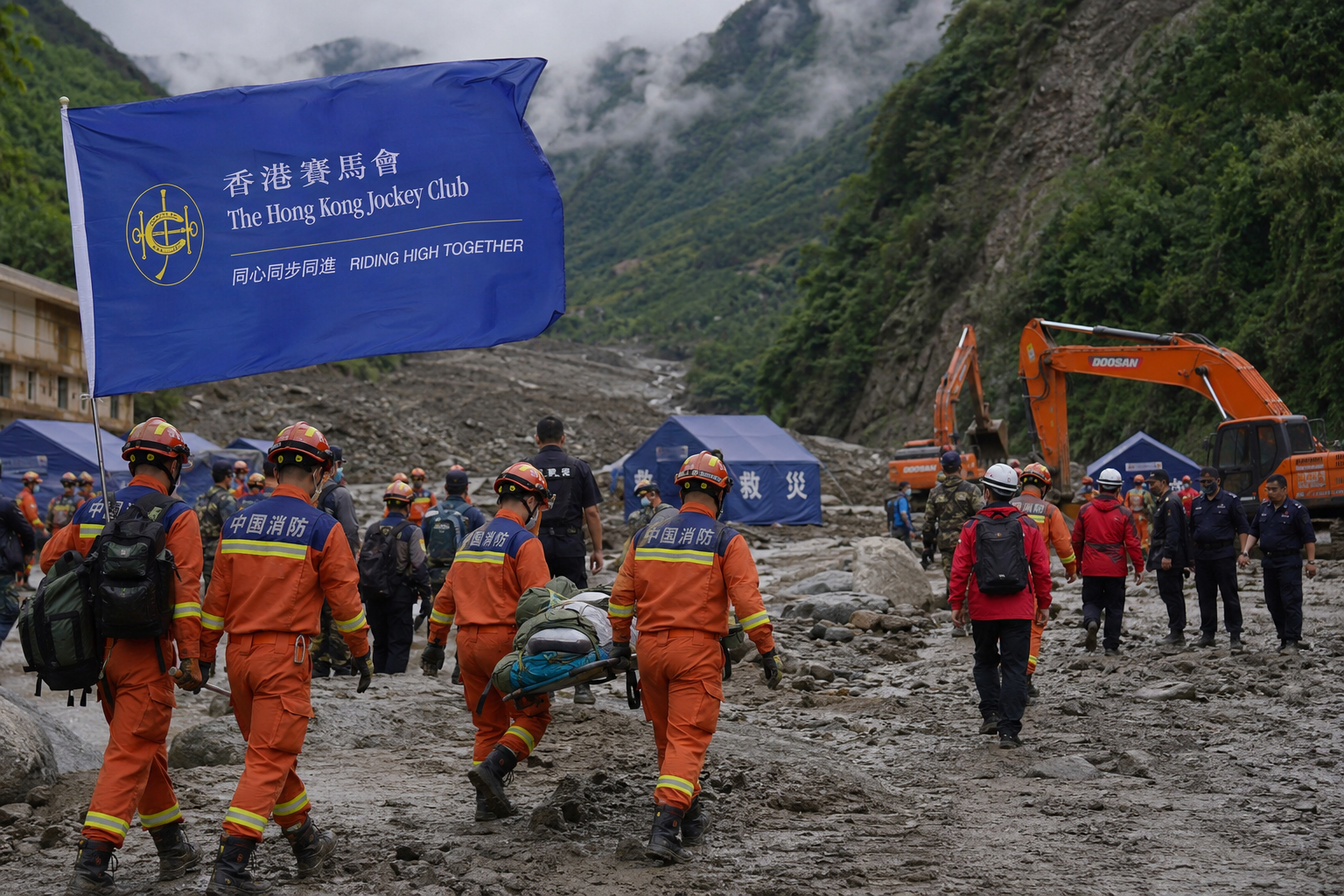
The Hong Kong Jockey Club has pledged HK$20 million to support emergency rescue and disaster relief operations in Gyirong County after severe mudslides struck the area, adding to the Club’s long record of providing financial assistance following major disasters on the mainland.
The donation will be channelled through the Liaison Office of the Central People’s Government in the Hong Kong Special Administrative Region. The money will be used to support communities affected by the disaster, emergency response efforts and subsequent recovery work.
The Club said it extended its condolences to those who lost their lives and their families, while wishing injured residents a speedy recovery. It also expressed hope that affected communities would be able to return to normal conditions as soon as possible.
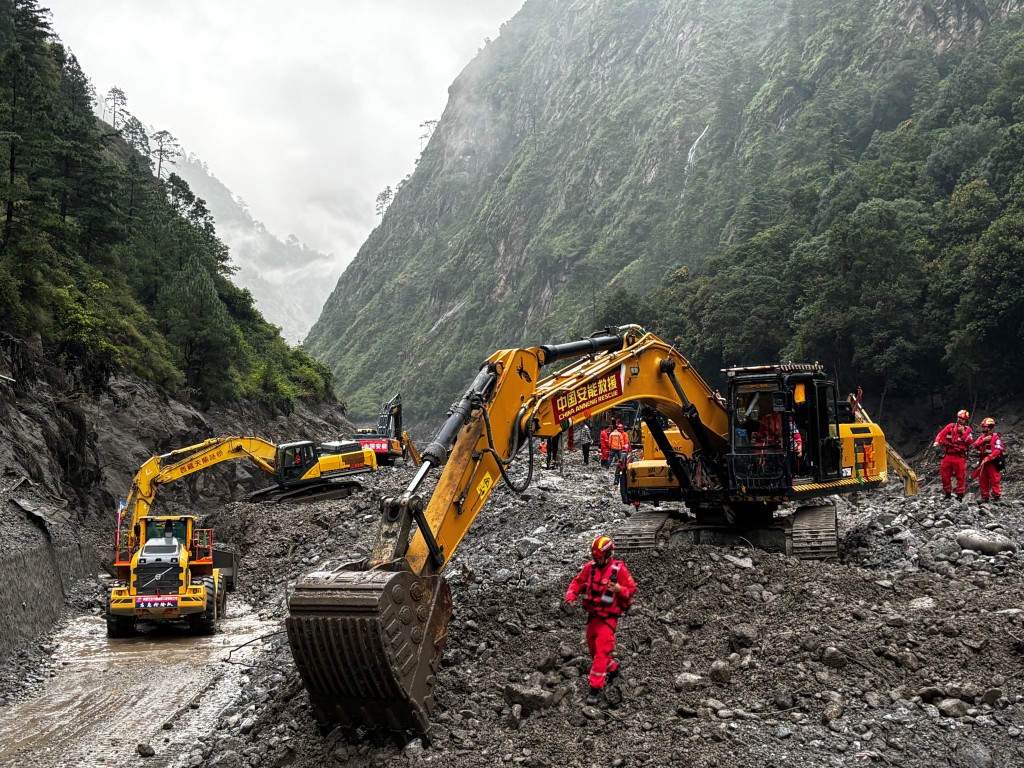
The latest contribution comes as rescue teams continue working in difficult conditions in Gyirong, where mudslides have caused widespread disruption and left authorities facing the task of reaching affected areas, assisting residents and assessing damage.
Hong Kong backed disaster institute joins rescue work
The response also involves an institution created with substantial support from the Hong Kong Jockey Club.
The Institute for Disaster Management and Reconstruction, a joint initiative of Hong Kong Polytechnic University and Sichuan University, is taking part in rescue operations in Gyirong County.
The institute was established with 200 million yuan in funding from the HKJC. Its involvement reflects a longer term effort to strengthen expertise in disaster prevention, emergency response and post disaster reconstruction.
Rather than limiting its contribution to financial assistance, the Club has supported the development of specialist capacity that can be deployed when major emergencies occur. Experts connected to the institute are now involved in the response to the Gyirong mudslides.
The institute’s participation gives the rescue effort access to personnel with experience in disaster management and reconstruction, while allowing specialists to assess conditions on the ground and contribute technical knowledge during the emergency phase.
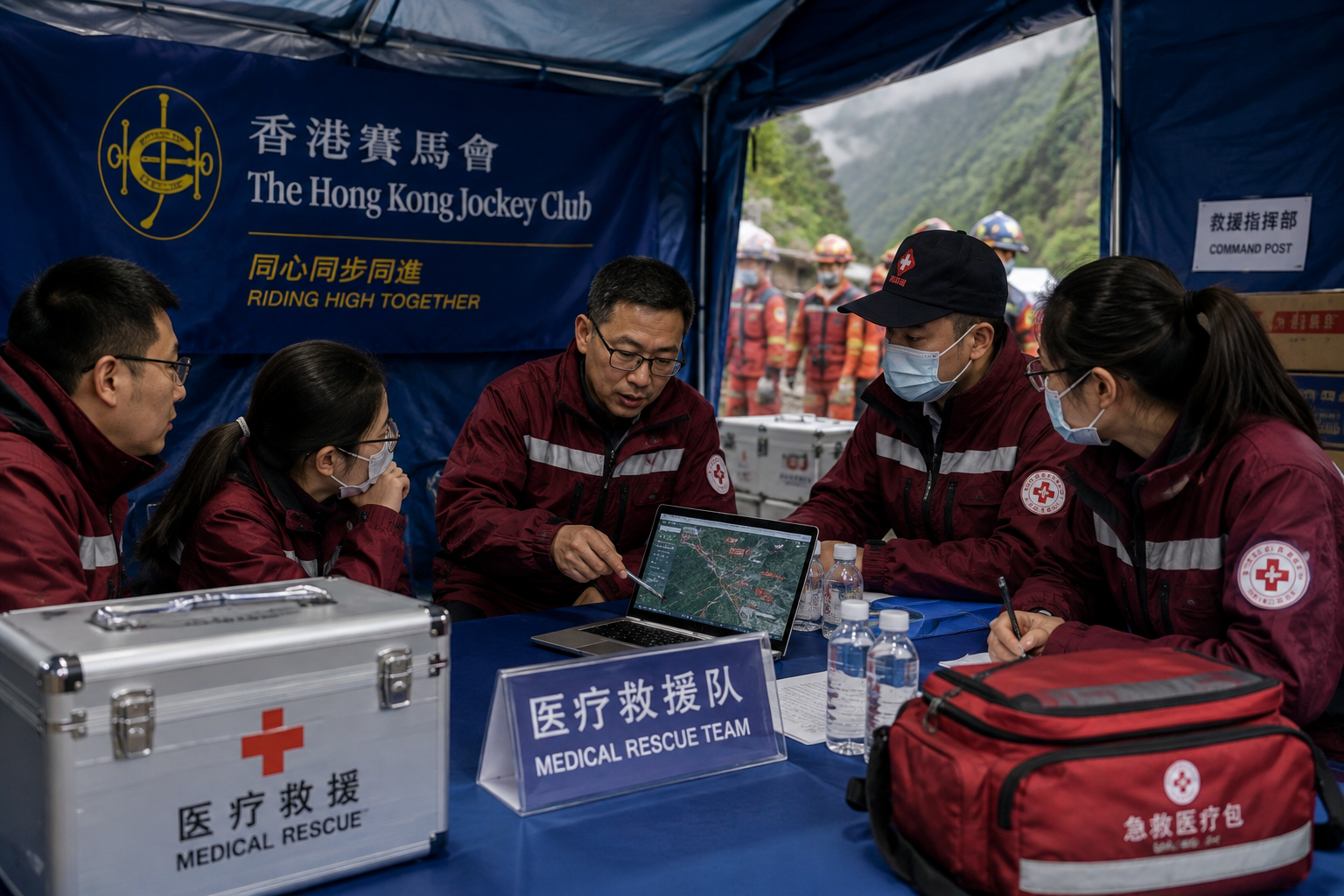
Medical team deployed to disaster zone
Medical support has also been sent to the affected area.
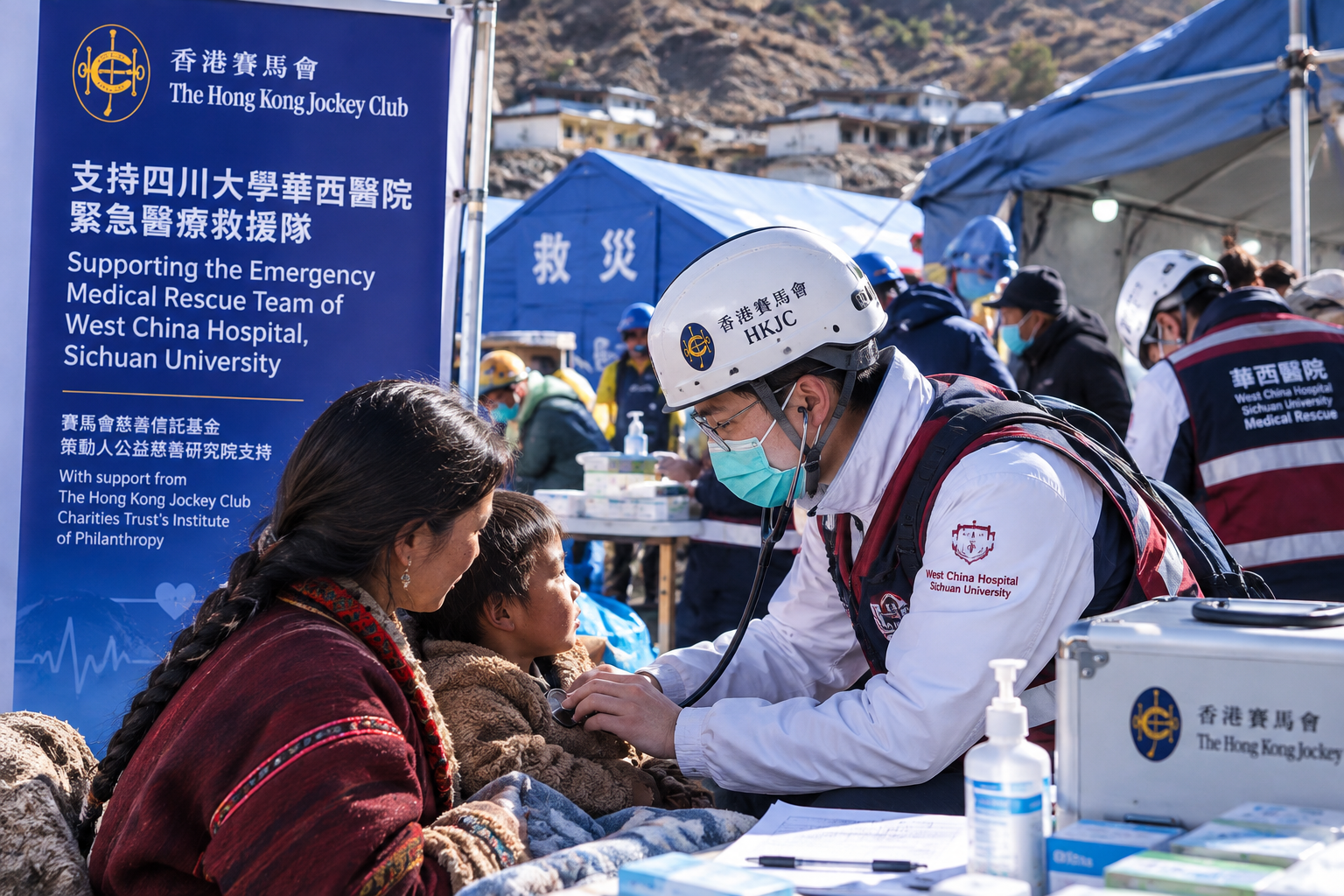
An emergency medical rescue team from West China Hospital of Sichuan University has deployed to the disaster site to assist with the response. The team comprises senior clinical medical personnel and is supported by funding from the Hong Kong Jockey Club and its Charitable Trust’s Institute of Philanthropy.
The medical specialists are providing technical and clinical support as rescue operations continue.
The deployment adds a specialist healthcare component to the wider relief effort, particularly as emergency teams work to reach people affected by the mudslides and provide treatment to those injured.
The involvement of West China Hospital also builds on the relationship between the HKJC supported Institute for Disaster Management and Reconstruction and Sichuan University, bringing together disaster management expertise and frontline medical support.
For communities affected by mudslides, the first hours and days of a disaster can present a series of challenges beyond the initial search for survivors. Rescue teams must assess unstable terrain, reach isolated locations, treat injuries and establish whether damaged infrastructure can safely be used.
The presence of experienced medical personnel allows those teams to respond to immediate healthcare needs while broader rescue and recovery operations continue.
HKJC has provided aid after major disasters
The HK$20 million commitment to Gyirong is the latest in a series of major disaster relief contributions by the Hong Kong Jockey Club in mainland China.
Following the 2008 Sichuan earthquake, the Club provided HK$1 billion towards reconstruction. The earthquake caused extensive loss of life and destruction across Sichuan, prompting a large scale reconstruction programme in the years that followed.
The Club later donated HK$20 million for flood relief in Zhengzhou, Henan province, in 2021, after severe flooding caused extensive damage and disrupted daily life across the city and surrounding areas.
In August 2023, the HKJC committed another HK$20 million to reconstruction efforts in areas affected by floods in the Beijing Tianjin Hebei region and Northeast China.
Several months later, in December 2023, it provided a further HK$20 million for earthquake relief efforts in Gansu and Qinghai.
Taken together, those contributions show a recurring pattern in the Club’s disaster response, combining direct financial assistance with longer term support for reconstruction and specialist disaster management.
The latest donation follows that approach. The HK$20 million will provide immediate support through the central government’s liaison office, while the HKJC supported disaster institute and medical team are contributing expertise directly to the emergency response.
Focus shifts from rescue to recovery
The scale of the latest response also points to the different stages that follow a major natural disaster.
The immediate priority is to locate and assist people affected by the mudslides. Once emergency operations begin to wind down, authorities and relief organisations must turn to restoring essential services, repairing damaged infrastructure and helping communities recover.
The HKJC’s earlier support for reconstruction following the Sichuan earthquake provides a precedent for assistance extending beyond the initial emergency period.
For Gyirong County, the immediate task remains the rescue and treatment of those affected by the mudslides. The involvement of Hong Kong backed specialists means the response now combines direct funding with medical and disaster management expertise.
The HK$20 million donation will be channelled through the Liaison Office of the Central People’s Government in the HKSAR, while specialist teams supported by the Club continue working at the disaster site.
The response puts the emphasis firmly on reaching affected communities, treating the injured and supporting the recovery work that will follow once the immediate rescue operation is complete.