

For years, cosplay in Hong Kong was a hobby that some enthusiasts preferred to keep private. Costumes stayed in bedrooms, wigs were hidden away and some cosplayers waited until they reached a shooting location before changing clothes, wary of family members who saw the hobby as little more than dressing up.
Two decades after she first entered the scene, Hong Kong cosplayer Ar Lu has seen that attitude change dramatically.
Today, cosplay has a much larger following in the city, with enthusiasts from different generations taking part in conventions, photography, competitions and online communities. Ar Lu and her partner, Ronnie Kui, have now taken that growth to one of the biggest stages in the international cosplay community.
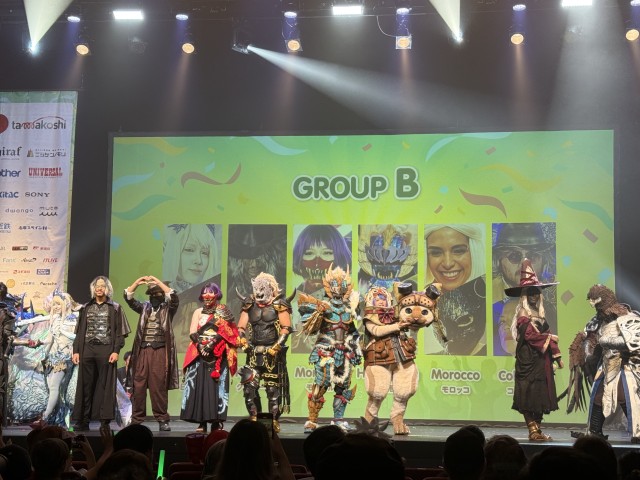
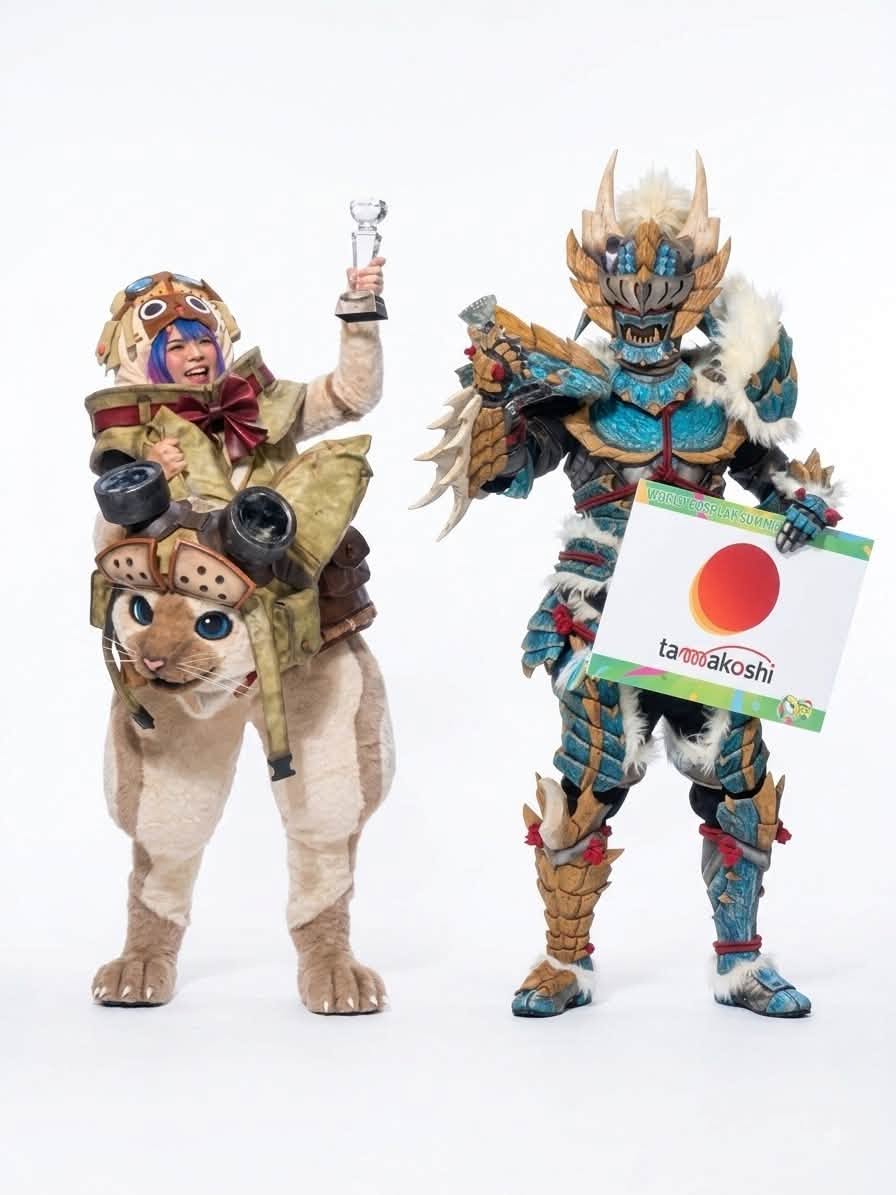
The pair won the Grand Championship at the 2026 World Cosplay Summit in Nagoya on August 2, defeating teams representing 40 countries and regions.
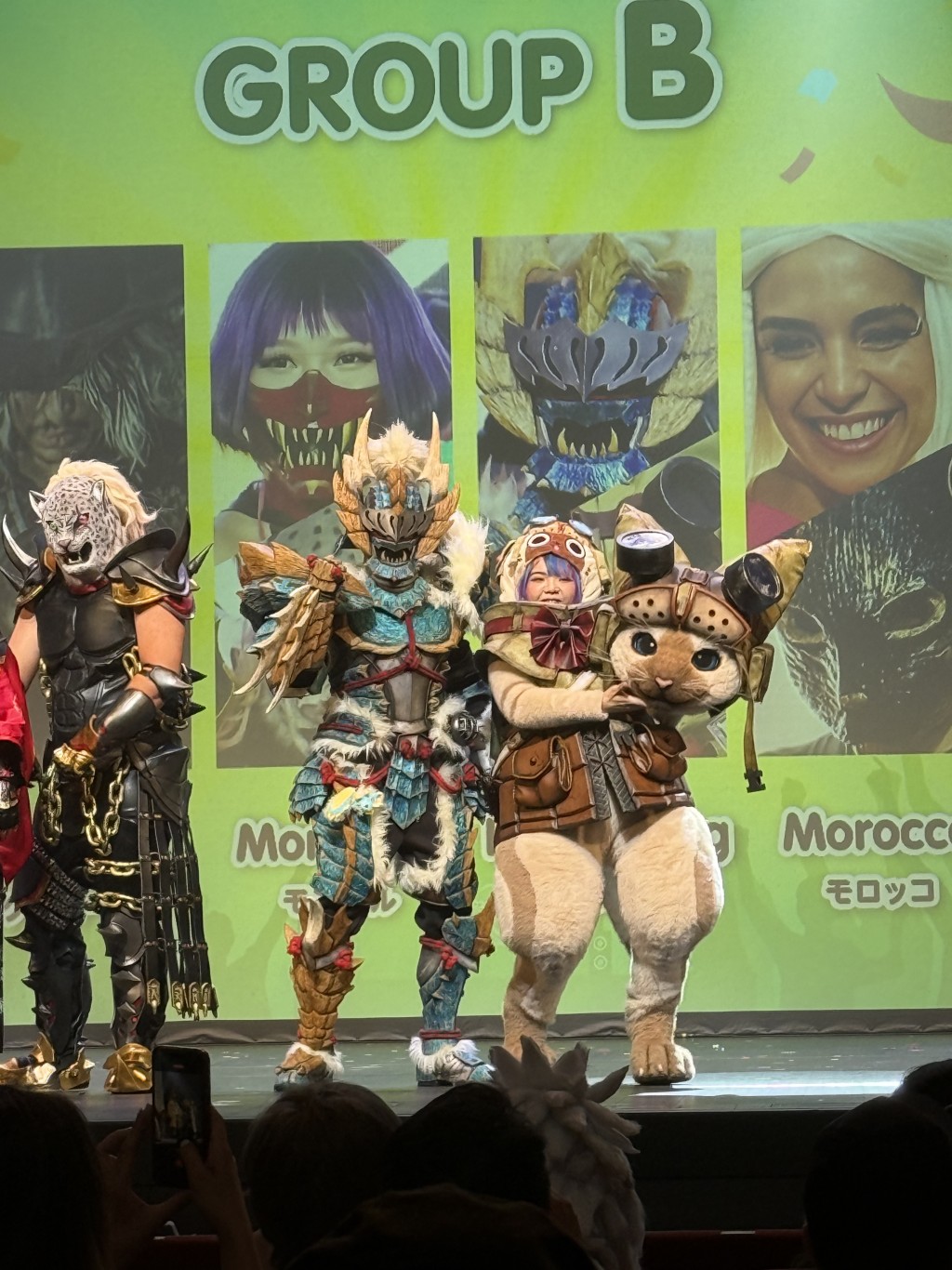
Their winning performance drew inspiration from the popular Monster Hunter series. Ar Lu portrayed Felyne, the franchise’s familiar cat like companion, while Ronnie appeared as the Hunter in an elaborate Zinogre armour costume. Their performance also incorporated Hong Kong’s Lion Rock into the stage production, giving the presentation a distinct connection to their home city.
For the pair, the award represented more than a competition victory. It was also a measure of how far Hong Kong’s cosplay community has travelled from the days when enthusiasts often felt the need to conceal their interests.
A Year of Preparation for a Few Minutes on Stage
The final performance lasted only a few minutes. Preparing for it took roughly a year.
Ar Lu said playing a furry character presented challenges that differ from portraying a conventional human character. The costume had to reproduce the proportions of an animal, while her performance needed to reflect the way a cat moves.
She studied real cats closely, paying attention not only to their appearance but also to how they walked, stood and shifted their bodies. She used prosthetics to recreate Felyne’s feet and repeatedly practised the character’s gait.
“You have to pay attention to their proportions, movement and mannerisms,” she said. “Our natural way of walking is already a habit, so you need to put in extra practice to change it.”
The work did not stop once the basic costume had been completed. Ar Lu continued adjusting details to make the character more convincing, including the shape and construction of the feet.
There was another problem that could not be solved with sewing or practice: heat.
A furry costume covers much of the performer’s body, creating uncomfortable conditions during a live performance. Ar Lu had to consider not only how the costume looked but also how she could move and perform while wearing it.
The result was built through months of trial, adjustment and repeated practice.
Building the Performance From Scratch
The competition required the pair to think beyond costume design.
They wrote the script and dialogue, created props and worked on stage effects. Much of the technical knowledge was self taught, with the couple turning to YouTube tutorials to learn techniques they had never used before.
Ar Lu concentrated mainly on sewing and costume construction. Ronnie, who works as a drum teacher, took responsibility for much of the sound, screen effects, stage design and voice over work.
The division of labour was not absolute. They also worked together on painting and prop making, often stepping into whichever task needed attention.
Some of their visual ideas were particularly ambitious. They experimented with fluorescent paint to create elements including butterflies, a dragon and Hong Kong’s Lion Rock as part of the performance.
Turning those ideas into something that would work on a competition stage required another round of experimentation. They had to understand how lighting, paint, props and electronic effects would interact once the performance moved from a workshop into a live venue.
The couple also had to prepare for things going wrong.
Transporting costumes and props from Hong Kong to Japan carried its own risks. A fragile component could break before the competition even began. Electronic equipment could stop working. Lighting or stage effects could fail at the worst possible moment.
They therefore carried repair equipment and prepared backup plans for the costumes and technical elements.
That preparation mattered because a competition performance cannot simply be paused while a broken prop is repaired. The show has to continue.
Working Together as a Couple
The partnership between Ar Lu and Ronnie extends beyond their work on costumes and performances. They are also a couple, which means their creative disagreements can sometimes follow them home.
They acknowledged that arguments occasionally arise when they are developing an idea, particularly when one of their concepts proves harder to build than expected.
Still, disagreements tend to be short lived.
The pair said they can usually cool down within about 10 minutes before discussing the problem and finding a practical solution.
That ability to divide responsibilities while continuing to work towards the same result became especially important during preparations for the World Cosplay Summit.
A large cosplay production can involve sewing, sculpting, painting, sound, acting, writing, lighting and stage technology. One person rarely has the time or expertise to master every part of the process.
For Ar Lu and Ronnie, their different skills allowed them to approach the project as a shared production rather than simply two costumes appearing on the same stage.
Hong Kong’s Cosplay Scene Has Changed
The audience surrounding cosplay in Hong Kong has also changed considerably.
Large ACG events now attract crowds that include established fans, newcomers and people who may have little connection with the original online or convention based communities. Social media has expanded that reach further, allowing costumes and performances to circulate well beyond convention halls.
That visibility has helped make cosplay easier to discuss openly.
Ar Lu remembers a period when some people were uncomfortable revealing their hobby to relatives or friends. Costumes could be stored out of sight, while cosplayers sometimes waited until they reached an event or photography location before putting on their outfits.
The situation is different today.
Hong Kong has access to a wide range of costume materials, specialist products and online shopping platforms. Ar Lu believes that access has helped create a particularly varied local community.
“If you can name a character, there may be someone in Hong Kong cosplaying it,” she said.
That variety is one of the features she hopes the local scene can continue developing.
Cosplay Remains Difficult as a Full Time Career
Greater public interest has not necessarily made cosplay financially sustainable.
Ronnie pointed to Hong Kong’s high cost of living as one of the biggest obstacles for anyone hoping to depend entirely on cosplay for an income.
Both he and Ar Lu maintain work outside the cosplay community. Much of their costume and prop production happens during the hours when most people are asleep.
The workload can be substantial. A competition costume may require months of planning and construction, while a stage performance adds writing, rehearsals, technical preparation and travel.
For enthusiasts who want to enter competitions, the financial and time commitments can therefore be significant.
That has not stopped Ar Lu from encouraging more Hong Kong cosplayers to compete.
She believes competitions provide an opportunity to learn skills that may not be developed through photography or convention appearances alone. Participants can gain experience in stage design, costume construction and performance while also learning directly from competitors from other countries.
The international element is particularly valuable, she said, because teams can exchange techniques and approaches that may not be widely known in Hong Kong.
Passing Knowledge to a New Generation
Ar Lu and Ronnie now want to use their experience to help younger and newer cosplayers.
They hope schools and organisations will provide more workshops and competitions where beginners can learn basic techniques in a structured environment.
For newcomers, that could mean learning how to choose appropriate materials, understand basic construction methods and work safely with costumes and props.
Safety becomes particularly important with large or complicated costumes. Restricted movement, heat, visibility and heavy components can all create problems if performers do not prepare properly.
Ar Lu wants the next generation to understand that cosplay does not have to begin with an expensive costume or professional equipment.
The first step can be simple.
“Cosplay is not difficult to get into, and it’s worth giving it a try,” she said.
A World Title, but Little Extra Sleep
The World Cosplay Summit victory has brought Ar Lu and Ronnie greater attention, including interviews and television appearances.
It has also given Hong Kong’s cosplay community a result that is difficult to overlook.
For a scene that once included enthusiasts hiding wigs and costumes from family members, seeing two local performers defeat teams from 40 countries and regions on an international stage marks a remarkable shift.
Yet the couple’s routine has not suddenly become easier.
They still have their jobs. They still have costumes to make, props to repair and new ideas to test. Winning the world title has opened a larger door, but it has not removed the long nights that come with creating something from scratch.
For Hong Kong’s cosplayers watching from home, the message from Nagoya may be the simplest one: a hobby that once had to be hidden can now carry the city’s name onto a world championship stage.