


A prop helicopter suspended above visitors at Tai Kwun offers an unusual introduction to the people who helped make Hong Kong action cinema famous. The aircraft is part of an exhibition that looks beyond movie stars and screen heroes to the stuntmen who spent decades jumping from buildings, crashing vehicles and taking hard falls so audiences could believe every second of the action.
The exhibition, titled Better Together: Partnering Up for Hong Kong Movies, brings together replicas of familiar film props and production equipment to examine the teamwork behind the city’s film industry. Chin Ka lok, president of the Hong Kong Stuntman Association, helped curate the exhibition and pushed for details that showed visitors what happens away from the camera.
For Chin, the display is not simply about nostalgia. It records a working culture that depended on trust, discipline and a willingness to accept physical danger.
“Hong Kong action cinema has always been a mix of real and fake. It looks like a deadly risk on screen, but behind the scenes it’s all calculated,” Chin told Xinhua in a recent interview.
The Men Behind Hong Kong’s Action Films
Hong Kong cinema developed its international reputation during a period when filmmakers faced strong competition from Hollywood.
From the 1960s through the 1980s, local productions found a distinctive way to stand apart. Martial arts, physical comedy, elaborate fight choreography and dangerous stunt sequences became central to the industry.
The people performing those sequences often worked without the protections audiences might assume were available on a modern film set.
Teams led by figures such as Jackie Chan and Sammo Hung Kam bo became known for demanding physical performances and inventive action scenes. Their work helped establish a style that audiences could identify within seconds.
The camera might show a character leaping across a street or crashing through a window. Behind that moment could be hours of rehearsal, careful positioning, safety checks and repeated attempts to get the movement right.
For the performers, the margin for error was often small.
Chin Ka lok Started at 15
Chin entered the film industry when he was just 15 years old.
He later spent about a decade training under Sammo Hung, one of the major figures in Hong Kong martial arts cinema. The experience gave him a firsthand look at the level of preparation demanded by action filmmaking.
He remembers a period when television crews could shoot around a dozen scenes in a single day. Yet some action sequences required an entirely different approach.
Chin recalled watching Jackie Chan spend three full days refining one wire work sequence.
The contrast stayed with him.
At a time when production schedules were already demanding, spending days on one shot required extraordinary patience from everyone involved. For Chin, however, it demonstrated that the most memorable action scenes were rarely achieved through speed alone.
“At the time, that level of dedication was almost unimaginable. That pursuit of perfection stayed with me for life,” he said.
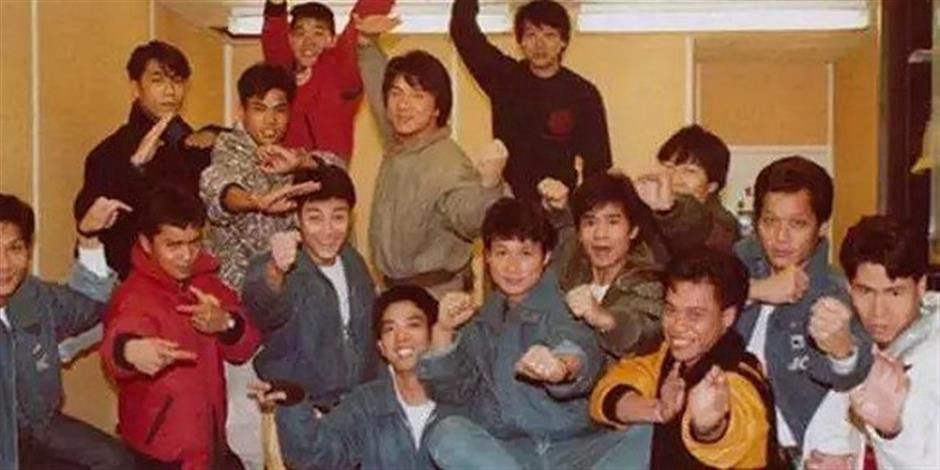
The Rule Was Simple: Never Say No
There is an old saying within the stunt business: never say no when a scene needs to be done.
For Chin, phrases such as “Yes,” “Can do” and “No problem” became part of his working vocabulary from the beginning of his career.
That attitude reflected the expectations placed on stunt performers. They were not simply asked to imitate a fight or fall. They had to create convincing physical action while meeting the demands of directors, actors, cameras and production schedules.
Chin remembers beginning as an extra and gradually accepting more demanding work.
“People pay to come to the cinema,” he said. “If we don’t put our lives on the line, we haven’t earned their ticket.”
The statement captures the mindset of a generation that saw physical commitment as part of the job.
But Chin’s later work also showed him the cost of losing that knowledge when experienced performers leave the industry.
A Missing Record of the People Who Took the Risks
After becoming president of the Hong Kong Stuntman Association in 2014, Chin began thinking more seriously about how the history of the profession could be preserved.
The problem became clear when a respected veteran stuntman died.
Chin wanted to prepare a memorial booklet documenting the man’s career. He quickly discovered that basic information was missing. There was no reliable record showing when the stuntman had entered the industry or which films he had worked on.
For a profession built around spectacular moments on screen, the people behind those moments could disappear from the historical record surprisingly quickly.
The experience convinced Chin that preserving the names and careers of veteran stunt performers had to become part of the association’s work.
Their contribution could not be measured only by famous films or memorable action scenes. Many worked without public recognition, appearing briefly on screen while carrying out the dangerous tasks required to make a production work.
Who Will Take the Next Jump?
Chin also saw another problem developing on film sets.
About a decade ago, he was directing a stunt sequence that required a performer to jump from the second floor of a building. The crew needed someone capable of carrying out the stunt, but repeated requests were met with hesitation.
Eventually, a crew member in his 40s stepped forward.
The experience left Chin thinking about what would happen as older stunt professionals retired.
“We must pass our experience to the young,” he said. “If we don’t teach them, who will jump in the future?”
That question became part of the association’s efforts to train a new generation.
Training a New Generation of Stunt Performers
The Hong Kong Stuntman Association organised its first training workshop to help young people enter the profession.
The organisers also had to confront a practical problem. Hong Kong’s film industry has limited capacity to absorb large numbers of new stunt performers, so holding the programme every year did not make sense.
The second edition did not take place until 2026.
This time, the programme received financial support from the Hong Kong Special Administrative Region government’s film development fund.
The 12 week course selected 20 candidates from almost 100 applicants. Participants trained under veteran stunt professionals in a range of disciplines, including wire work, vehicle stunts, controlled explosions, firearms and acting.
The group included people with no previous stunt experience as well as athletes who already had years of physical training behind them.
The mixture created its own challenges. Physical fitness alone was not enough. Participants had to learn timing, communication, camera awareness and the discipline required to work safely with other performers.
Trust Matters When Someone Is Hanging in the Air
Wire work provides a clear example of why stunt performance depends so heavily on teamwork.
During training exercises, participants were suspended above the ground while other members of the group controlled their safety ropes.
At that moment, the performer in the air had little control over what happened below.
Their safety depended on the people holding the ropes, following instructions and reacting correctly.
That relationship is at the heart of the exhibition’s title, Better Together. A stunt may appear to feature one performer, but the finished sequence often depends on an entire team working together without hesitation.
The audience sees the jump. The performers know about the people checking the equipment, holding the ropes, positioning the camera and standing ready to respond if something goes wrong.
Can Artificial Intelligence Replace the Stuntman?
Technology is changing film production, including the way filmmakers create action sequences.
Artificial intelligence can generate images, manipulate backgrounds and assist with visual effects. Computer generated imagery can also reduce the need to expose performers to certain risks.
But Chin believes technology cannot easily reproduce the physical reactions that make an action scene convincing.
The challenge is not simply showing two people fighting. The performers have to make the audience believe the fight is happening.
“We aren’t actually brawling in the street, but we have to make the audience believe it,” Chin said. “It has to look stylish, yet feel like real combat. That takes real skill.”
That skill comes from years of training and an understanding of movement that cannot be reduced to a digital effect.
A computer can create an image of a person falling. A trained stunt performer knows how to fall, how to react to another performer’s movement and how to sell the impact to the camera while working within carefully planned safety limits.
The Legacy Hanging Above the Exhibition
Back at Tai Kwun, the helicopter remains suspended above the exhibition floor.
It is a prop, but it also points toward an important part of Hong Kong film history. Behind decades of famous fight scenes, spectacular falls and elaborate action sequences stood performers whose names were often less familiar than those of the actors they doubled for.
Their work helped Hong Kong cinema compete internationally and gave the city a distinctive action style that influenced filmmakers and performers far beyond the territory.
Now the industry is trying to make sure the knowledge does not disappear with the generation that created it.
The young trainees learning to handle wires, vehicles, weapons and controlled explosions are not simply being taught how to perform dangerous movements. They are being taught how to work with others, trust a safety team and turn physical risk into convincing cinema.
The question for Hong Kong’s film industry is straightforward: How will it preserve the hard earned skills of its veteran stuntmen while giving the next generation enough opportunities to keep that tradition alive?