

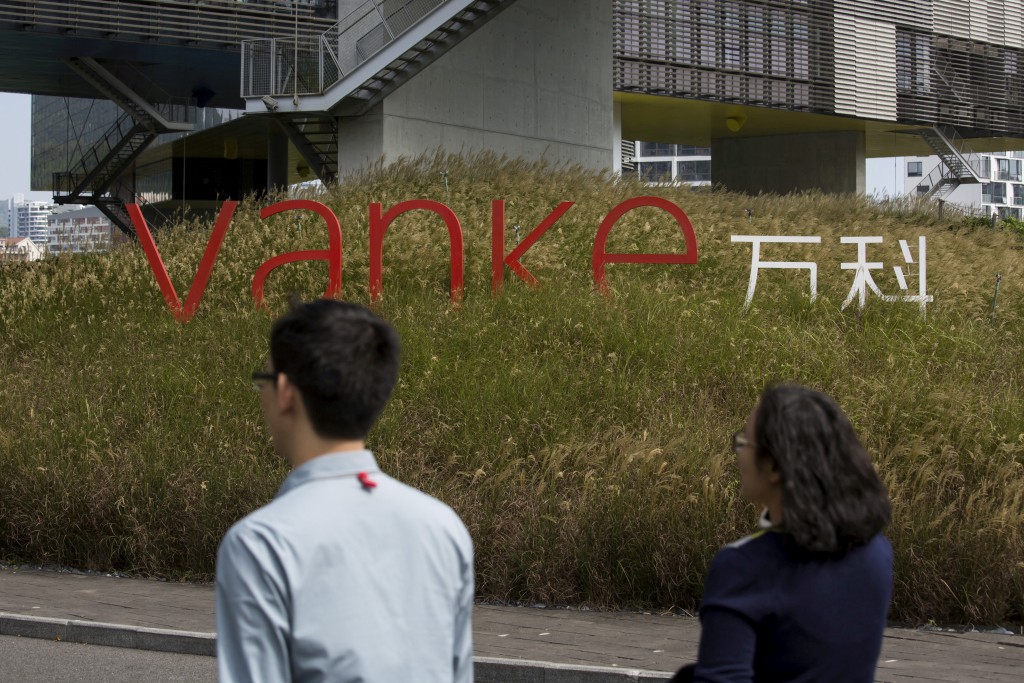
.Chinese financial regulators have asked some banks to avoid classifying overdue loans to China Vanke as non performing and to give the troubled developer more time to repay its debt, according to people familiar with the matter.
The guidance represents one of Beijing’s strongest efforts yet to prevent a default by Vanke, one of China’s largest property developers and a company closely linked to the state through its major shareholder, Shenzhen Metro.
Regulators have privately told lenders to support Vanke and avoid measures that could intensify its cash shortage, the people said. Some banks have also been asked to delay collecting interest payments owed by the developer, although the sources did not provide details on the amount involved.
The instructions were delivered as informal guidance rather than a formal public order, reflecting the sensitivity surrounding Vanke’s financial position and the wider risks facing China’s property sector.
Banks told to delay non performing loan classifications
The guidance was directed mainly at larger banks, including state owned lenders, according to the people familiar with the discussions. Reuters could not determine exactly how many banks received the instructions.
The regulators did not set a fixed period for keeping Vanke’s overdue loans outside the non performing category. One source said the treatment would depend on conditions in the property market and further discussions between lenders and Vanke.
The sources requested anonymity because they were not authorised to speak publicly about the matter.
Chinese financial regulators and Vanke did not immediately respond to requests for comment.
Under normal banking practices, lenders generally increase collection efforts when a loan becomes non performing. They may also seek additional collateral or impose other measures to protect their position. For a developer already facing pressure on cash flow, those actions can make it harder to meet other obligations.
By asking banks to delay such steps, regulators are giving Vanke additional time to manage its debt and preserve cash.
The intervention also shows the importance Beijing places on preventing a disorderly failure at Vanke. A default by a developer of its size could affect banks, bondholders, suppliers and other companies connected to the property market.

Vanke remains under pressure after record loss
Vanke has managed to avoid an official default despite the prolonged property downturn that has pushed many Chinese developers into restructuring or liquidation.
The company reported a record net loss of 88.6 billion yuan in 2025 as weak property sales reduced revenue and drained its cash resources.
The financial pressure has continued into this year.
Vanke reported a net loss of 14.95 billion yuan for the first six months of the year. Revenue fell 33 percent from a year earlier to 70.2 billion yuan.
The figures underline the challenge facing the developer as it attempts to meet debt obligations while property demand remains weak.
Vanke had total assets of close to 1 trillion yuan, making its financial condition significant for lenders and investors beyond the company itself.
The developer has also relied on support from Shenzhen Metro, its state owned major shareholder, as it works to manage its liabilities.
Shenzhen Metro provided Vanke with a 22 billion yuan credit facility last year and extended additional loans this year. The shareholder has also been involved in financing arrangements that have helped Vanke manage its debt obligations.
Vanke has used extensions on some yuan denominated bond payments to avoid defaults, with support from Shenzhen Metro.
Bank loans make up most of Vanke's debt
The scale of Vanke’s bank exposure helps explain why regulators are focusing on lenders.
At the end of June, Vanke reported total debt of 351 billion yuan. Bank loans accounted for 72 percent of that amount, while bonds represented 7 percent.
The remaining 21 percent consisted of other forms of borrowing, including loans from Shenzhen Metro, according to the company’s interim report released in August.
The large share of bank financing means that decisions by lenders could have a direct effect on Vanke’s ability to manage its liquidity.
If banks began demanding repayment, additional collateral or accelerated interest payments at the same time, the pressure on the developer could increase sharply.
The regulatory guidance therefore gives Vanke more room to manage its obligations without facing an immediate escalation from its lenders.
It also shifts some of the pressure onto banks, which must continue managing their exposure to a borrower whose financial performance has deteriorated substantially.
Beijing seeks to contain wider property risks
Vanke’s difficulties come after more than five years of weakness in China’s property market.
The sector was once one of the country’s main engines of economic growth, supporting construction, household spending, land sales and local government finances. The downturn accelerated after Beijing launched a campaign to curb excessive borrowing by developers.
The financing restrictions triggered a liquidity crisis across the sector. Several major developers later defaulted or entered restructuring processes, while falling sales made it increasingly difficult for companies to refinance existing debt.
The weakness has persisted despite a series of government measures designed to support the market.
Home prices continue to fall in many parts of China, while property investment remains under pressure. Efforts to restore confidence among homebuyers have yet to produce a broad recovery.
Beijing has also recently moved to limit presales of unfinished homes, seeking to address concerns among buyers and improve confidence in the market. The measures, however, have so far done little to reverse the decline in home prices.
Against this backdrop, authorities have increasingly focused on preventing individual corporate failures from developing into broader financial problems.
Why Vanke matters to financial markets
Vanke occupies a different position from many of the private developers that have already defaulted.
Its connection to Shenzhen Metro gives the company a direct link to a state owned shareholder. That relationship has also helped it secure additional financing as it works through its debt problems.
One source said financial authorities want to avoid a “risk event” involving a developer so closely connected to a state shareholder because of the potential damage to market confidence.
The concern extends beyond Vanke itself.
Banks hold much of the company’s outstanding debt. Bond investors have exposure to its repayment plans. Contractors and suppliers depend on payments from the developer, while homebuyers rely on construction and delivery commitments.
A disorderly default could therefore create pressure across several parts of the property and financial sectors.
That does not mean regulators can eliminate the financial risks facing Vanke. Extending repayment deadlines can provide time, but it does not by itself resolve weak property sales, declining revenue or the company’s large debt burden.
The effectiveness of the approach will depend partly on whether Vanke can improve cash generation while receiving continued support from its lenders and state owned shareholder.
Pressure remains despite regulatory support
Vanke’s latest financial results show that the company remains under significant strain even as banks receive guidance to give it more breathing room.
The developer needs to manage 351 billion yuan of debt while operating in a property market where sales and investment remain weak. Its first half revenue fell by one third from a year earlier, while its net loss reached nearly 15 billion yuan.
For banks, the immediate issue is how to handle overdue loans without worsening Vanke’s liquidity position. For regulators, the broader concern is whether a major developer can be stabilised without creating a shock for the banking system or damaging confidence in China’s financial markets.
The informal guidance gives lenders a clear signal about Beijing’s priorities, but it leaves important questions unresolved, including how long banks will defer non performing classifications and whether the property market will recover enough to improve Vanke’s finances.
For now, regulators appear focused on buying the developer time. The next test will be whether that time can translate into stronger sales, improved cash flow and a sustainable plan for reducing its debt.
Could continued bank support give Vanke enough time to stabilise its finances and avoid a wider property market shock?