

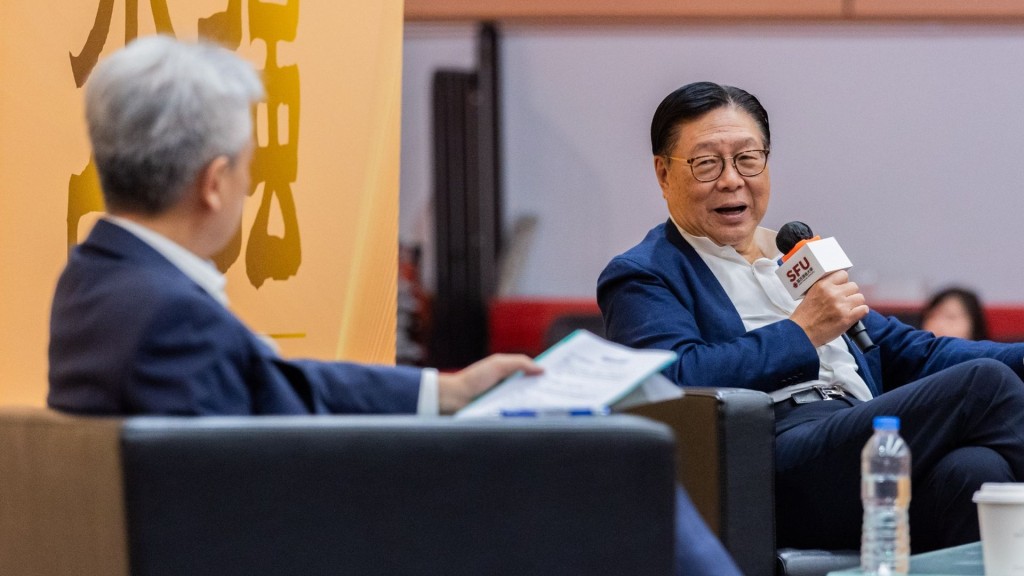
Hong Kong Trade Development Council chairman Frederick Ma led a delegation to Shaanxi from September 23 to 25, meeting senior provincial and Xi’an officials as Hong Kong and the northwestern Chinese province looked to expand cooperation in technology, finance and overseas business.
Ma met Shaanxi Communist Party secretary Zhao Yide and Xi’an Party secretary Hao Huijie during the visit. Discussions focused on turning research and technological advances into commercial opportunities, strengthening financial links between Shaanxi and Hong Kong, and helping mainland companies build operations in international markets.
The delegation’s visit came as Shaanxi continues to promote sectors including technological innovation, aerospace and the low altitude economy. Ma said these areas could complement Hong Kong’s established role as an international financial and business centre.
He described Hong Kong as a “super connector” and “super value adder” for mainland businesses seeking access to international resources.
The HKTDC, he noted, operates more than 50 offices around the world. That network gives Hong Kong based organisations direct links to overseas markets and business communities, which Ma said could help Shaanxi companies identify partners, raise capital and expand beyond mainland China.
Hong Kong positioned as a gateway for Shaanxi companies
A central theme of the visit was the growing number of Shaanxi companies looking beyond the mainland for investment, customers and business partnerships.
About a dozen companies from Shaanxi are already listed in Hong Kong, according to Ma. He said there was room for more high quality businesses from the province to use Hong Kong’s capital markets to raise funds and support international expansion.
For companies developing new technologies, access to financing can be as important as the technology itself. Research and development can require substantial investment before a product reaches commercial scale. Hong Kong’s financial market offers mainland businesses another channel for raising capital while also placing them in a city with extensive links to international investors.
Ma encouraged more Shaanxi enterprises to consider Hong Kong when planning their next stage of development.
The message reflects a broader shift in how mainland companies approach overseas expansion. Rather than simply exporting finished products, many technology businesses are increasingly establishing international supply chains, seeking overseas investment and recruiting talent across different markets.
That change was also addressed by HKTDC executive director Sophia Chong during the visit.
Chong said Hong Kong’s role as a platform for mainland companies expanding overseas had been reinforced through the government’s first five year plan and its latest Policy Address.
She said the newest wave of overseas expansion was increasingly being led by technology companies. Their international strategies now involve more than selling products abroad. Companies are also deciding where to place capital, source technology, recruit talent and build supply chains.
For businesses from a province such as Shaanxi, that can create demand for professional services and international connections that extend well beyond traditional trade.
Technology cooperation takes centre stage
The delegation visited several technology and research facilities during its stay, including the Qinchuangyuan Innovation Promotion Centre and the Shaanxi Aerospace Power Research Institute.
The group also toured technology companies in Xi’an’s high tech zone.
Those visits gave Hong Kong representatives an opportunity to examine research and industrial capabilities in sectors that Shaanxi has been developing as part of its broader technology strategy.
The delegation also attended a technology enterprise exchange conference involving Xi’an’s high tech zone and Hong Kong companies.
The event provided a platform for businesses from the two locations to discuss possible cooperation and identify areas where their strengths could complement one another.
Technology commercialisation was one of the main areas under discussion.
Universities and research institutes can produce new technologies, but turning laboratory research into commercial products requires investment, management expertise, market access and connections with companies capable of bringing products to customers.
Hong Kong can offer some of those links through its financial sector, professional services firms and international business network.
Shaanxi, meanwhile, has built significant research and industrial capabilities in aerospace and other technology intensive fields.
The two sides are therefore looking at cooperation that goes beyond conventional imports and exports.
Aerospace and low altitude economy among growth areas
Ma specifically pointed to Shaanxi’s progress in technological innovation, aerospace and the low altitude economy.
Shaanxi has a long association with China's aerospace and aviation industries, while Xi’an is home to universities, research institutions and companies working across a range of engineering and technology fields.
The low altitude economy has also become an area of growing interest in China, covering activities involving aircraft and other equipment operating at relatively low altitudes. These can include logistics, aerial services, tourism and emerging applications involving unmanned aircraft.
For Hong Kong businesses, developments in these sectors can create opportunities for investment, professional services and international market connections.
For Shaanxi companies, Hong Kong offers access to a financial centre and a network of international contacts.
The potential relationship is therefore not limited to one industry.
It can involve financing, research partnerships, commercialisation, professional services, recruitment and overseas expansion.
Investment links already run through Hong Kong
Hong Kong is already Shaanxi’s largest source of foreign investment, according to the information provided during the visit.
That existing relationship gives the two sides a substantial base from which to develop new areas of cooperation.
Trade and investment links have gradually expanded into other fields, including innovation and the exchange of talent.
The expansion matters because companies entering foreign markets often need more than funding. They need people who understand local regulations, customers, suppliers and business practices. They may also need assistance with setting up overseas offices, protecting intellectual property, arranging financing and finding international partners.
Hong Kong’s professional services sector can provide some of these functions.
The HKTDC also has a role in connecting businesses with markets outside Asia. Its network of more than 50 offices gives companies access to local market information and potential commercial contacts.
For Shaanxi companies considering internationalisation, that network can reduce some of the distance between a mainland headquarters and overseas markets.
From trade links to wider business cooperation
The visit reflects a broader effort to deepen economic connections between Hong Kong and mainland regions as companies adjust to changing international markets.
Traditional trade remains important, but technology businesses increasingly operate across multiple jurisdictions. A company may conduct research in one location, manufacture components in another, raise money through an international financial centre and sell its products across several overseas markets.
That model requires connections between finance, technology, talent and supply chains.
Chong said this was changing the nature of mainland companies’ overseas expansion. Instead of focusing solely on exporting products, technology firms are increasingly making decisions about the global allocation of capital, technology, people and production networks.
Hong Kong’s role, according to the HKTDC, is to provide a platform that brings those elements together.
The Shaanxi visit placed that approach in a regional context. Shaanxi has technology companies and research institutions seeking opportunities beyond their home market, while Hong Kong has financial and international business infrastructure that can support those ambitions.
The next stage will depend on whether discussions between officials, research institutions and companies lead to specific projects.
For businesses, that could mean new investment deals, joint research, fundraising activity, technology partnerships or overseas expansion plans.
For universities and research organisations, cooperation could involve talent exchanges and the commercial development of research.
For Hong Kong, stronger ties with Shaanxi could also bring more mainland companies into the city's financial and professional services ecosystem.
The visit therefore put technology and internationalisation at the centre of a relationship that already has a strong investment foundation. With Shaanxi companies looking for new markets and Hong Kong offering financial resources and international connections, what specific projects should businesses from the two sides pursue next?