

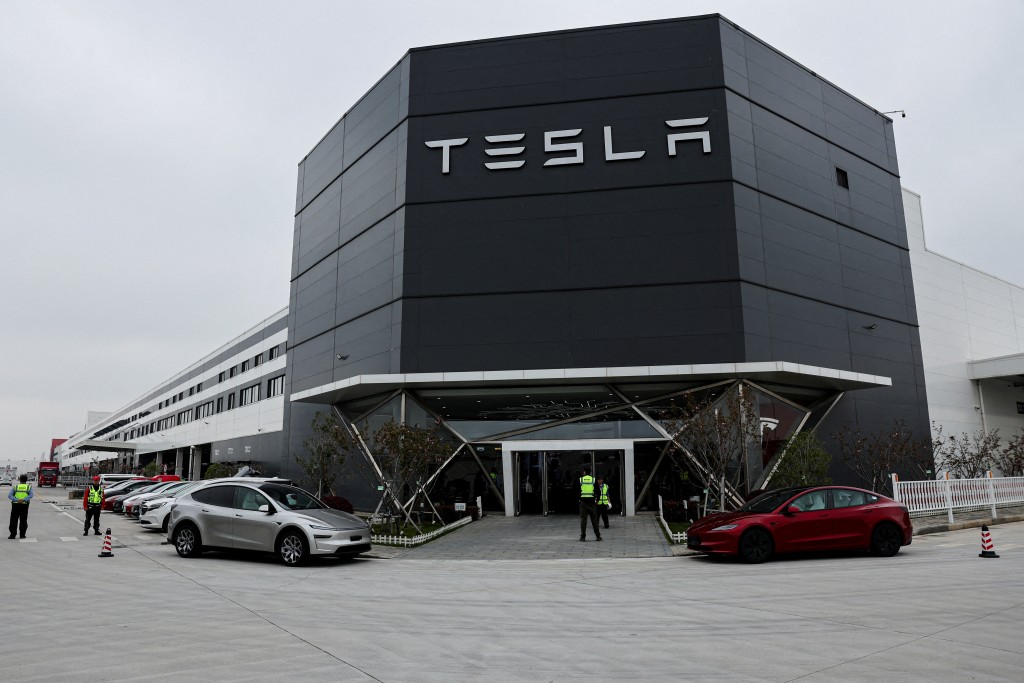
Tesla delivered 486,532 vehicles in the third quarter, beating Wall Street expectations as a recovery in European sales helped offset weaker demand in the United States and China. The result gives the electric vehicle maker a stronger finish to the quarter, although production fell short of analyst forecasts and the company still faces questions over the direction of its core car business.
Analysts tracked by Visible Alpha had expected Tesla to deliver an average of 456,896 vehicles between July and September. The company exceeded that estimate by nearly 30,000 vehicles, providing a boost for investors after a difficult year for the automaker.
Tesla shares rose almost 2 percent in premarket trading following the release. The stock, however, had already fallen more than 21 percent through the previous market close this year, reflecting broader investor concerns about vehicle demand and the company’s changing business priorities.
European Demand Provides a Lift
The strongest improvement came from Europe, where Tesla had struggled during the previous year. Registrations across the European Union rose by roughly two thirds through August compared with the same period a year earlier.
Tesla’s recovery was particularly visible in France. The Model Y became the country’s best selling vehicle across all categories, marking the first time a Tesla model had reached the top of France’s overall sales rankings.
The European rebound helped compensate for weaker conditions in Tesla’s two largest markets, the United States and China. In the US, the company has faced the loss of tax incentives that previously supported electric vehicle purchases. China, meanwhile, remains one of the world’s most competitive electric vehicle markets, with domestic manufacturers continuing to challenge Tesla across several price and vehicle segments.
Tesla’s Shanghai operation also showed signs of stronger overseas demand. Exports from the factory nearly doubled during July and August, according to the figures provided, suggesting that the plant was shipping more vehicles into international markets as European demand improved.
The recovery matters because Europe had been one of the regions where Tesla’s sales suffered most sharply during the previous year. The company also faced public controversy surrounding Chief Executive Elon Musk’s political activity, which analysts and market observers had linked to weaker consumer sentiment toward the brand in parts of Europe.

Tesla Faces Another Annual Sales Test
The latest delivery figure raises the possibility that Tesla’s vehicle business could be approaching a period of stabilization after two consecutive years of declining annual sales.
The company still has work to do before that becomes clear. Tesla must deliver at least 311,448 vehicles during the fourth quarter to avoid recording a third consecutive annual decline in deliveries.
That target puts additional attention on the final three months of the year, particularly as the company balances established models with its broader push into autonomous driving, artificial intelligence and robotics.
Demand appeared relatively strong entering the third quarter. Tesla Chief Financial Officer Vaibhav Taneja said in July that the company had exited the second quarter with its largest order backlog since 2023.
The statement offered investors an indication that orders were building despite the broader pressure on Tesla’s vehicle sales. The third quarter delivery result now provides some evidence that demand improved in several markets, although the company will need sustained sales growth to reverse the longer term decline in annual deliveries.
Production Trails Analyst Expectations
Tesla’s delivery figures were stronger than expected, but production told a different story.
The company produced 464,391 vehicles during the third quarter, well below the analyst estimate of 486,761 vehicles. The gap between production and deliveries means Tesla delivered more vehicles than it produced during the period, drawing on vehicles already available in inventory.
The production figure will be closely watched as the company prepares for the final quarter of the year. A sustained difference between production and deliveries can affect inventory levels and may influence how the company manages manufacturing and logistics across its global network.
Tesla has not only been dealing with changes in consumer demand. It is also attempting to reshape the company’s identity around technologies that extend beyond conventional electric vehicle manufacturing.

Musk Shifts Focus Beyond Electric Cars
Investors have increasingly looked beyond Tesla’s quarterly vehicle delivery numbers as Musk places greater emphasis on artificial intelligence, autonomous driving, humanoid robots and energy products.
One of the most closely watched areas is Tesla’s robotaxi programme. The service now operates in Texas and Florida without a safety supervisor inside the vehicle, representing a further step in the company’s push toward autonomous transportation.
Tesla also expanded its robotaxi operation in Austin last month by adding the purpose built Cybercab to the service. The vehicle was designed specifically for autonomous transportation rather than being another adaptation of Tesla’s existing consumer models.
The company has also been working to expand access to its Full Self Driving software in Europe.
Analysts expect the gradual rollout of FSD across the region to provide another potential source of demand. The software has now been approved in eight European countries, giving Tesla additional opportunities to offer autonomous driving features to customers as regulatory approvals expand.
Delivery Numbers Remain Important
Despite the company’s growing focus on robotics and autonomous driving, vehicle deliveries remain a key measure of Tesla’s financial performance and consumer demand.
The third quarter figures provide a mixed picture. Deliveries clearly exceeded Wall Street expectations, while European sales recovered strongly and exports from Shanghai increased. At the same time, Tesla’s production number fell below expectations, and the company still needs to clear a specific delivery threshold in the fourth quarter to prevent another annual decline.
The figures also show how dependent Tesla’s results can be on regional market conditions. Stronger European sales helped offset pressure in the United States and China, but maintaining that balance will require continued demand across several markets rather than a short term rebound in one region.
For Tesla, the fourth quarter will therefore carry more than the usual significance. Delivering at least 311,448 vehicles would allow the company to avoid a third consecutive annual fall in deliveries, while stronger production and sustained demand would provide a clearer indication of whether the car business is stabilizing.
At the same time, Tesla is asking investors to look further ahead toward robotaxis, Full Self Driving, humanoid robots and energy technology. The company’s latest delivery report shows that its traditional vehicle business still matters, even as its strategy moves into new territory.
With the final quarter now underway, will Tesla turn this stronger delivery performance into a sustained recovery in annual vehicle sales?