


The benchmark US 10 year Treasury yield moved close to 5 percent on Monday as investors prepared for the Federal Reserve’s two day policy meeting, with stronger inflation and rising oil prices reinforcing expectations that the central bank will raise interest rates.
The yield on 10 year Treasury notes reached 4.983 percent, rising 0.84 basis points during the session and bringing the closely watched benchmark within striking distance of the 5 percent threshold. The move reflects growing pressure on US borrowing costs as financial markets reassess the outlook for inflation and Federal Reserve policy.
The latest inflation figures added to those concerns. US consumer prices accelerated in August, according to data released on Friday, strengthening expectations that Federal Reserve officials will respond with another rate increase as inflation remains well above the central bank’s 2 percent annual target.
For investors, the combination of persistent price pressures, solid employment growth and higher energy costs has created a difficult backdrop for the bond market.
Tom di Galoma, managing director at Mischler Financial, said the latest consumer price report was “probably the nail in the coffin” for expectations of a rate increase at this week’s meeting.
Markets price in a higher interest rate
Fed funds futures traders were assigning an 89 percent probability to a rate increase when the market opened on Monday. The expected decision is due at the conclusion of the Federal Reserve’s two day meeting on Wednesday.
Investors are not simply watching the rate decision itself. They are also looking for clues about what policymakers expect to do next.
Particular attention will fall on the Federal Reserve’s updated interest rate projections, commonly known as the dot plot. The projections could indicate whether some policymakers expect another increase before the end of the year.
The last quarterly projections, released following the Federal Reserve’s June meeting, showed that nine officials expected at least one additional rate increase by the end of the year.
A further increase would keep borrowing costs elevated for households, businesses and governments and could extend the pressure already affecting interest sensitive parts of the US economy.
The two year Treasury note is especially sensitive to expectations for Federal Reserve policy because its yield tends to move closely with forecasts for short term interest rates. Its yield rose 0.54 basis points on Monday to 4.649 percent.
The 10 year Treasury yield, meanwhile, continued moving towards the psychologically important 5 percent mark.

Oil prices add to inflation concerns
Energy markets have added another layer of uncertainty.
Oil prices rose more than 3 percent on Monday following new strikes against Saudi Arabian energy infrastructure and attacks on ships in the Middle East. The developments raised fresh concerns about disruptions to energy supplies at a time when investors are already watching inflation closely.
Higher oil prices can affect the wider economy through fuel, transportation and production costs. If those increases persist, businesses may face higher expenses and consumers may pay more for goods and services.
That could make it harder for inflation to return to the Federal Reserve’s 2 percent target.
The situation also creates a difficult policy calculation for central bankers. Higher interest rates can reduce demand and help control inflation, but they can also slow economic activity. If energy prices rise because of supply disruptions rather than strong consumer demand, monetary policy has less direct influence over the initial cause of the increase.
Investors therefore face the possibility that inflation could remain elevated even if economic growth begins to weaken.
Strong employment keeps pressure on the Fed
The US labour market is another factor supporting expectations for higher rates.
Employers added 162,000 jobs last month, according to the figures cited by investors. The continued pace of hiring suggests that the economy retains enough strength to withstand higher borrowing costs, at least for now.
A strong employment market can also support household spending because people with jobs and steady incomes are more likely to continue spending.
For the Federal Reserve, however, persistent labour market strength can complicate the fight against inflation. Strong demand can give businesses more room to raise prices, while wage growth and continued hiring can keep economic activity from slowing as quickly as policymakers might want.
The latest jobs data therefore reinforced the view among traders that the central bank still has work to do.
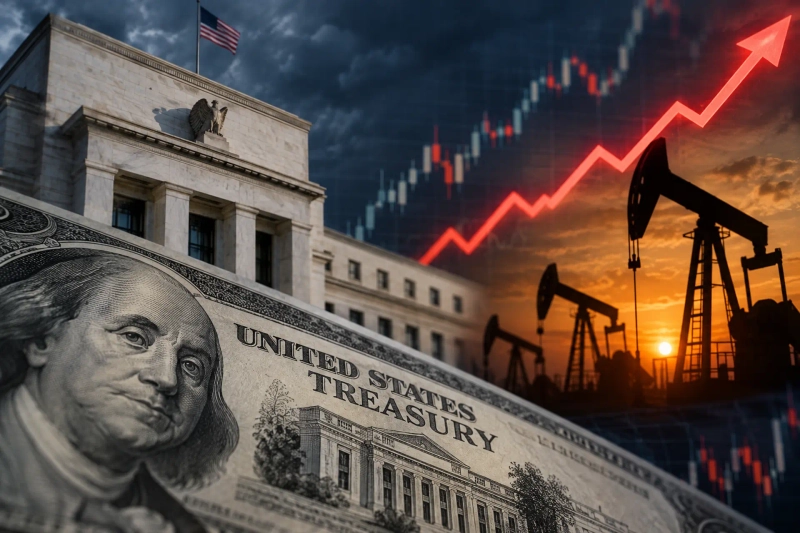
Why the 5 percent Treasury yield matters
The 5 percent level has become an important reference point for financial markets because Treasury yields influence borrowing costs throughout the economy.
The 10 year Treasury note is used as a benchmark for mortgages, corporate borrowing and many other forms of long term debt. When its yield rises, the cost of borrowing can increase across a broad range of financial products.
Housing is one of the clearest examples.
Higher mortgage rates have already kept activity in the US housing market subdued. Potential buyers face larger monthly payments, while existing homeowners with low mortgage rates may have little incentive to sell and take on a new loan at a much higher rate.
Other parts of the economy have proved more resilient. Technology companies and other growth sectors have continued to attract investor attention, even as borrowing costs have risen.
A sustained move above 5 percent would therefore give markets another test of how much economic and corporate strength can withstand higher long term interest rates.
Government borrowing adds pressure
Interest rate expectations are only part of the story behind the rise in Treasury yields.
The US government continues to issue large quantities of debt, while companies are also raising money in the bond market. Increased supply can put pressure on bond prices when investors demand higher returns to absorb additional debt.
The country’s long term fiscal position has also become a growing concern among bond market participants.
Di Galoma pointed to the size of the US budget deficit and the continued expansion of government debt as factors contributing to the rise in yields.
“The budget and the deficit and the overall makeup of our debt continues to grow,” he said.
The concern is straightforward. The more money the government needs to borrow, the greater the amount of Treasury securities that investors must absorb.
If demand does not keep pace with supply, Treasury yields may need to rise to attract buyers.
Treasury auctions will provide another test
Demand for longer dated US government debt will receive another test this week.
The US Treasury is scheduled to sell US$13 billion in 20 year bonds on Tuesday. Investors will examine the auction closely for evidence of how much demand exists for longer maturity government securities at current yields.
Another important sale is scheduled for Thursday, when the Treasury plans to offer US$19 billion in 10 year Treasury Inflation Protected Securities.
These securities provide investors with protection against inflation because their principal value adjusts according to changes in consumer prices.
Strong demand at the auctions could ease some concerns about the ability of the market to absorb the government’s growing debt issuance. Weak demand, on the other hand, could add further pressure to Treasury yields.
Investors await the Fed’s next signal
The Federal Reserve’s decision on Wednesday will give investors more information about the immediate direction of US monetary policy, but the accompanying projections may matter just as much.
Markets will look for any indication that officials expect another rate increase later this year. They will also examine the central bank’s assessment of inflation, economic growth and employment.
The approach of the 10 year yield towards 5 percent shows how several forces are now converging in the bond market. Inflation remains above the Federal Reserve’s target, oil prices are rising, employment remains strong, government borrowing is expanding and investors are demanding higher returns on longer term debt.
The consequences extend far beyond the Treasury market. Higher government bond yields can affect mortgage rates, corporate financing, investment decisions and household spending.
With the 10 year Treasury yield already at 4.983 percent, investors are now watching one question closely: Can the US economy and equity markets continue to absorb borrowing costs if the benchmark 10 year yield breaks above 5 percent?