

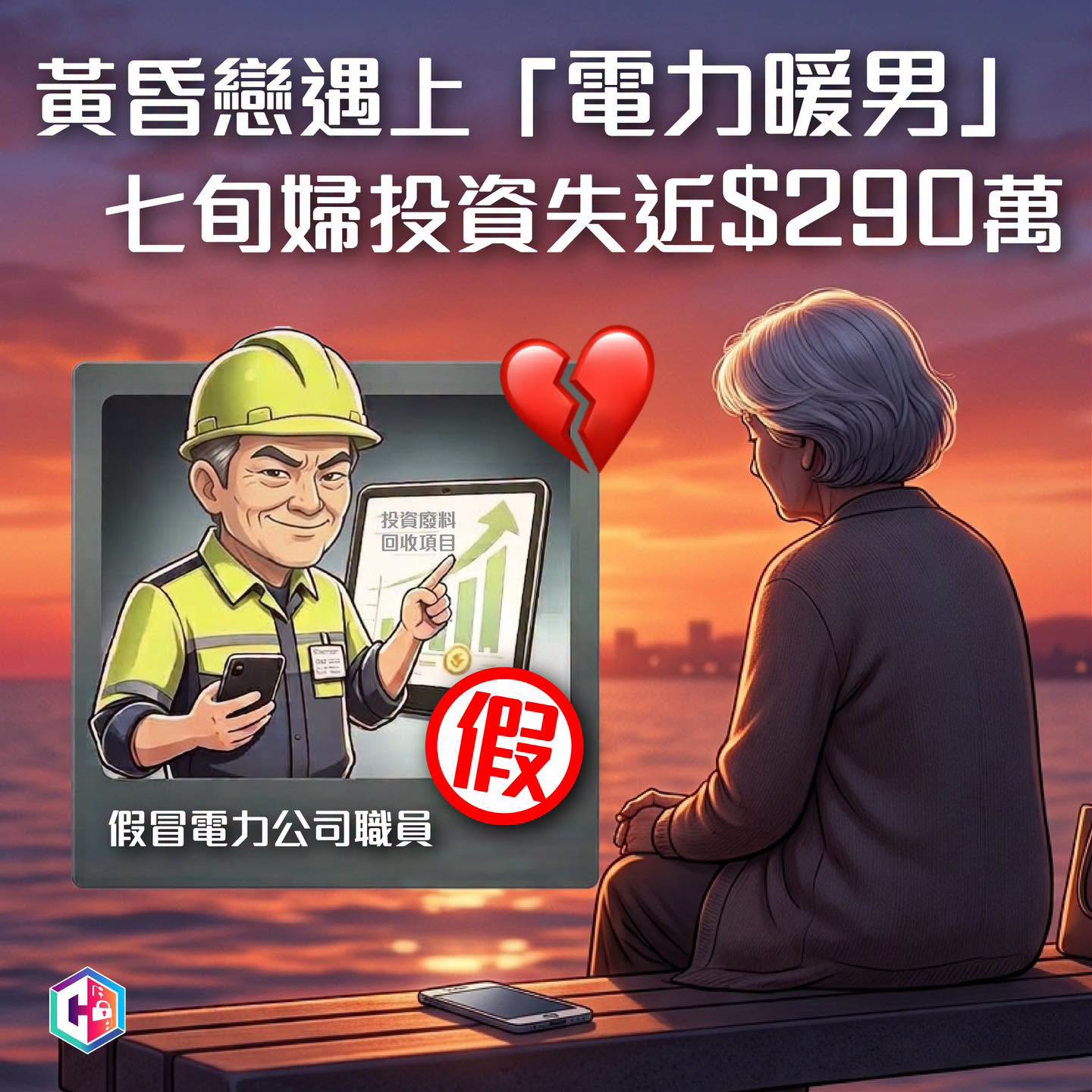
A 71 year old retired woman lost nearly HK$2.9 million after an online romance developed into a sophisticated investment scam, with the fraudster persuading her to transfer money through 17 separate transactions.
The woman met a man on Facebook who claimed to be 60 years old and said he worked for a power company, according to a CyberDefender post published by the Hong Kong Police Force. The pair never met in person, but the man gradually built a relationship with her through regular messages and expressions of care.
After establishing the online relationship, he introduced her to what he described as an investment opportunity linked to a waste recycling project in Singapore. He promised that the investment would generate guaranteed returns.
The woman was then persuaded to download an investment application that appeared to show her money growing. An individual posing as an online customer service representative guided her through the registration process and instructed her to make deposits.
The displayed account balance continued to increase, giving the victim the impression that the investment was performing as promised. When she attempted to withdraw her money, however, the supposed customer service representative refused to process the request and gave her different reasons for why the funds could not be released.
Online relationship became gateway to investment fraud
The case began with what appeared to be an ordinary social media connection. The man contacted the woman through Facebook and maintained regular communication with her.
His approach was gradual rather than an immediate request for money. According to police, he used daily messages to show concern and attention, eventually developing an online romantic relationship with the woman.
That relationship created the trust the fraudster later used to introduce the investment scheme.
He told her about a supposed waste recycling project in Singapore and presented it as an opportunity capable of delivering guaranteed profits. The promise of predictable returns gave the investment an appearance of legitimacy while the relationship made the proposition more convincing.
The woman then downloaded an application presented as an investment platform.
An alleged customer service representative communicated with her through the platform and assisted with opening the account and making deposits. The application showed the value of her investment increasing, reinforcing the impression that her money was generating returns.
The apparent profits were not enough to allow her to recover her funds.
When she attempted to withdraw the money, the supposed customer service representative refused to release it, according to the police account.
Fraudster invented arrest to demand more money
The deception escalated after the woman encountered difficulties withdrawing her funds.
The man later told her that he had been arrested in Singapore on money laundering charges. He claimed that he needed money for bail and legal expenses and persuaded the woman to send funds to help him.
He also instructed her to visit a cryptocurrency exchange in person and deposit cash into a designated electronic wallet.
The requests transformed the original investment scam into a series of increasingly urgent demands for money. Each new appeal was presented as an emergency that required immediate financial assistance.
The woman continued transferring money despite being unable to withdraw the funds she believed she had invested.
Police said she eventually made 17 separate transactions, transferring close to HK$2.9 million in total.
Savings depleted as borrowing continued
The financial impact extended beyond the woman's own savings.
As the transfers continued, she exhausted her available funds and began borrowing money from friends. She also borrowed from a finance company to meet further demands from the scammers.
The fraud therefore continued even after her personal savings had been depleted.
The investment application had continued to display an increasing balance, while the online suitor continued to provide explanations and requests that encouraged her to send more money.
The woman did not discover that she had been deceived through the investment platform itself. Instead, the fraud came to light after debt collectors began contacting her over the money she had borrowed.
Facing growing financial pressure, she eventually asked her daughter for assistance.
That conversation led the family to recognize that the investment and the online relationship were part of a scam.
Police report wider rise in romance scams
The case was shared by CyberDefender, the Hong Kong Police Force's cybersecurity platform, as an example of the financial damage that can result from online romance scams.
Police said they received 18 reports of online romance scams during the week covered by the post. The reported losses from those cases were close to HK$7.8 million.
The figures show that the reported HK$2.9 million loss in this single case represented a substantial portion of the total amount lost across the 18 reports during that period.
Romance scams often begin with personal communication rather than an immediate financial request. A fraudster may first establish contact through social media or another online platform, maintain regular conversations and build an emotional connection before introducing a financial problem or investment opportunity.
In this case, the relationship and the investment scheme were closely connected. The alleged suitor first established trust before directing the woman towards the fraudulent investment platform.
The subsequent claims about his arrest and legal expenses created another reason for her to continue sending money.
Fake investment platforms can make losses harder to spot
The woman's experience also shows how a fraudulent investment application can reinforce a scam by displaying information that appears convincing to the victim.
According to police, the application showed her funds increasing steadily. A rising balance can make a person believe that an investment is generating profits even when no genuine investment activity is taking place.
The problem became apparent only when she attempted to withdraw her money.
Instead of receiving the funds, she encountered excuses from the supposed customer service representative. By that stage, she had already transferred a substantial amount of money and had also taken on debt.
The use of cryptocurrency added another channel through which the fraudsters could direct payments. The woman was instructed to visit a cryptocurrency exchange and deposit cash into an electronic wallet specified by the scammer.
Police warn against guaranteed returns
The case carries several clear warning signs. The woman had never met the man in person, yet he eventually persuaded her to make large financial transfers. He also introduced an investment promising guaranteed returns and directed her towards an application controlled by people presented as customer service representatives.
The later demands for bail and legal fees added further pressure.
Hong Kong police's CyberDefender has publicised the case as part of its efforts to raise awareness about online fraud. The reported figures also show that romance scams can result in losses running into millions of Hong Kong dollars.
For people approached online with investment opportunities, particularly those involving guaranteed returns, an inability to withdraw funds should be treated as a serious warning sign rather than a reason to make another payment.
Have you or someone you know encountered a similar online investment or romance scam? Reporting suspicious activity early can help prevent further financial losses.