

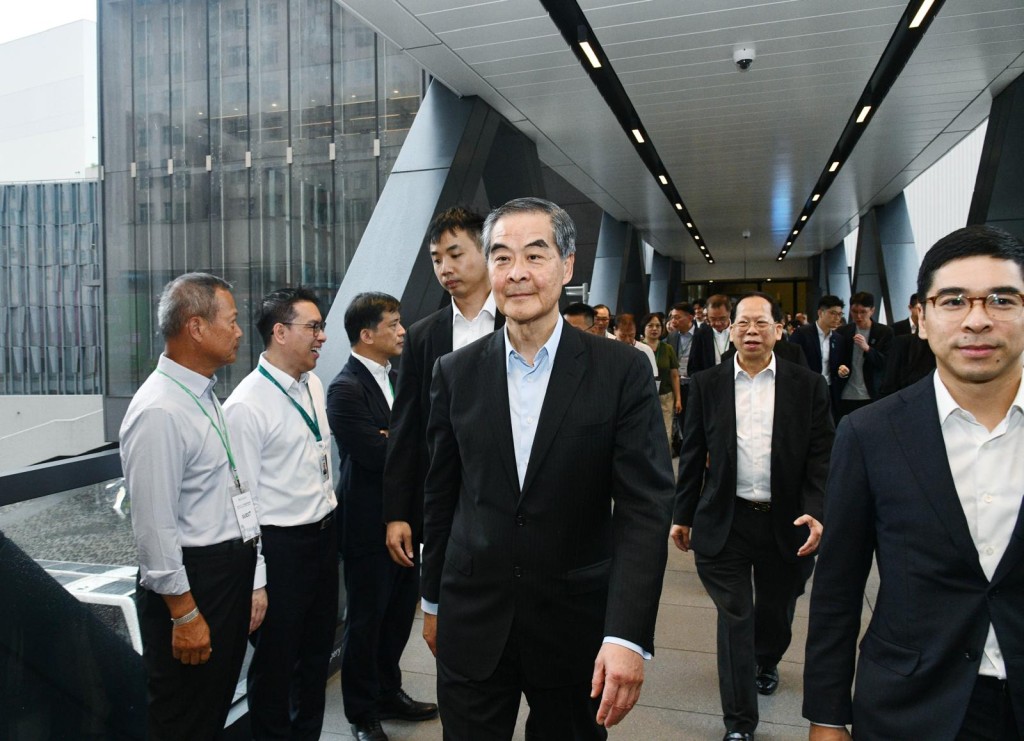
A new footbridge connecting the East Kowloon Cultural Centre, Amoy Plaza and Kowloon Bay MTR station has opened in a project that former Hong Kong chief executive Leung Chun ying described as a rare example of government, business and residents working towards a shared goal.
Leung, now vice chairman of the National Committee of the Chinese People’s Political Consultative Conference, attended the inauguration ceremony on Monday and said the project had its roots in a practical problem faced by residents of Amoy Gardens during his time as chief executive.
Residents travelling towards the MTR station had to make their way up and down along the existing routes, creating an inconvenience that Leung said prompted him to propose a direct footbridge connection. Years later, the completed structure has become a major new link between transport, culture and retail facilities in the Kowloon Bay area.
Speaking at the ceremony, Leung described the project as a “win win win” arrangement involving the government, the business sector and the local community.
A long discussed connection finally opens
The footbridge was developed as a community investment project by Hang Lung Properties, providing a direct pedestrian connection between several major destinations in the area.
For residents, the bridge is expected to make daily journeys more convenient. For businesses, the new connection offers a potential increase in pedestrian traffic around Amoy Plaza. The East Kowloon Cultural Centre could also benefit from easier access as audiences attend performances and other activities at the venue.
Leung said the project demonstrated how an idea raised in response to residents’ needs could eventually become a broader community development project when different parties were willing to contribute.
The opening also comes as Amoy Plaza seeks to strengthen its appeal to younger consumers and respond to changing shopping habits in Hong Kong.
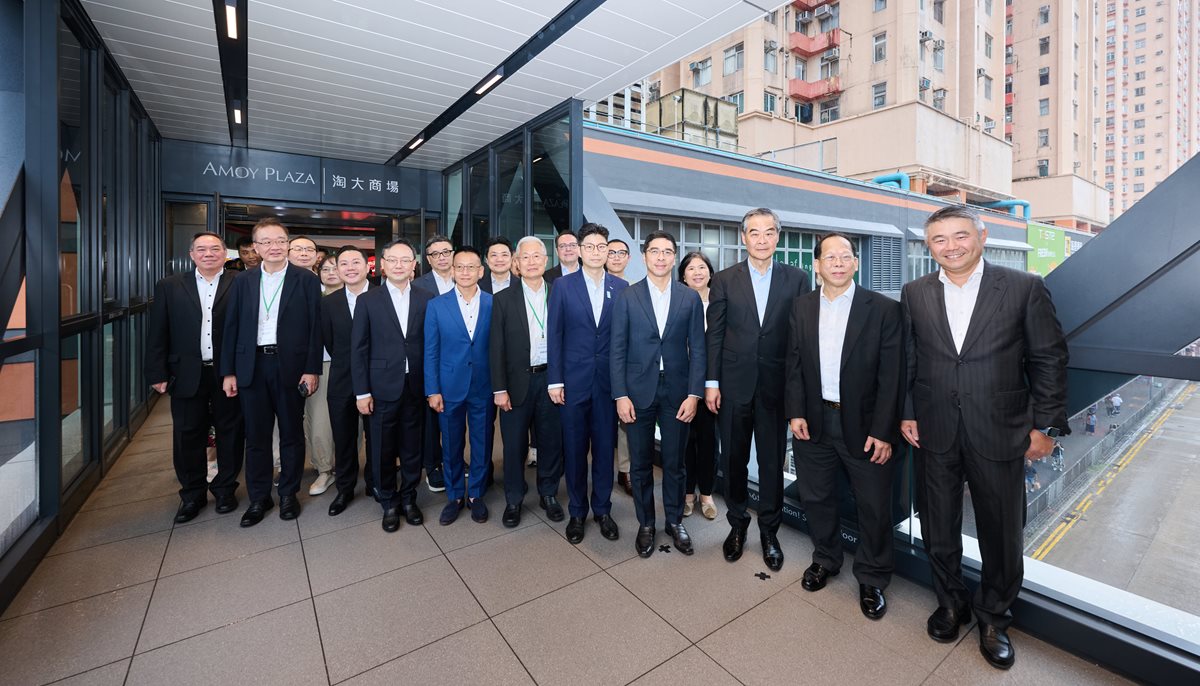
Hang Lung links new brands to improved access
Adriel Chan Wenbwo, chair of Hang Lung and Hang Lung Properties, said the arrival of new youth oriented brands at Amoy Plaza had coincided with the completion of the footbridge.
The connection gives shoppers a more direct route between the MTR station, the cultural centre and the shopping mall, potentially making it easier for visitors to include Amoy Plaza in their trips to the neighbourhood.
Chan also said Hang Lung planned to refurbish its malls as the company seeks to create more comfortable shopping environments and encourage consumers to continue spending in Hong Kong.
The strategy reflects a wider effort by shopping centre operators to adapt to changes in consumer behaviour. Hong Kong retailers have faced stronger competition from shopping destinations outside the city, particularly as residents increasingly travel to mainland cities for leisure and shopping.
For Amoy Plaza, improving accessibility is therefore only one part of the response. The mall is also seeking to refresh its tenant mix and physical environment.
Retail occupancy remains high
Weber Lo Wai pak, chief executive of Hang Lung, said the company had maintained a presence in Ngau Tau Kok and Kowloon Bay for more than five decades.
He said the company hoped the new footbridge would bring more people into the surrounding neighbourhood and increase pedestrian traffic for local businesses.
Lo pointed to the East Kowloon Cultural Centre as another potential source of visitors. Performances at the venue have been attracting a younger audience, he said, creating an opportunity for nearby businesses to benefit from increased activity before and after events.
The development comes at a time when Hong Kong retailers are looking for ways to attract consumers who might otherwise spend their money outside the city.
Lo said Amoy Plaza currently had an occupancy rate of between 98 percent and 99 percent. He also expected tenants to generate stronger business as visitor numbers increase, potentially giving retailers greater capacity to absorb higher rents following tenant adjustments.
The comments point to a relatively strong level of demand for retail space at the mall, even as the wider sector continues to deal with changing spending patterns.
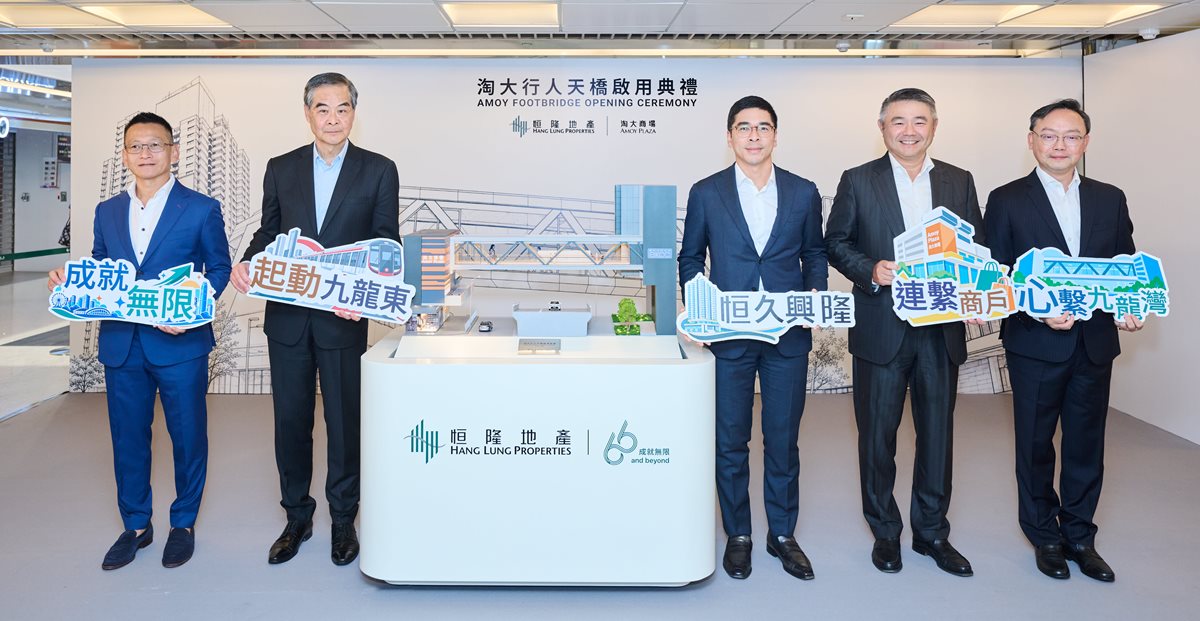
New tenants planned for Causeway Bay
Hang Lung is also preparing to introduce more new shop tenants at its properties in Causeway Bay during the fourth quarter.
The company expects Hong Kong’s retail market to perform better over the next 18 months, although the outlook remains closely tied to consumer confidence, visitor numbers and competition from shopping destinations in the Greater Bay Area and elsewhere.
For property owners, attracting the right tenants has become increasingly important. Consumers have more choices than before, and shopping centres are competing not only on products but also on dining, entertainment, cultural experiences and convenience.
The Amoy Plaza footbridge fits into that broader strategy by connecting different parts of the neighbourhood and making the journey between transport, retail and cultural facilities easier.
A project with wider implications
The significance of the new bridge extends beyond the structure itself. Its opening illustrates how infrastructure serving a residential community can also become part of a wider commercial and cultural strategy.
Amoy Gardens residents gain a more convenient connection to the MTR station, while visitors to the East Kowloon Cultural Centre receive easier access to the surrounding shopping district. Amoy Plaza, meanwhile, gains another route through which potential customers can enter the mall.
That combination is particularly relevant as Hong Kong works to retain local consumer spending and strengthen neighbourhood commercial districts.
The project also places greater attention on Kowloon Bay and Ngau Tau Kok, areas that have undergone substantial commercial and cultural development over the years. The presence of established retail facilities, transport links and cultural venues gives the district a mix of uses that can support higher pedestrian activity.
The immediate test for the project will be whether the increased connectivity translates into sustained visitor numbers and stronger business for retailers. A busy footbridge alone does not guarantee higher sales, but easier movement between transport, culture and shopping can give businesses a stronger chance of capturing passing customers.
For Hang Lung, the strategy now extends beyond completing the bridge. The company is planning further mall refurbishment, introducing new tenants and preparing for additional retail changes in Causeway Bay.
For residents, the most immediate benefit is simpler: a shorter and more convenient route through the neighbourhood.
With the footbridge now open and new retail plans taking shape, will improved connectivity help turn Kowloon Bay into a stronger destination for both local residents and younger shoppers?