


Hong Kong lawmaker Scott Leung Man kwong expects the number of subdivided flats registered under the government’s Basic Housing Unit regime to increase in the coming months, as landlords move closer to the deadline for complying with the new housing standards.
More than 34,000 subdivided units had been registered under the scheme by the end of the first round early bird offer on August 31. Leung, deputy chairman of the Legislative Council’s Panel on Housing, said the figure should not be regarded as a final indication of participation because some owners are likely to wait until enforcement draws nearer before completing the registration process.
The first round offer was designed to encourage landlords to come forward early. Owners who submitted grace period applications by the August 31 deadline were exempted from paying the application fee for recognition as a Basic Housing Unit, commonly referred to as a BHU.
Speaking on a radio programme on Tuesday, Leung said discussions with subdivided flat owners suggested that many units would require only relatively minor work before they could meet the government’s requirements.
Many units may need only limited improvements
According to Leung, some landlords told him that their flats could be brought into compliance through straightforward alterations rather than extensive rebuilding.
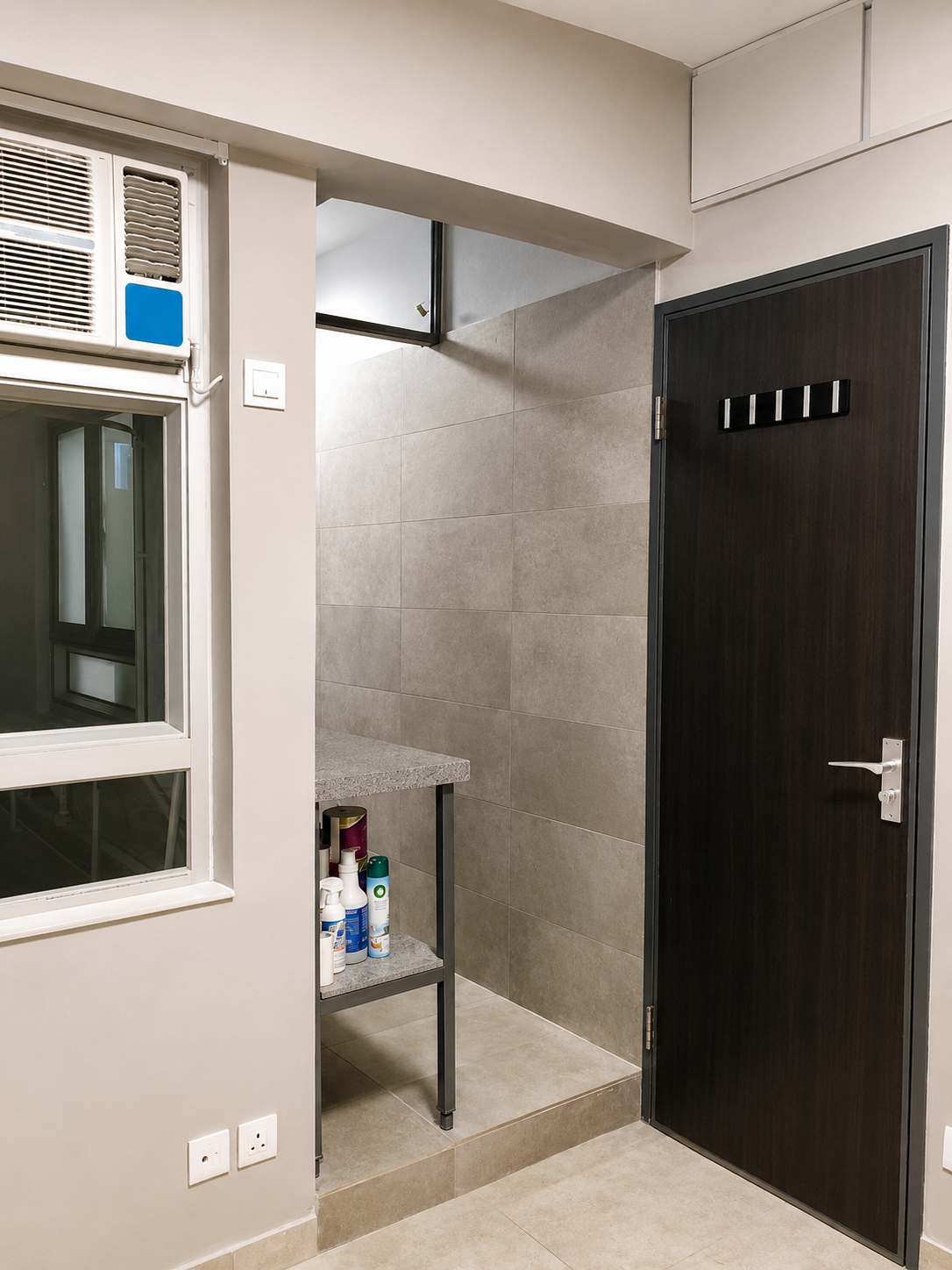
Examples include replacing entrance doors and improving ventilation. Such work can still involve time, coordination and expense, but it is less demanding than a full structural renovation.
The situation is different for older or poorly configured subdivided flats that require major alterations. In those cases, owners may have to make a commercial decision about whether the cost of renovation is justified by the rental income they can continue to receive from the property.
That calculation could become particularly important for landlords operating older buildings, where the physical condition of the premises may make compliance more complicated. A property that requires substantial construction work could face higher costs and longer periods during which rooms cannot be rented.
Leung said the government’s enforcement timetable would probably become an important factor in landlords’ decisions. Some owners who have delayed registration may begin the process once they see that the authorities are moving closer to active enforcement.
The expected increase in registrations therefore does not necessarily mean that all applications will result in immediate certification. Registration and compliance can involve several stages, particularly for units where improvements are required before the property can satisfy the relevant standards.

Rent pressures could emerge in the short term
Leung also acknowledged concerns that the new requirements could affect rents.
Landlords facing renovation, installation or administrative costs may attempt to recover some of those expenses through higher rents. That could place additional pressure on tenants who already depend on subdivided accommodation because of the high cost of conventional private housing.
The lawmaker said any increase was likely to be temporary, with market conditions expected to adjust over time.
He also pointed to the expansion of public housing supply as a factor that could help ease pressure in the longer term. If more households can move into public housing, demand for some forms of subdivided accommodation could eventually fall, reducing the ability of landlords to pass compliance costs directly on to tenants.
The immediate effect, however, may be more complicated. Renovation costs are not evenly distributed among landlords, and the condition of individual buildings varies widely. Some owners may face relatively small expenses, while others could be confronted with substantial construction bills.
For tenants, any resulting rent increase could add to an already difficult housing situation, particularly for those with limited alternatives.
Elderly landlords face additional difficulties
Leung also drew attention to another group that could face obstacles under the registration system: elderly landlords who themselves live in subdivided units.
For some of these owners, the challenge may not simply be financial. Completing applications, arranging renovation work and understanding technical requirements can be difficult for people who are less familiar with administrative or construction procedures.
Leung said support services were available to help owners deal with the registration and compliance process. The availability of assistance could become increasingly important as more landlords begin applications and encounter practical problems.
The government’s aim is not simply to increase the number of registered units. The broader objective is to improve the standard of subdivided accommodation and gradually phase out housing that fails to meet basic requirements.
That means the number of applications alone will not provide a complete picture of the scheme’s progress. The pace at which units actually achieve recognition will be another important measure.
Operators say technical procedures remain a hurdle
Jerry Ho, vice chairman of the Hong Kong Basic Housing Units Operators Association, said some individual landlords still have only a limited understanding of the policy and its technical requirements.
Speaking on the same radio programme, Ho said certain owners struggled with practical procedures, including arrangements for installing separate water and electricity meters.
For landlords without experience in building works or utility installations, these requirements can be difficult to handle without professional assistance. As a result, some owners have turned to one stop service providers that can coordinate different parts of the application and renovation process.
The reliance on such services reflects a wider challenge facing the policy. Even when landlords are willing to comply, they may not have the technical knowledge required to determine what needs to be changed, how the work should be carried out or which procedures must be completed before an application can move forward.
That could help explain why the number of certified units has so far lagged behind the eventual target.
Ho nevertheless expressed confidence that the government’s goal of recognising 80,000 units can eventually be achieved.
Certification expected to accelerate
The government has set the target of 80,000 Basic Housing Units as part of its effort to move away from substandard subdivided accommodation.
Ho said the current certification figure remains relatively low, but he expects the pace to increase as landlords, operators and service providers become more familiar with the requirements.
The first phase of the scheme has given owners an opportunity to submit applications under more favourable conditions. With that early bird period now over, attention is shifting toward enforcement and the practical steps landlords must take to bring individual flats into compliance.
The experience of the first group of applicants could also influence those who have yet to register. If owners find that relatively minor alterations are sufficient in many cases, more landlords may decide to proceed. Conversely, properties requiring expensive structural work could remain a more difficult category.
For the authorities, the challenge will be to maintain pressure for compliance while ensuring that landlords and tenants can manage the transition without creating unnecessary disruption.
The next stage will therefore be measured not simply by how many owners register, but by how many units complete the process and meet the required standards.
With the first round of fee exemptions now closed, landlords who have delayed action face a clearer choice: assess their properties, understand the work required and begin the registration process, or risk waiting until enforcement leaves them with fewer options.