

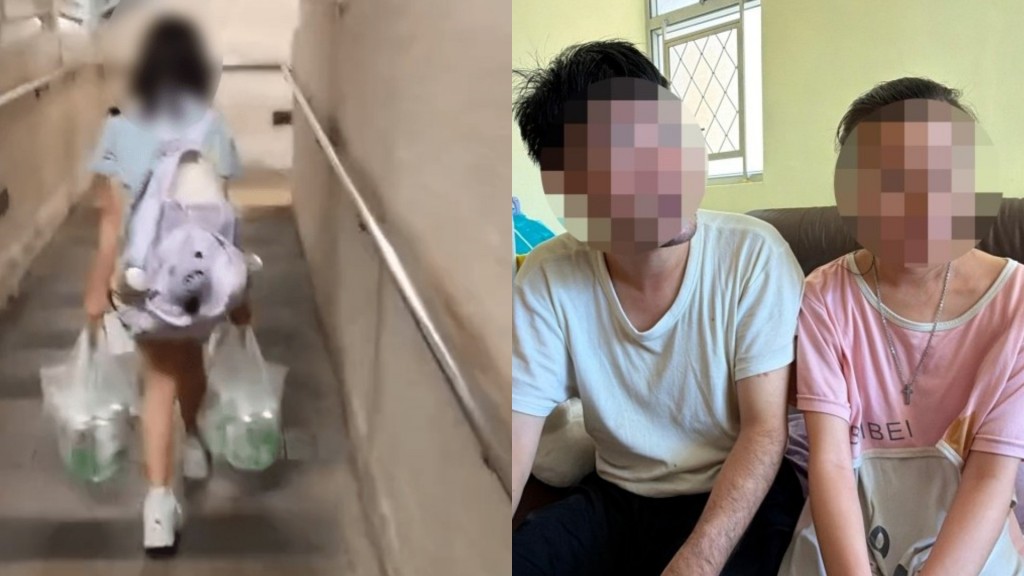
A 10 year old girl carrying two heavy bags of beer at Fu Tai Estate in Tuen Mun has prompted renewed concern over the physical and psychological pressure placed on children at home. The incident, captured in a video that quickly circulated online, drew widespread public criticism and raised questions about when demanding children to perform household tasks crosses the line into harmful treatment.
Maple Lau Siu kwan, director of Against Child Abuse, addressed the issue on a radio programme on Thursday, warning parents and caregivers against making children carry loads that their developing bodies cannot safely handle.
Lau said the public reaction reflected growing awareness of child safety and noted that there appeared to be broad agreement that the load carried by the girl was far beyond what would normally be considered appropriate for a child.
Health Risks From Excessive Weight
Lau referred to Department of Health guidance stating that a child's load should generally not exceed 10 percent of their body weight. The recommendation is intended to reduce unnecessary strain on children's developing bones, muscles and other parts of the body.
For a child, even an activity that appears ordinary for an adult can create significantly more physical stress. Carrying a load that is too heavy can affect posture, balance and movement, while repeated exposure may place continued strain on the developing body.
Lau stressed that the concern does not depend solely on whether an incident happens once or forms part of a regular routine. An excessive load can pose a risk regardless of whether a child is asked to carry it on one occasion or repeatedly over time.
The incident at Fu Tai Estate has therefore raised a broader issue than the particular task shown in the video. Parents may expect children to help with shopping, housework or other responsibilities as part of learning independence, but those expectations must take account of a child's age and physical ability.
The difference between reasonable household responsibility and an unreasonable physical demand can be significant.

Abuse Is Not Limited to Visible Injuries
The discussion also focused on an issue that can be overlooked when assessing possible child abuse: not every form of harm leaves a visible mark.
Lau explained that child abuse generally falls into four broad categories: physical abuse, neglect, sexual abuse and psychological abuse. Physical injuries such as bruises or cuts may make abuse easier to identify, but psychological harm can occur without any obvious external sign.
A child may experience significant distress when adults repeatedly place demands on them that are unreasonable or beyond their ability to cope. Excessive pressure, fear or emotional stress can affect a child's sense of security and wellbeing even when there is no physical injury.
That distinction is particularly important in situations where adults describe difficult tasks as discipline, training or an attempt to teach children responsibility.
Expecting children to contribute to family life is not inherently harmful. Age appropriate chores can help children develop practical skills and a sense of responsibility. Problems arise when expectations ignore a child's physical limitations or place unreasonable emotional pressure on them.
The case has consequently prompted discussion about how parents can distinguish between teaching independence and imposing demands that may put a child at risk.
Public Concern Reflects Wider Child Safety Awareness
The viral video also demonstrated how quickly concerns about children's treatment can attract public attention. Once the footage circulated online, members of the public questioned whether the girl's workload was appropriate for her age and whether adults should have intervened.
Lau welcomed the increased public awareness surrounding child safety. She said the reaction showed that people were becoming more attentive to situations in which children may be exposed to excessive physical or psychological demands.
Public concern, however, is not a substitute for professional assessment. Individual cases can involve different circumstances, family relationships and levels of risk, making it important for trained professionals to assess what has happened and determine what support may be needed.
That is particularly relevant when a child does not have an obvious physical injury.
Professionals Urged to Put Children's Safety First
Lau also addressed the responsibilities of professionals who encounter suspected cases of child abuse. Under mandatory reporting requirements, relevant professionals are expected to consider the welfare and safety of children when concerns arise.
Rather than focusing solely on whether a particular incident meets a specific legal or statutory threshold, Lau advised professionals to seek guidance from the Social Welfare Department or appropriate social service organisations.
That approach can allow concerns to be assessed by people with the relevant expertise instead of leaving individual professionals to make difficult judgments without support.
The message is also relevant to people who encounter children outside the home, including teachers, social workers and other professionals who may notice changes in a child's behaviour or circumstances.
A lack of visible injury should not automatically end the conversation when there are other signs that a child may be under unreasonable pressure.
Parents Encouraged to Use Positive Discipline
Lau urged parents to consider positive discipline and nonviolent communication when dealing with children. Community parenting courses can provide parents with practical guidance on setting boundaries, managing difficult behaviour and communicating expectations without relying on physical punishment or excessive pressure.
Positive discipline does not mean that children should have no responsibilities or rules. Parents can still establish clear expectations while making sure those expectations are appropriate for the child's age, abilities and emotional development.
For physical tasks, parents should also consider the child's size and strength before asking them to lift or carry objects. The Department of Health's 10 percent guideline provides a practical reference point, but the specific circumstances of a task also matter.
A load that is manageable for one child may be inappropriate for another, depending on body weight, physical development and the way the object must be carried.
The controversy surrounding the girl at Fu Tai Estate has therefore moved beyond a single viral video. It has opened a wider discussion about how adults define discipline, responsibility and independence when raising children.
Parents and caregivers can teach children useful life skills without exposing them to excessive physical loads or unnecessary emotional stress. When there is uncertainty about whether a demand is appropriate, seeking advice from child welfare professionals can help protect the child before a situation causes lasting harm.
How should parents balance teaching children responsibility with protecting their physical and emotional wellbeing?