

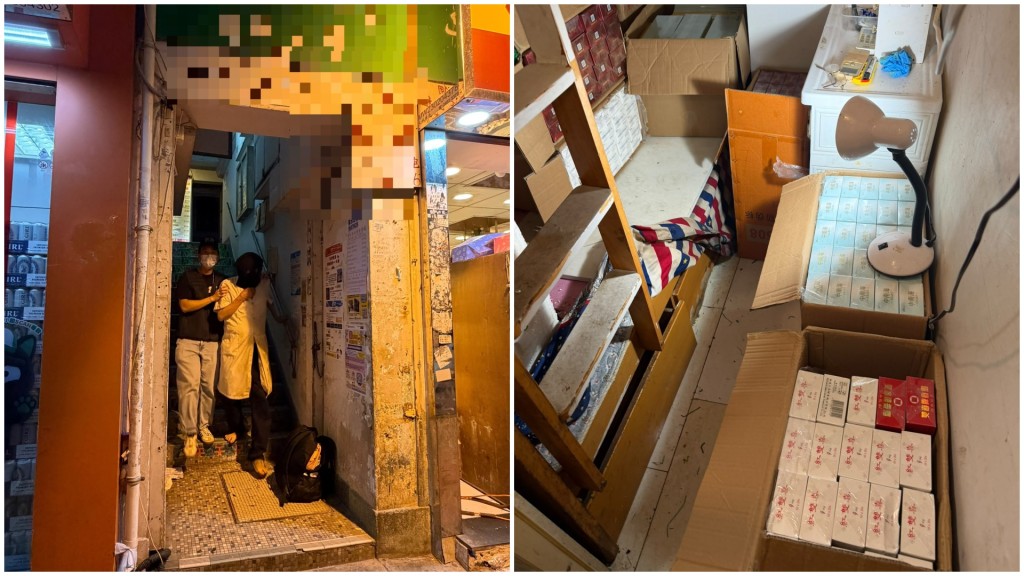
Hong Kong Customs officers have shut down a suspected illicit cigarette outlet in Tsuen Wan that allegedly operated from inside a traditional Chinese medicine clinic, seizing about 100,000 duty unpaid cigarettes worth an estimated HK$440,000.
A 78 year old man identified as the person in charge of the premises was arrested during the enforcement operation on Thursday after undercover officers carried out a test purchase at the clinic. Customs said the seized cigarettes represented a potential duty loss of about HK$320,000.
The suspect has since been formally charged in connection with the case.
Undercover Officers Posed as Customers
The investigation was conducted by officers from the Revenue Crimes Investigation Bureau, who began looking into the premises after identifying activities they considered suspicious.
Customs officers went undercover on Thursday afternoon, entering the clinic and posing as customers. During the test purchase, the operator allegedly offered cigarettes at prices substantially below the statutory tobacco duty rate.
The transaction gave officers the opportunity to move against the suspected operation.
Customs officers entered the premises, arrested the man and searched the unit. They subsequently found a large quantity of cigarettes believed to be duty unpaid and seized the stock for further investigation.
The operation demonstrated how illicit tobacco sellers can use apparently legitimate businesses to mask commercial activity. In this case, the premises presented itself as a traditional Chinese medicine clinic while allegedly being used to store and distribute cigarettes.
Customs did not indicate that the medical services themselves were involved in the alleged cigarette operation. The investigation remains focused on the suspected sale and distribution of duty unpaid tobacco.
Cigarettes Stored Inside Older Tenement Building
Initial inquiries found that the suspected operation was not simply using a conventional shopfront.
According to Customs, the group had rented a subdivided unit inside an older tenement building without a lift. The premises was allegedly used as a storage and distribution point for the cigarettes.
The location presented practical challenges for enforcement officers and reduced the visibility of the operation from the street. Investigators believe the premises was deliberately selected to make detection more difficult.
Older tenement buildings can contain subdivided units, narrow entrances and limited access points, creating conditions that can make commercial activity less visible than it would be in a conventional retail outlet. Customs said the use of the clinic as a front added another layer of concealment.
The seized stock suggests the premises was serving more than an occasional retail function. With approximately 100,000 cigarettes recovered, investigators believe the unit was being used as both a retail outlet and a distribution point serving customers in the Tsuen Wan area.
Customs described the raid as the removal of an active illicit cigarette retail and distribution operation.
Low Price Sales Trigger Legal Presumption
The case also comes as Hong Kong continues to tighten enforcement against the sale and distribution of duty unpaid tobacco.
Customs reminded members of the public that amendments to the Dutiable Commodities Ordinance introduced a statutory presumption concerning cigarettes sold at prices below the statutory tobacco duty rate. The amended provisions took effect in September last year.
Under the amended law, cigarettes sold below the statutory tobacco duty rate are presumed to be illicit unless the seller can establish that the required duty has been paid.
The provision is intended to address one of the warning signs frequently associated with illicit tobacco sales, namely unusually low prices.
For consumers, a cheap price does not necessarily mean a legitimate bargain. Cigarettes sold without the required duty can form part of an illegal supply chain, while sellers and other people involved in handling the products can face criminal prosecution.
Customs therefore urged members of the public to avoid purchasing cigarettes from suspicious sources, particularly when prices appear significantly lower than those charged through legitimate retail channels.
Serious Penalties for Duty Unpaid Tobacco
Hong Kong law treats the purchase, sale, possession and handling of duty unpaid cigarettes as criminal offences under the Dutiable Commodities Ordinance.
Those convicted can face a maximum fine of HK$2 million and imprisonment for up to seven years.
The potential penalties apply to people involved in unlawful tobacco activities and reflect the financial consequences of evading tobacco duty. In the Tsuen Wan case, Customs estimated that the seized cigarettes carried a duty potential of approximately HK$320,000.
The difference between the estimated market value of HK$440,000 and the potential duty of HK$320,000 illustrates the financial scale of the seizure. Authorities said the cigarettes were being sold at prices below the statutory tobacco duty rate, one of the factors that led undercover officers to intervene.
The arrest also shows the role of targeted investigations rather than relying solely on visible street level enforcement. Officers first identified suspicious activity, conducted an undercover purchase and then carried out the seizure and arrest.
Investigation Continues After Seizure
The arrest of the 78 year old person in charge does not necessarily mark the end of the investigation. Customs may conduct follow up inquiries to establish how the goods entered the territory, who supplied them and whether other people or premises were involved.
The seized cigarettes will form part of the evidence in the case, while investigators may examine records and other material connected with the premises and its suspected activities.
The use of a subdivided unit inside an older building also points to the importance of intelligence led enforcement. Illicit tobacco operations do not always operate from obvious shops or warehouses. They can be concealed behind ordinary businesses or within residential and mixed use buildings.
For Customs, the challenge is not only removing cigarettes from circulation but also identifying the wider supply networks responsible for bringing duty unpaid tobacco into the market.
The department's warning to consumers remains straightforward. Cigarettes offered at unusually low prices may carry legal consequences for sellers and other people involved in the transaction, particularly under the amended rules governing low cost tobacco.
With the suspected Tsuen Wan outlet now shut down and about 100,000 cigarettes seized, investigators have removed a significant quantity of suspected duty unpaid tobacco from the local supply chain. The case will now proceed through the legal process, with the charges against the arrested man to be dealt with by the courts.
Would you be willing to report suspicious cigarette sales to the authorities rather than risk becoming part of an illegal tobacco supply chain?