

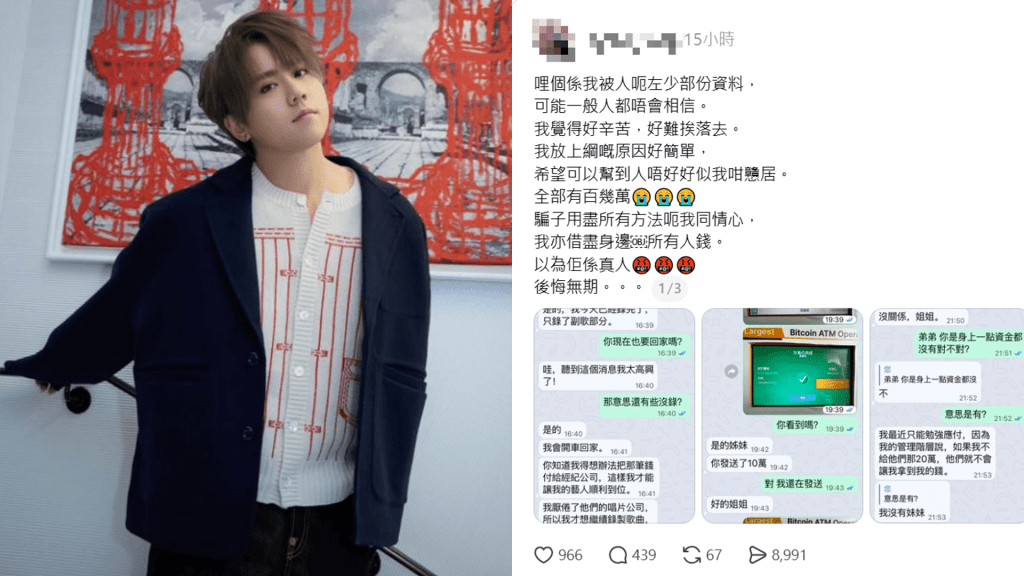
A Hong Kong fan of MIRROR singer Keung To says she lost more than HK$1 million after allegedly being drawn into an online scam by a person claiming to be the popular Cantopop star.
The woman said the person repeatedly asked her for money, offering a series of explanations for why he urgently needed financial help. According to her account, the alleged scammer claimed that his assets had been frozen and that he needed cash to settle a termination fee, fund new music recordings and pay for other personal expenses, including refuelling his car.
The woman eventually made multiple payments, including transfers in Bitcoin, with some individual transactions reportedly reaching HK$100,000. She also said she borrowed money from friends and relatives because she believed she was helping someone she admired.
By the time she began to suspect something was wrong, she had already transferred more than HK$1 million. Even then, the person allegedly continued asking her for additional money.
She has since reported the case to police and shared her experience online in an effort to warn other fans about the risks of celebrity impersonation scams.
Repeated Requests for Money
According to the fan's account, the relationship developed around her belief that she was communicating with Keung To, a member of Hong Kong boy band MIRROR.
The alleged scammer reportedly used financial difficulties to explain why he needed repeated payments. The requests did not involve one single transaction. Instead, the woman described a series of demands that gradually increased the amount of money she was willing to provide.
One explanation allegedly involved frozen assets. The person claimed he could not access his own funds and therefore needed financial assistance. Other requests were linked to a supposed termination fee and expenses connected to recording music.
At another point, the fan said she was asked to provide money for fuel for a car.
Such requests can appear more believable when they arrive gradually rather than as a single demand for a large sum. A person may initially send a relatively small payment, only to be presented with another explanation and another urgent request later.
In this case, however, the payments eventually reached a scale that left the woman more than HK$1 million out of pocket, according to her account.
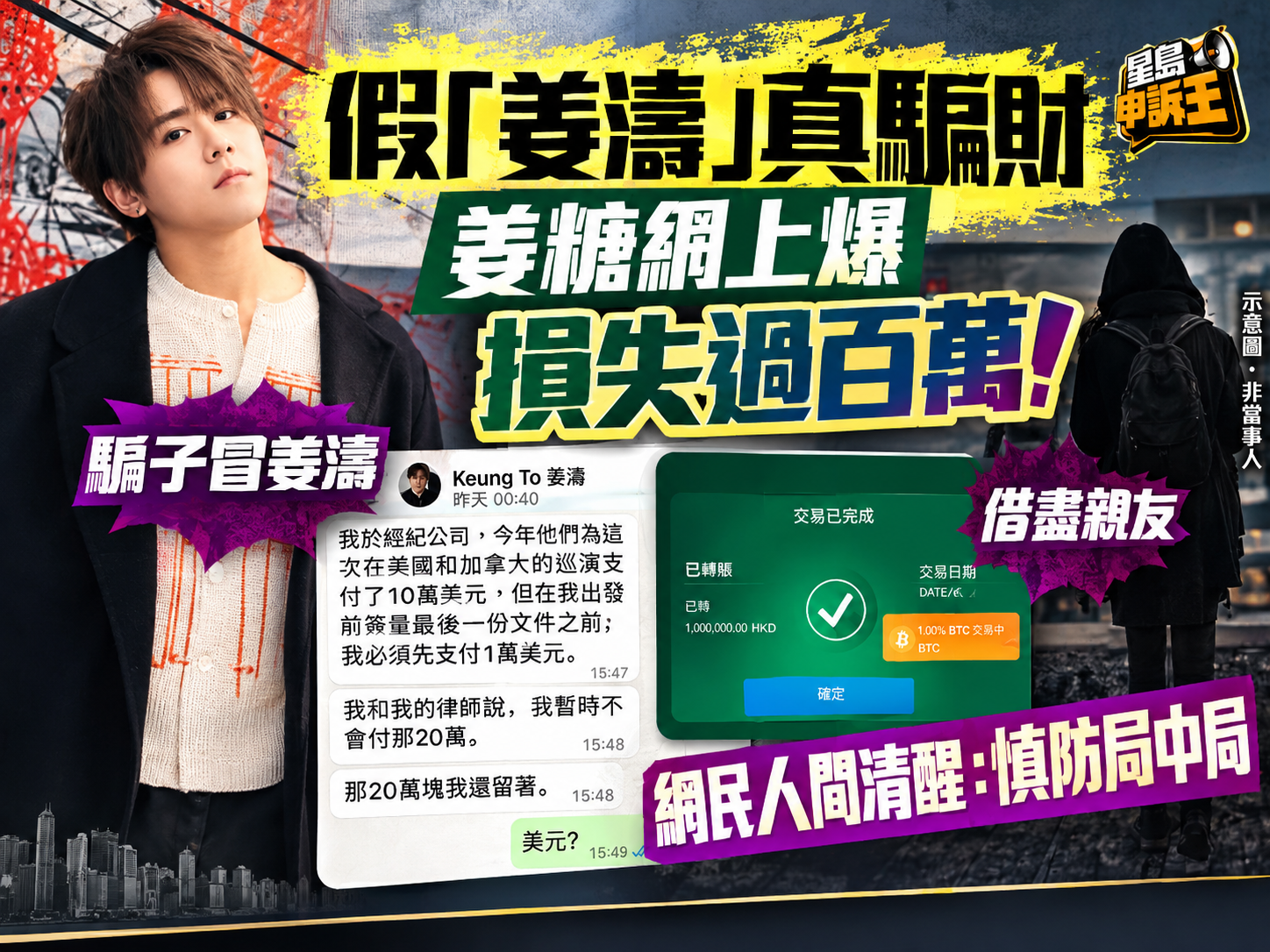
Bitcoin Payments Among Transactions
The fan said she made several payments using Bitcoin. Some individual transfers were reportedly worth as much as HK$100,000.
Cryptocurrency transactions can create additional difficulties for victims of fraud because payments are generally not handled in the same way as ordinary bank transfers. Once cryptocurrency has been transferred to another wallet, recovering the funds can be extremely difficult.
The woman said she went as far as borrowing money from friends and relatives to continue helping the person she believed was Keung To.
That detail illustrates how an online confidence scam can move beyond a victim's own available savings. Once trust has been established, emotional pressure can persuade a victim to seek money elsewhere, particularly when the person making the request appears to be someone they admire or care about.
The fan's account suggests that the alleged impersonator maintained the story even as the financial demands continued.
Realisation Came After More Than HK$1 Million
The woman said she only realised that she had been deceived after sending more than HK$1 million.
Even after that point, she claimed, the person continued requesting additional payments.
That continued demand appears to have been the point at which the woman began questioning the identity and circumstances of the person with whom she had been communicating.
Celebrity impersonation scams often rely on the perceived relationship between a fan and a public figure. Fans may already have a strong emotional connection to a singer, actor or other celebrity before any direct communication begins. An online contact claiming to be that person can exploit that existing trust.
The alleged scam described by the woman also involved highly personal explanations for financial requests. Rather than simply asking for money, the person allegedly provided reasons intended to explain why the money was needed urgently.
For a victim, each individual request can therefore appear to have a specific purpose. The larger financial loss becomes apparent only after multiple payments have been made.
Online Users Question the Claims
The woman's account has also triggered debate among people who saw the story online.
Some users questioned whether the screenshots shared as evidence of the alleged conversations were genuine. Others went further, warning that the post itself could potentially be part of another scam.
The suggestion has been described by some commenters as a possible "scam within a scam", in which a story about an alleged celebrity impersonation could be used to attract people who are emotionally invested in the case and potentially expose them to another fraudulent scheme.
Those comments do not establish that the woman's account is false. They do, however, demonstrate the difficulty of assessing online evidence without independent verification.
Screenshots alone may not establish who was behind an account, whether a conversation took place exactly as presented or whether an account actually belonged to the celebrity whose name or identity was being used.
For that reason, people who encounter similar claims online should be cautious before sending money, sharing personal information or continuing private conversations with accounts claiming to belong to public figures.
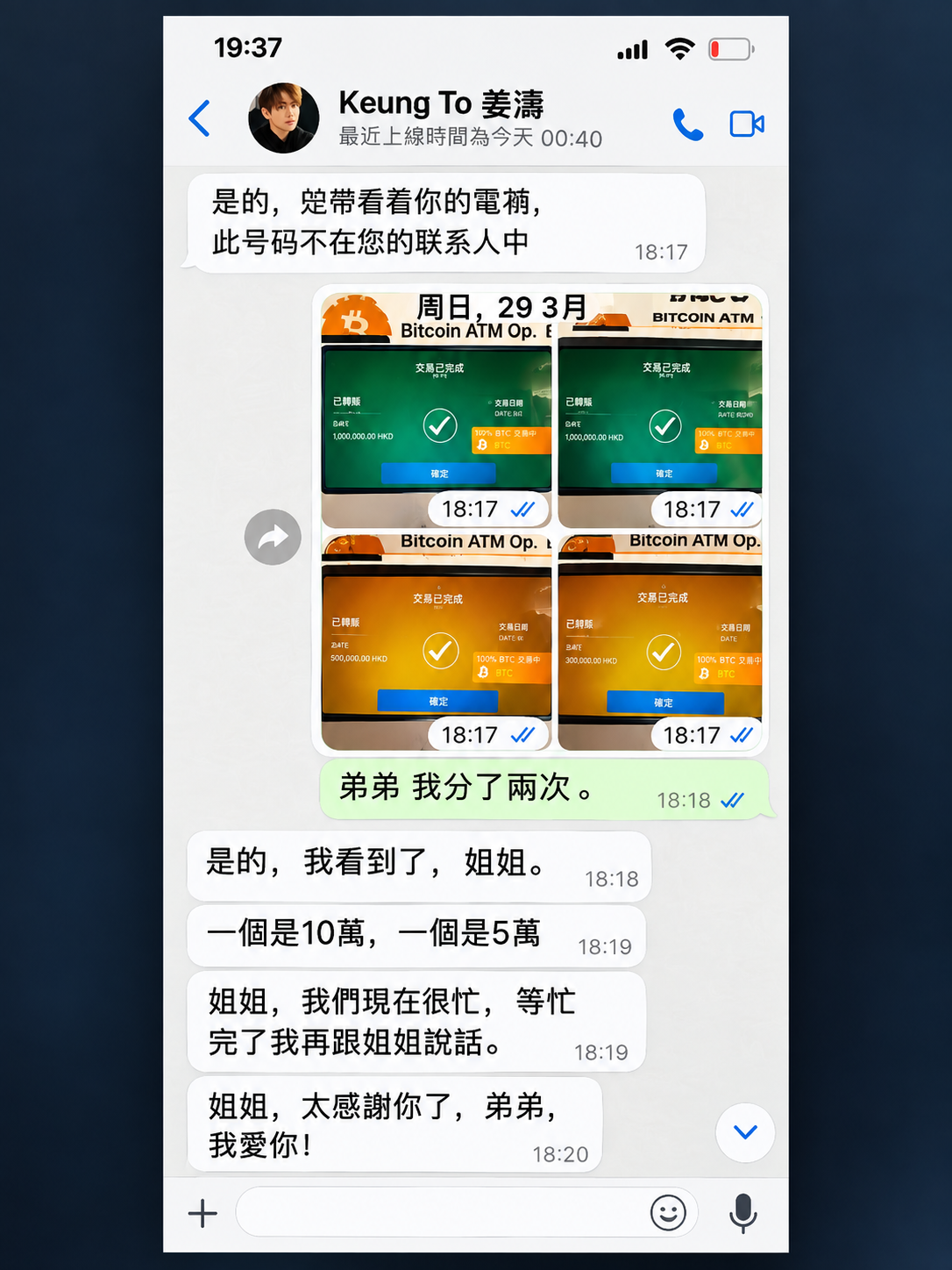
Police Report Filed
The fan said she has reported the matter to police.
Her decision to come forward publicly appears intended to prevent other fans from experiencing a similar loss. The case also illustrates the importance of independently verifying the identity of anyone requesting money online, particularly when the person claims to be a celebrity.
A social media profile, photographs, private messages or screenshots do not by themselves prove that an account is operated by the person it claims to represent.
Fans should also be particularly wary when an online contact asks for cryptocurrency, requests secrecy, creates a sense of urgency or repeatedly produces new reasons for needing money. A request involving frozen assets, unexpected fees, personal emergencies or other urgent financial problems should be independently checked before any payment is made.
A Warning for Celebrity Fans
The alleged case involving Keung To serves as a warning about how quickly an online interaction can turn into a major financial loss when trust replaces verification.
For fans, the safest approach is straightforward: do not assume that a private account belongs to a celebrity simply because it uses the celebrity's name, photographs or personal information. Any request for money should be treated independently from the emotional relationship a fan believes they have established.
People who suspect they have encountered an impersonation scam should preserve messages, transaction records, wallet addresses and other available evidence and report the matter to the relevant authorities or platform.
For the Hong Kong fan who says she lost more than HK$1 million, the financial consequences have already become severe. Her experience now raises a question for other fans: if someone claiming to be your favourite celebrity suddenly asked you for money, how would you verify that the person was really who they claimed to be?