

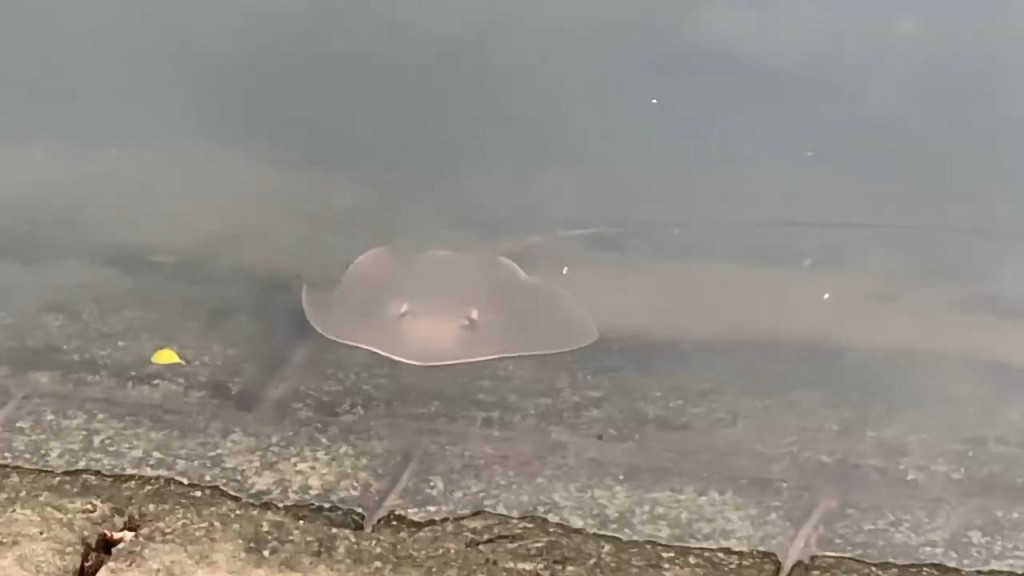
A sudden gathering of red stingrays in Tai Po's Lam Tsuen River turned an otherwise ordinary Thursday into a busy afternoon for curious residents and anglers, after footage of the marine animals began spreading rapidly across social media.
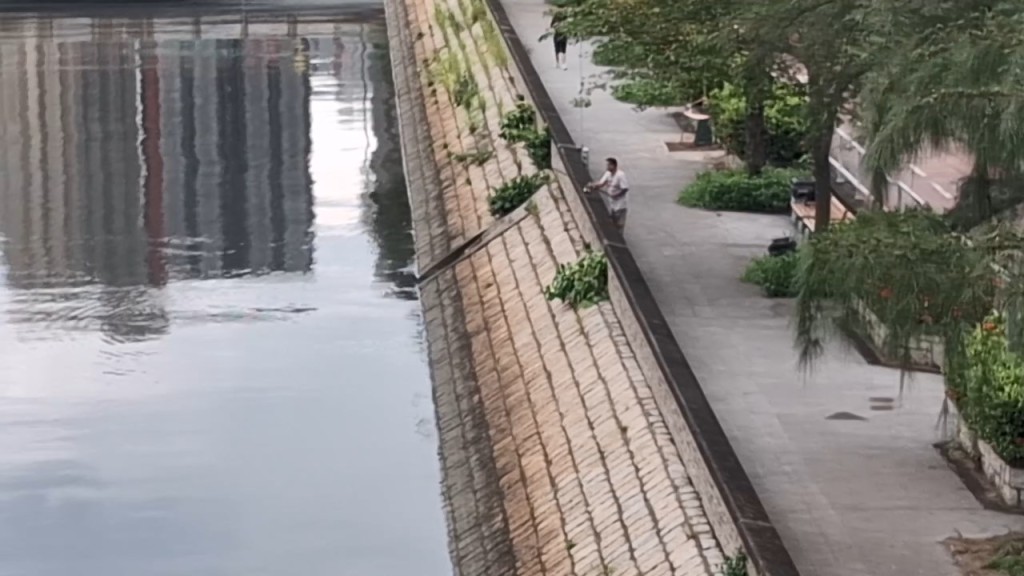
The stingrays, known locally in Chinese as devilfish, were spotted near Kwong Fuk Bridge, where crowds gathered to watch them moving through the river. Videos shared online showed several of the animals swimming close to the surface, while fishermen arrived with nets, rods and other equipment in an attempt to catch them.
At least five stingrays could be seen in one widely circulated video. According to people at the scene, one man using nets and fishing rods managed to catch three of the animals within minutes.
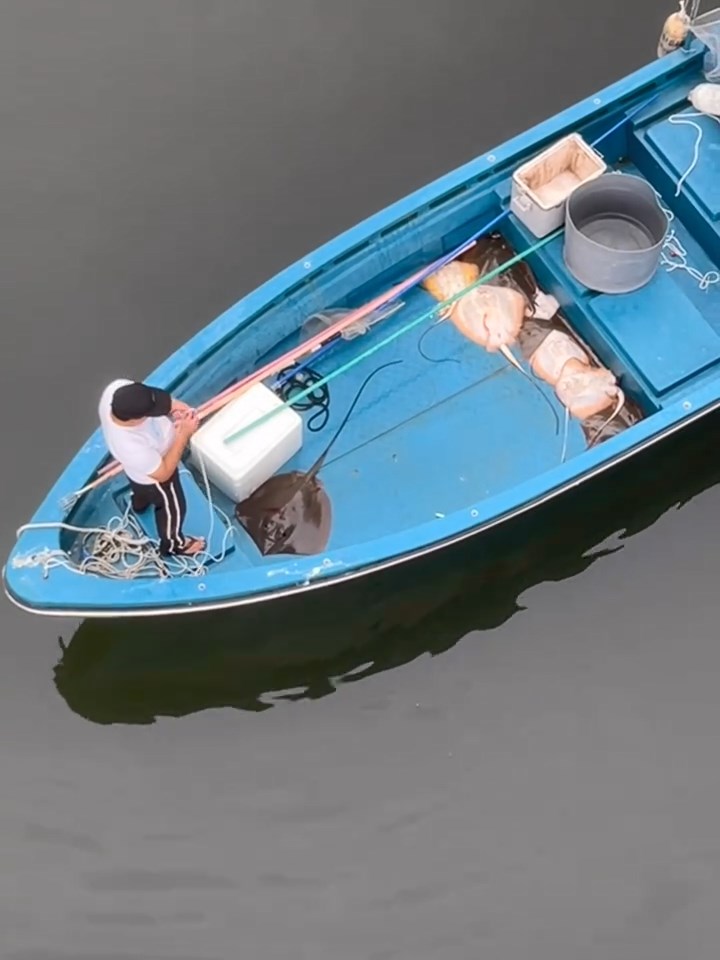
Another video showed a man aboard a small boat moving through the river and using a net to catch stingrays. He was seen hauling at least nine animals of different sizes from the water.
The sudden fishing activity quickly became a subject of online debate. Some people questioned why residents were catching the animals rather than simply observing them, particularly because stingrays can pose a danger when handled carelessly.
Anglers Catch Stingrays as Crowds Gather
Some anglers were reportedly seen cutting off the venomous barbs from the tails of captured stingrays before placing the animals into bicycle baskets and taking them away.
The practice raised concern among people who watched the videos, both because of the risk involved in handling stingrays and because of questions about the treatment of the animals after they were removed from the river.
Stingrays have a defensive barb on their tails that can cause serious injuries if a person steps on or handles the animal incorrectly. Removing the barb does not necessarily make the animal safe to handle, particularly if people are unfamiliar with the species.
The scene also attracted residents who had no intention of fishing. Some came simply to watch the unusual sight and take photographs or videos as word spread online.
For many onlookers, the appearance of several stingrays in a river running through Tai Po was unusual enough to prompt questions about why the animals had moved so far inland.
Ichthyologist Explains Why the Stingrays Moved Upriver
Chong Dee hwa, chairman of the Ichthyological Society of Hong Kong, identified the animals as Hemitrygon akajei, commonly known as the red stingray.
Chong said the species has long been present in Hong Kong waters and can be found in both coastal areas and local riverbeds. Their appearance in the Lam Tsuen River, therefore, does not mean the animals have suddenly arrived in Hong Kong.
Instead, the concentration seen on Thursday appears to have been linked to changes in conditions in nearby waters.
Chong pointed to two factors in particular: the recent end of the South China Sea fishing moratorium and heavy rainfall.
The fishing moratorium is imposed during part of the year to give marine species a period in which fishing activity is restricted. With the latest moratorium having ended, changes in fishing conditions may have altered the movement and feeding patterns of marine animals in coastal waters.
Heavy rain can also have a direct effect on rivers. Large volumes of rainwater flowing downstream increase the amount of freshwater entering coastal areas and can dramatically alter water flow and sediment conditions.
According to Chong, the increased river discharge may have encouraged the stingrays to move upriver while searching for food.
The behaviour is therefore not necessarily a sign of distress or an unexplained invasion. The animals are capable of moving between coastal waters and river environments, particularly when conditions provide suitable feeding opportunities.
Public Urged Not to Catch or Feed the Animals
While Chong encouraged members of the public to observe the stingrays and use the unusual sighting as an opportunity to learn more about Hong Kong's aquatic wildlife, he advised people not to catch or feed them.
The advice comes as the popularity of the sighting raised concerns that more people could attempt to capture the animals after seeing footage of successful catches online.
Feeding wild animals can also change their natural behaviour. Animals that begin associating people with food may become more dependent on human activity and can gather in areas where they would not normally remain.
For residents visiting the river, the safest option is to watch from a distance and avoid entering the water or attempting to touch the stingrays.
The incident also revived an old debate over the treatment of wild marine animals in Hong Kong. Although some residents regard stingray meat as food, others argued online that there was little reason to catch animals that had entered the river naturally.
Social Media Debate Over Stingray Meat
The videos prompted a flood of comments from people expressing surprise at the number of stingrays being caught.
Some users questioned whether the meat was worth the effort, while others urged the fishermen to leave the animals alone and allow them to return to the harbour.
One commenter wrote: "I don't get what's so tasty about them. Why do these uncles catch them every year?"
Others pointed out that stingray meat can develop a strong ammonia smell, particularly when it is not handled or prepared properly. The smell is associated with compounds produced as the animal's tissue breaks down.
The online discussion reflected two very different attitudes toward the sighting. Some saw the stingrays as an opportunity for fishing, while others viewed their presence as a rare chance to observe local wildlife in an urban environment.
For conservation minded residents, the spectacle was less about catching a meal and more about seeing a marine species using a river that cuts through one of Hong Kong's populated areas.
Similar Sightings Have Happened Before
Thursday's appearance was not the first time stingrays have been spotted in the Lam Tsuen River.
Similar sightings were reported in September 2023, shortly before Super Typhoon Saola approached Hong Kong. Stingrays were again seen in the river ahead of Severe Tropical Storm Trami in October 2024.
The repeated appearances have led some local residents to joke that the Lam Tsuen River functions as a kind of "typhoon shelter" for the animals.
The connection may be more than a coincidence, given the changes in water conditions that can accompany periods of heavy rain and approaching storms. Increased rainfall can send large quantities of water through river systems and alter conditions where rivers meet the sea.
Such changes can affect the movement of fish and other aquatic species, sometimes pushing them into places where people are not accustomed to seeing them.
For Tai Po residents, the latest sighting has once again brought attention to the wildlife living in and around the district's waterways.
A Rare Chance to Observe Local Wildlife
The reaction to the stingrays also points to a broader issue surrounding Hong Kong's relationship with its coastal and freshwater ecosystems.
The city is heavily urbanised, but its waterways remain connected to the sea and continue to support a wide range of marine life. Species can move between habitats in response to rainfall, tides, food availability and changing water conditions.
When those animals appear in populated areas, they can quickly become social media attractions. That attention can help residents learn about species they might otherwise never encounter, but it can also create pressure for people to approach, feed or capture them.
The Lam Tsuen River sightings demonstrate why distance matters when wild animals appear in unexpected places. A stingray swimming beneath a bridge may provide an unusual photograph, but attempting to catch one creates risks for both the animal and the person handling it.
The advice from local marine experts is straightforward: watch, do not feed, and do not catch.
For the stingrays now moving through the Lam Tsuen River, the safest outcome is to allow them to continue feeding and eventually return to the coastal waters from which they came.