


The Hong Kong Jockey Club expects track conditions at Happy Valley to improve when racing resumes on Wednesday night, with the rail moving to the B position after unusually slow times at last week’s season opening meeting.
Stephen Higgins, the Jockey Club’s head of race day operations, said the slower times were linked to extensive off season work carried out on the course and should improve as racing moves across different sections of the track.
Higgins said the club had expected the surface to start the season on the slower side because of work completed during the summer.
“Historically we start a little slower,” Higgins said after last week’s meeting. “In the off season some sand core work was done and verti drained across the profile.”
The comments came after every race time recorded at the Happy Valley meeting fell outside the track’s standard times, creating a noticeable contrast with conditions at Sha Tin during the opening meetings of the season.
The Jockey Club now expects the Happy Valley surface to become faster and closer to its usual performance as the rail position changes.
“I expect it will tighten up as we move across the profile with rail placements,” Higgins said. “From next week it will perform closer to standard.”
Slow Opening Times Raise Questions
Happy Valley’s opening meeting produced slower than expected times across the card, with none of the races reaching the standard times established for the course.
The result attracted attention because the opening meetings at Sha Tin had produced markedly different conditions. A number of class records were broken at Sha Tin, while some of the fastest times recorded in recent Hong Kong racing were posted during the early meetings of the new season.
Higgins acknowledged that the contrast was noticeable.
“People saw the first meeting and saw it was lightning quick, and the times on Wednesday surprised them,” he said.
The difference between the two venues has given added importance to the Jockey Club’s assessment of Happy Valley’s surface. The club monitors conditions closely because changes in moisture, preparation and racing lines can influence how quickly horses travel and how the track responds to repeated use.
The rail position also plays a role. Moving the rail changes the section of the course used by horses and allows the racing surface to recover between meetings. As the rail moves through different positions, horses compete on sections of ground that have experienced different levels of traffic.
That is one reason the club expects the times at Happy Valley to improve gradually rather than change immediately after a single meeting.

Off Season Work Changed the Surface
According to Higgins, the slower opening meeting followed specific maintenance work carried out during the off season.
The work included sand core treatment and verti draining across the track profile. Such work forms part of the preparation of the racing surface and can affect its condition at the beginning of a new season.
The club has to balance track preparation with the need to provide a surface that remains consistent throughout the racing calendar. Work carried out during the summer can alter how the ground responds when racing resumes, particularly before the surface has settled under competition.
Higgins indicated that the slower times should therefore be viewed in the context of the maintenance programme rather than as evidence of a permanent change in the character of the Happy Valley track.
The club's expectation is that the surface will settle as racing continues and as different sections are brought into use.
“We are always trying to provide a consistent surface,” Higgins said.
Consistency is particularly important at Happy Valley, where racing takes place on a compact circuit and relatively small differences in track conditions can influence the way races unfold.
Sha Tin Provides a Sharp Contrast
The conditions at Happy Valley stood out even more because Sha Tin began its season with exceptionally quick performances.
Several class records were broken during the first two meetings at the New Territories venue. Among the most notable performances was that of Ka Ying Rising, who lowered his own 1,200 metre course record to 1 minute and 6.11 seconds during the Sha Tin season opening meeting.
The performance was believed to be the fastest time recorded for the distance on turf from a standing start.
That result helped create expectations of fast racing at the start of the new season. When Happy Valley subsequently produced much slower times, the difference between the two courses became difficult to overlook.
The Jockey Club, however, says the venues should not be assessed solely by comparing times from individual meetings. Each course has its own characteristics, while preparation work and rail movements can affect the surface available to horses.
Happy Valley is also a very different racing environment from Sha Tin. Its tighter circuit places different demands on horses and riders, while the changing rail positions mean that the section of track used for racing can vary from meeting to meeting.
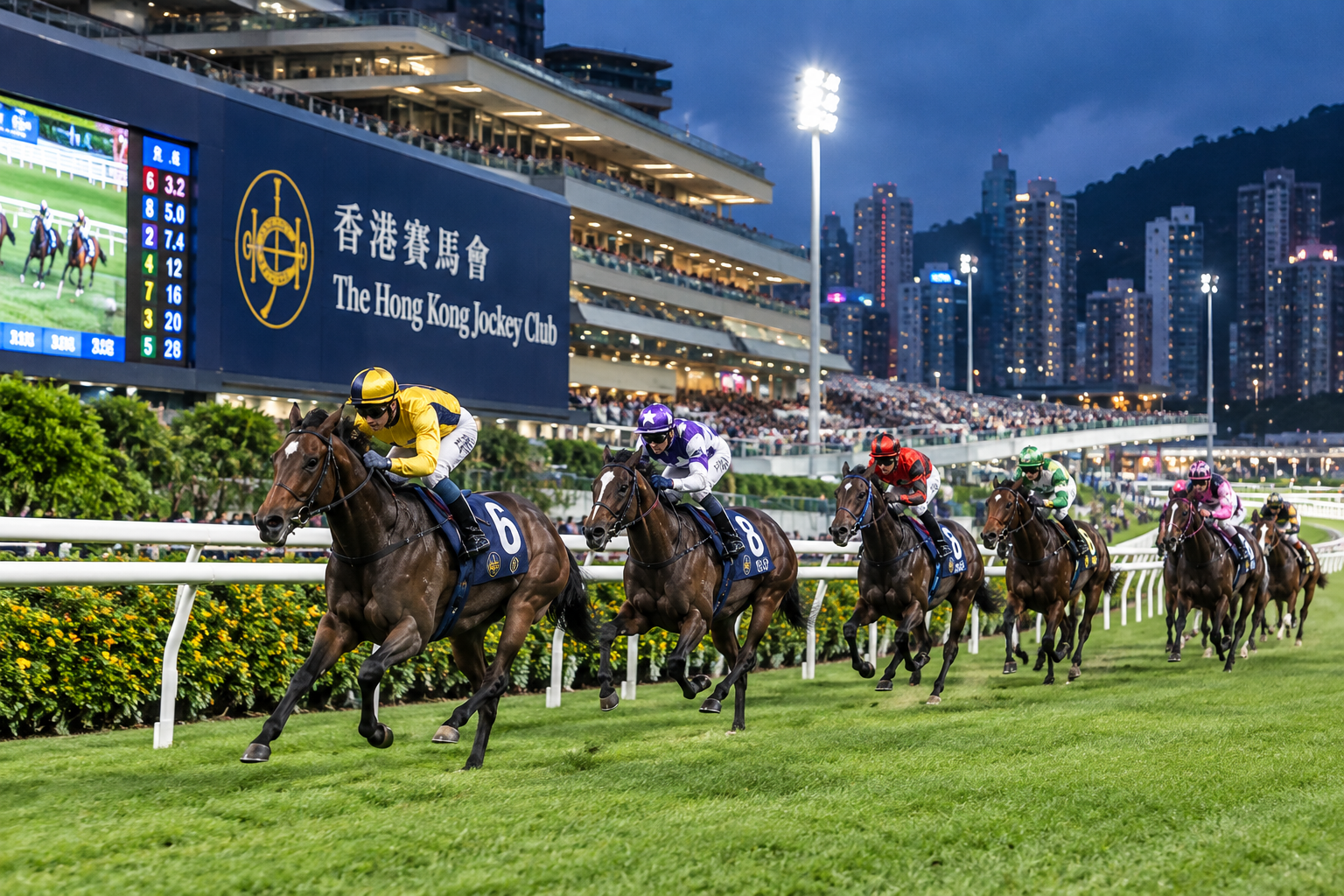
Rail Movement Expected to Improve Times
The next stage of the Happy Valley programme will involve the rail moving to the B position.
The Jockey Club expects that change to bring racing onto another part of the track and help the surface move closer to its standard performance.
The club's assessment is based on how the track responds as racing shifts across its profile. Instead of relying on one section throughout the season, rail movements allow different areas to be used while limiting repeated traffic over the same ground.
Higgins expects the process to produce a gradual improvement.
By next week, he said, the track should perform closer to standard times.
That forecast will be closely watched by trainers and jockeys, particularly after the unusual opening meeting. Track speed can influence tactical decisions, including how horses are ridden during the early stages of a race and how much ground they are expected to cover before the final turn.
For punters, changes in track conditions can also affect how previous form should be interpreted. A horse that performed well on a slower surface may face different circumstances if the track becomes quicker at subsequent meetings.
Consistency Remains the Main Goal
The Jockey Club's response has focused less on the individual times from the opening meeting and more on the longer term condition of the track.
The club wants the surface to provide a reliable racing environment throughout the season. That means monitoring the effects of maintenance work, weather, racing traffic and rail movements while making adjustments when necessary.
Higgins' comments indicate that the club does not regard last week's slower times as a cause for immediate concern. Instead, officials expect the surface to settle as the season progresses.
The shift to the B rail position provides the next test.
If the track responds as expected, race times should begin moving closer to established standards. That would also provide a clearer indication of how much of last week's slower pace was linked to the initial condition of the surface following its off season treatment.
For now, the Jockey Club's message is that Happy Valley is expected to tighten up as racing moves across the track.
The Wednesday night meeting will offer the first opportunity to see whether that prediction is reflected in the clock. Will the move to the B position bring Happy Valley's race times back closer to standard, and which horses will benefit most if the surface becomes faster?