

Hong Kong health authorities have launched an investigation into claims surrounding a purported “cancer preventing vaccine” priced at HK$120,000, warning the public not to rely on unverified medical claims about a product that has not been registered as a pharmaceutical product in Hong Kong.
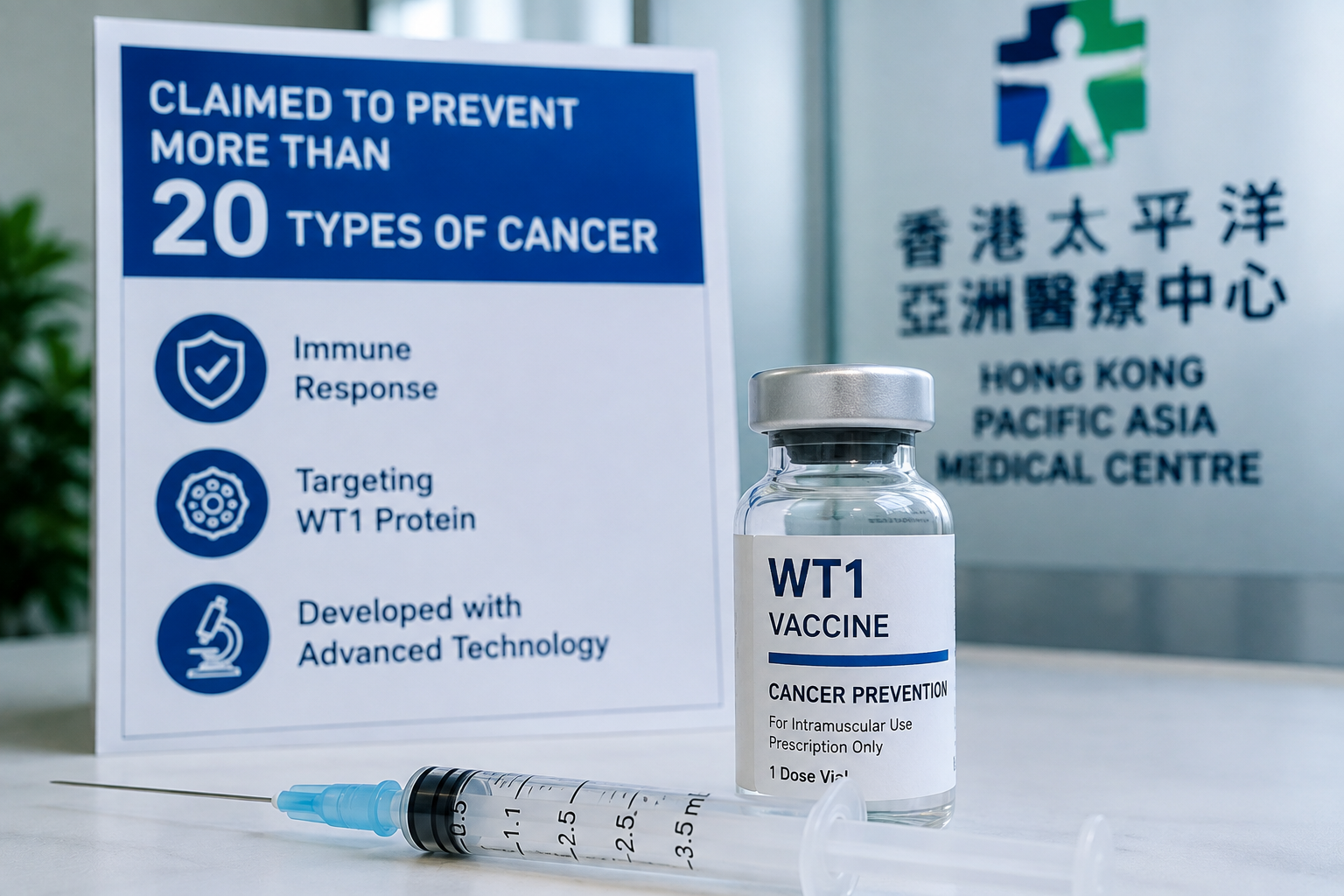
The Department of Health said the product, described as a WT1 vaccine, was allegedly being promoted by the Hong Kong Pacific Asia Medical Centre and its affiliates as a product capable of preventing more than 20 types of cancer. The department said it had found no record showing that the product was registered with Hong Kong’s drug regulator or with drug regulatory authorities on the mainland or overseas.
The investigation began after the department received reports in July about promotional material for the alleged vaccine appearing on social media platforms.
Officials subsequently carried out a series of unannounced inspections. The latest operation on Monday involved seven premises across Hong Kong and Kowloon that were linked to the medical centre and its affiliated operations.
The inspections form part of a wider examination of whether unregistered pharmaceutical products were being supplied or promoted in breach of Hong Kong law, as well as whether medical professionals may have engaged in conduct that warrants disciplinary action.
Health authorities question cancer prevention claims
The Department of Health said advertisements claiming that the WT1 vaccine could prevent cancer were misleading.
The warning is significant because claims about preventing cancer can influence people facing serious or potentially life threatening illnesses, particularly when such claims are presented alongside a high priced medical product. Cancer prevention involves established measures such as screening where appropriate, vaccination against certain cancer causing infections, avoiding tobacco and maintaining other evidence based health practices.
According to the department, the WT1 vaccine being promoted by the centre does not hold a pharmaceutical registration in Hong Kong.
The department also said searches had not identified registration records for the product with drug regulators in mainland China or overseas. This means the alleged product does not have the regulatory status expected of a registered pharmaceutical product in Hong Kong.
Authorities have therefore urged members of the public to treat claims surrounding the product with caution and to seek advice from registered medical practitioners when considering cancer prevention or treatment.
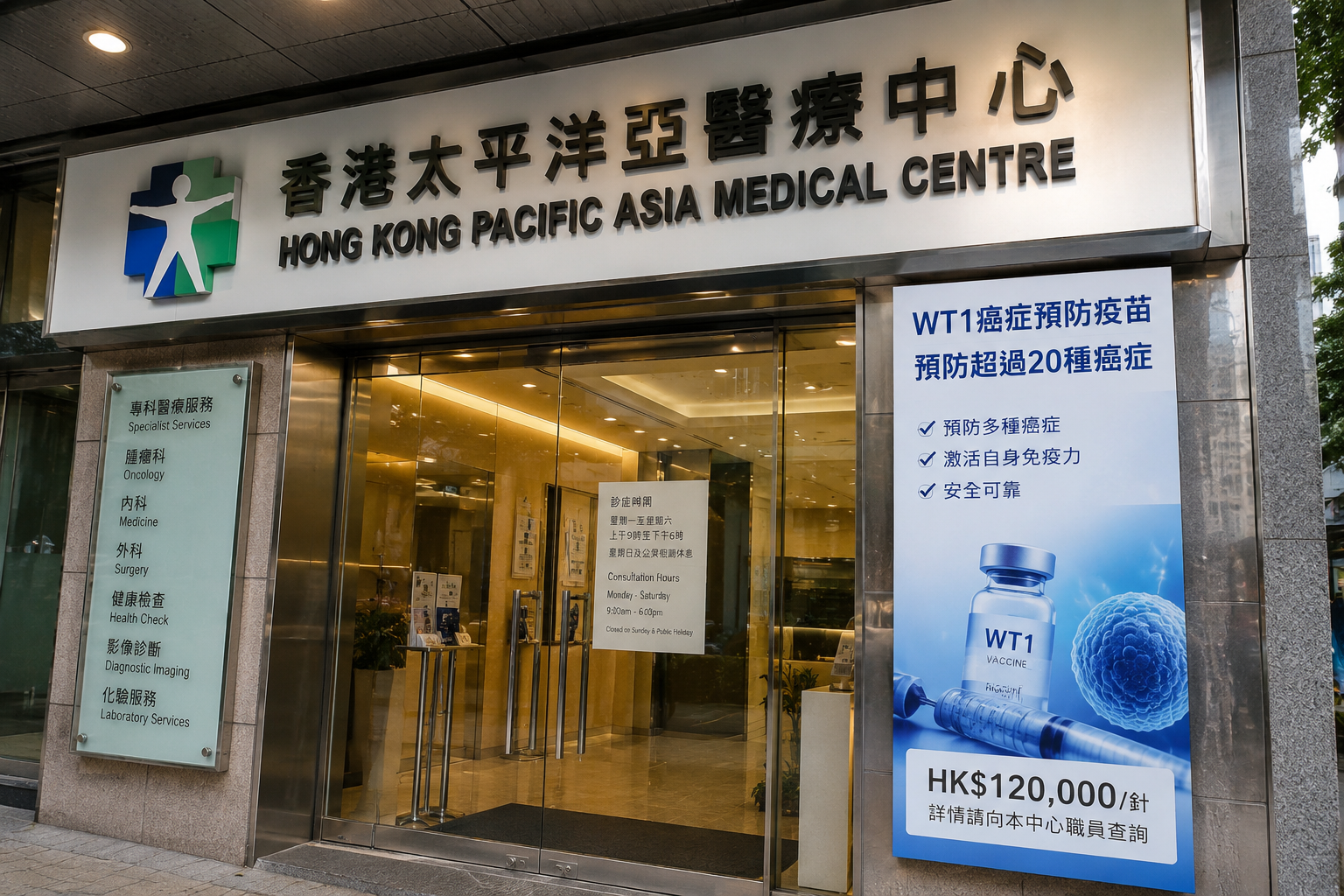
Seven premises inspected
The Health Department’s investigation moved beyond online advertising after officials carried out multiple unannounced inspections at premises associated with the medical centre.
Seven locations in Hong Kong and Kowloon were inspected on Monday. The operation followed reports received in July alleging that the centre and related entities had used social media to promote the purported vaccine.
Unannounced inspections are among the enforcement measures available to health authorities when they suspect that pharmaceutical products may be supplied or promoted unlawfully. The department’s investigation is expected to examine the nature of the product, how it was obtained, how it was marketed and whether it was supplied to members of the public.
The case has also been passed to other authorities, reflecting the possibility that the investigation could involve more than one area of regulation.
The Medical Council of Hong Kong has been notified because the department suspects that the circumstances could raise questions of professional misconduct. The referral does not establish that misconduct occurred, but allows the professional regulator to consider whether any registered medical practitioner involved may have breached professional standards.
Customs authorities have also been alerted over possible illegal importation of the product.
The Department of Health said it had additionally informed mainland authorities about advertisements for the alleged vaccine appearing on social media platforms there.
Unregistered drugs can trigger criminal penalties
Hong Kong’s regulatory system places restrictions on the sale and possession of pharmaceutical products that have not been registered for use in the city.
The Department of Health warned that illegally supplying an unregistered pharmaceutical product is a criminal offence. Under the Pharmacy and Poisons Ordinance, the illegal sale or possession of an unregistered pharmaceutical product carries a maximum penalty of a HK$100,000 fine and two years’ imprisonment.
The warning applies not only to people who may sell such products but also to those involved in their possession in circumstances covered by the law.
For regulators, the distinction between a medical claim and a legally recognised pharmaceutical product is particularly important. A product may be promoted through social media or private medical channels, but online availability or claims made by a provider do not amount to official approval by Hong Kong health authorities.
The department’s action also illustrates the difficulties regulators face when medical products are marketed through digital platforms. Promotional messages can reach potential customers directly, while claims may circulate rapidly before authorities have an opportunity to assess them.
Social media advertising under scrutiny
The investigation was triggered by reports concerning social media promotion, showing how online advertising has become an important part of the authorities’ examination of suspected health related offences.
The department has not said that every person who encountered the advertisements purchased the alleged vaccine, nor has it disclosed the total amount of money that may have been collected.
It has also not publicly established through the investigation that the product caused harm to any patient.
The central regulatory concern at this stage is the alleged promotion and supply of a pharmaceutical product that is not registered in Hong Kong, together with claims that it could prevent more than 20 types of cancer.
Those claims are now being examined by the relevant authorities.
The involvement of Customs and the Medical Council means the case could develop along several separate regulatory tracks. Customs may examine whether the product entered Hong Kong lawfully, while the Medical Council may consider whether the conduct of any registered doctors involved in the promotion or provision of the product complied with professional requirements.
The Department of Health’s own investigation focuses on pharmaceutical regulation and enforcement.
Public urged to verify medical claims
The department has urged people not to place their trust in unverified claims about cancer prevention and advised the public to consult registered doctors when seeking information about preventing disease.
That advice is particularly relevant when a product is sold at a substantial cost and is promoted using claims involving a large number of cancer types.
Members of the public considering a medical product can check whether it has the required regulatory status rather than relying solely on promotional material, testimonials or claims made through social media. A high price, specialist terminology or association with a medical centre does not itself establish that a product has been approved by health authorities.
The Department of Health’s investigation remains focused on determining whether offences were committed and whether further enforcement action is required.
For now, officials have made one point clear: the WT1 vaccine described in the allegations is not a registered pharmaceutical product in Hong Kong, and the department has found no registration records for it with drug regulators in mainland China or overseas.
Anyone being offered the alleged vaccine or similar products should verify their regulatory status and seek advice from a registered doctor before paying for or using them.