

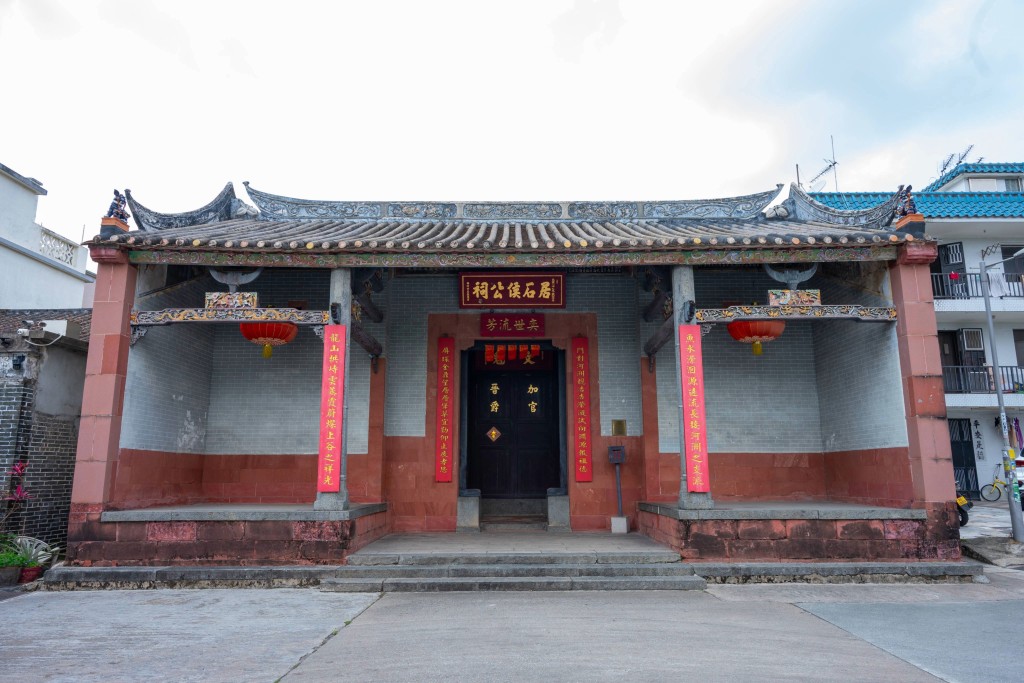
A century old police station, a Qing dynasty communal hall and a former school rarely open to visitors are among the historic sites featured in this year’s Heritage Fiesta across Hong Kong’s Northern Metropolis.
Organised by the Development Bureau’s Commissioner for Heritage’s Office, the programme will take visitors through 12 declared monuments and graded historic buildings under the theme “Traversing Northern Metropolis.” The programme brings together buildings connected to clan traditions, education, wartime relief and the everyday life of communities in the New Territories.
Rather than presenting the sites as isolated monuments, the festival links them through three themes: the traditional character and clan culture of the New Territories, the adaptive reuse of historic buildings and the role of education in developing generations of local talent.
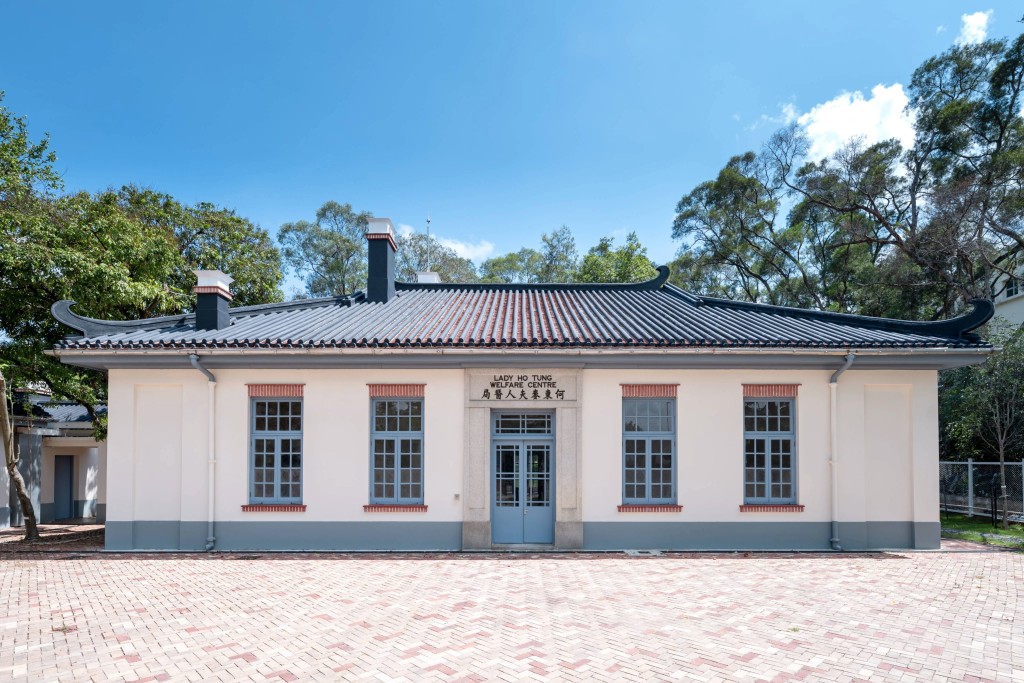
The programme includes Liu Man Shek Tong Ancestral Hall in Sheung Shui, Tai Fu Tai Mansion, the Old Ping Shan Police Station and the former Yuen Long Public Middle School.
Old Ping Shan Police Station tells a changing story
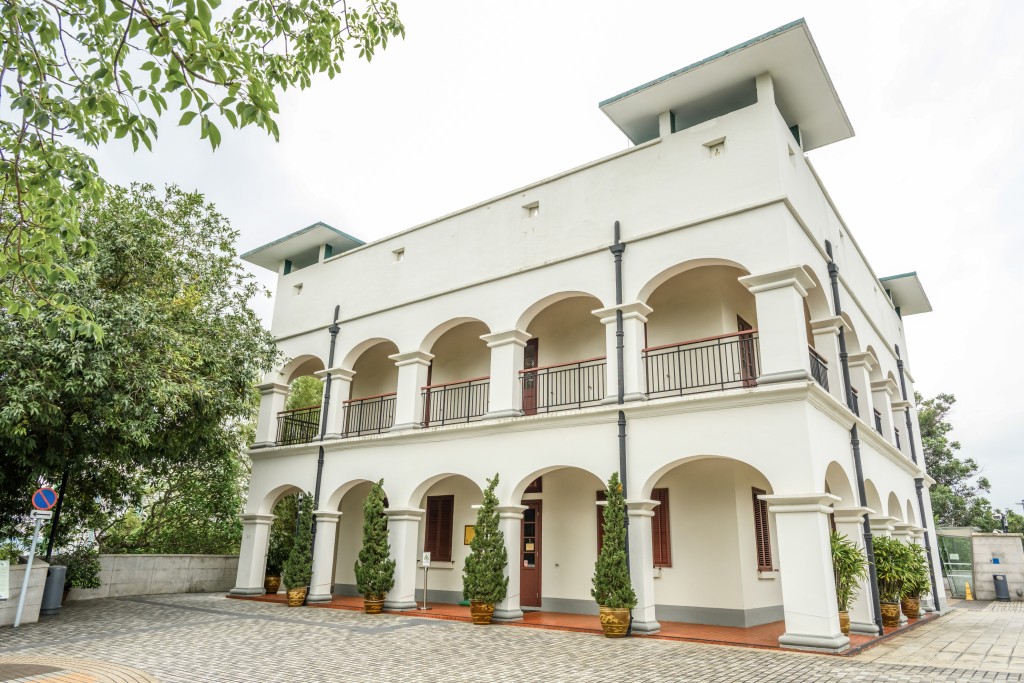
The Old Ping Shan Police Station stands on a hill overlooking Ping Shan and remains one of the few surviving prewar police stations in the New Territories.
The building dates to 1900, just after the British administration took control of the New Territories. Its two storeys reflect the architectural approach of the period, with Western style arched verandahs designed to provide shade while allowing air to circulate through the building.
The design was practical for Hong Kong’s hot and humid conditions. The building also reflects an era when policing infrastructure was expanding into rural areas that had previously been governed largely through established village and clan structures.
According to a curator surnamed Lo at the Commissioner for Heritage’s Office, the police station performed several roles during its working life.
It housed the Police Dog Unit and later accommodated traffic police before its police functions ended.
The building received a new public purpose in 2007, when it became the Ping Shan Tang Clan Gallery cum Heritage Trail Visitors Centre.
That change allowed the former police station to move from law enforcement to heritage education without losing its connection to the surrounding community.
Visitors today can see objects associated with the Tang clan’s domestic life. Among the exhibits are traditional household items, a single seat baby chair, wine cups and wedding accessories.
The objects are modest compared with the architecture itself, but they offer details about family life, customs and ceremonies that are difficult to understand from buildings alone.
Tat Tak Communal Hall carries memories of war
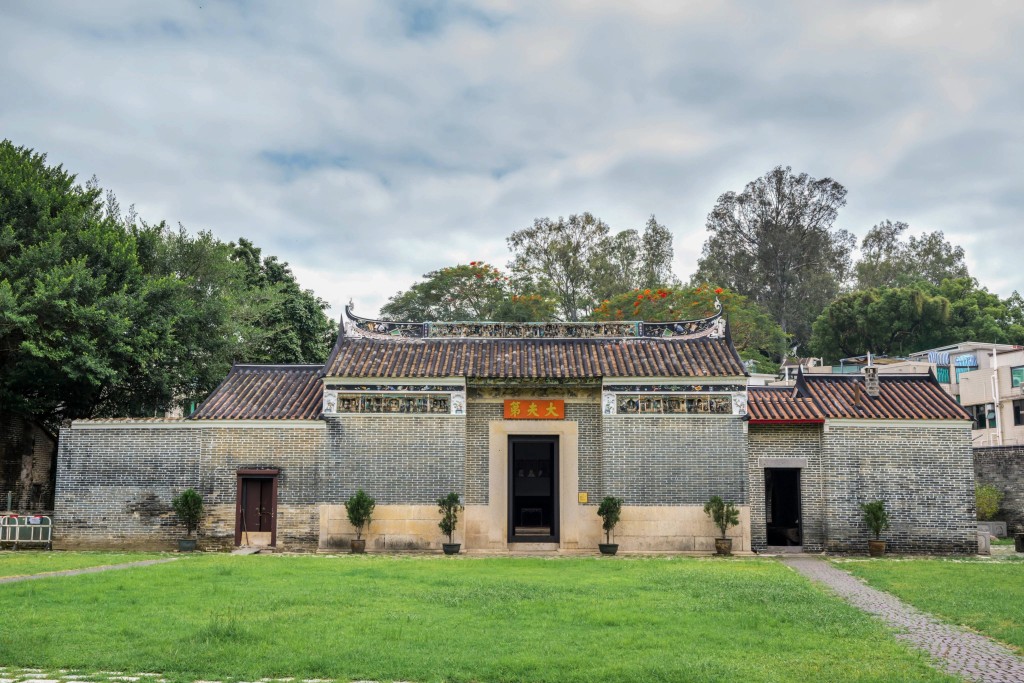
Another major stop is Tat Tak Communal Hall in Yuen Long, a declared monument with a history stretching back to the Qing dynasty.
The building was completed in 1857. Its traditional features include a pitched tiled roof, granite door frames and decorative elements associated with Chinese architecture of the period.
Above the entrance, Chinese characters referring to the Xianfeng reign provide a visible clue to the building’s historical period.
The hall was originally more than a meeting place. It served as a communal facility for villagers and operated as an office connected to the management of Ping Shan Market.
Its history also became linked to political events surrounding the British takeover of the New Territories in 1899. Historical accounts associate the hall with meetings where local residents organised resistance against the British advance.
The building later took on a very different role during the Second Sino Japanese War.
Between 1940 and 1941, the Hong Kong Red Swastika Society used Tat Tak Communal Hall as a children’s home. More than 50 homeless children rescued from Shenzhen were sheltered there.
The change illustrates how historic buildings could take on new functions as communities faced emergencies. A hall originally associated with village administration and local gatherings became a place of refuge for children displaced by war.
Its social role did not end when the war ended.
After the Second World War, Tat Tak Communal Hall continued to support education and welfare activities. The premises accommodated students and later served as an orphanage before being used as a private primary school.
The building therefore records several layers of community history, from village administration and political activity to wartime relief, education and child welfare.
A school opens its doors to visitors
The former Yuen Long Public Middle School offers another perspective on the region’s educational history.
The building now houses TWGHs CY Ma Memorial College and is normally not open to the public. Heritage Fiesta will provide visitors with an unusual opportunity to enter the site at designated times on November 21 and 28, coinciding with the school’s information days.
The former school is included in one of five suggested self guided heritage routes developed for the programme.
Its inclusion reflects the festival’s third theme, which examines how education helped nurture generations of people in the New Territories.
Schools were not simply places where students attended lessons. They became community institutions where young people developed social networks, acquired skills and prepared for changing economic conditions.
Opening a former school to visitors also allows the public to view the physical spaces associated with that history rather than relying solely on photographs or written records.
More than 170 free tours planned
Heritage Fiesta will extend beyond the 12 featured historic sites.
Organisers plan to provide more than 170 free guided tours between November and December. Public lectures will also be held, giving visitors opportunities to learn more about the history and architecture connected with the Northern Metropolis.
A new open top bus heritage tour will offer another way to explore the area.
The bus route is intended to connect heritage locations and provide visitors with a broader view of the communities surrounding the individual buildings. That approach allows participants to consider how historic sites relate to villages, roads, markets, schools and other parts of the built environment.
Visitors taking part in the programme can also collect 13 specially designed commemorative stamps as they visit the historic locations.
The stamps add a simple interactive element to the heritage experience while encouraging participants to visit more than one site.
Exhibition brings Northern Metropolis history closer to residents
People who cannot join the guided tours will still have an opportunity to explore the history through a roving exhibition.
The exhibition will run from October to December at government venues, shopping malls and 14 public libraries across Hong Kong.
Taking the exhibition outside the historic buildings means residents can encounter the stories of the Northern Metropolis without travelling to every site.
The approach also places the region’s heritage within the context of its ongoing transformation.
The Northern Metropolis is undergoing major development, bringing changes to transport, housing, infrastructure and land use. Against that backdrop, the Heritage Fiesta provides a public record of buildings and institutions that existed long before the current development plans.
The historic sites featured in the programme show how communities adapted to earlier periods of change.
The Old Ping Shan Police Station moved from policing duties to heritage education. Tat Tak Communal Hall shifted from village administration to wartime relief, education and welfare. The former Yuen Long Public Middle School represents the continuing importance of education to communities in the New Territories.
These changes are part of what makes the buildings significant. Their value lies not only in their age or architectural features but also in the different purposes they served over generations.
Heritage beyond buildings
The Heritage Fiesta also offers a way to understand the Northern Metropolis through the people who used these places.
Clan halls reveal family structures and traditional customs. Communal buildings show how villagers organised local affairs. Former schools trace changes in education, while wartime shelters document how communities responded when families and children were displaced.
The programme's three themes connect those stories and give visitors several ways to approach the same region.
For some, the architecture may be the main attraction. For others, the wartime history of Tat Tak Communal Hall or the domestic objects displayed at the Tang Clan Gallery may provide the strongest connection.
The range of activities also means visitors can choose between guided tours, lectures, self guided routes, the open top bus experience and the roving exhibition.
With more than 170 free guided tours planned from November through December, the festival will give residents and visitors multiple opportunities to examine parts of northern Hong Kong that are normally less accessible.
The former Yuen Long Public Middle School, in particular, offers a limited access opportunity on November 21 and 28.
For anyone interested in Hong Kong’s village history, wartime experiences and educational development, the programme provides a practical starting point: visit the buildings, examine the surviving objects and follow the routes that connect them to the communities around them.
Which Northern Metropolis heritage site would you visit first, and what part of Hong Kong’s local history would you like to explore?