

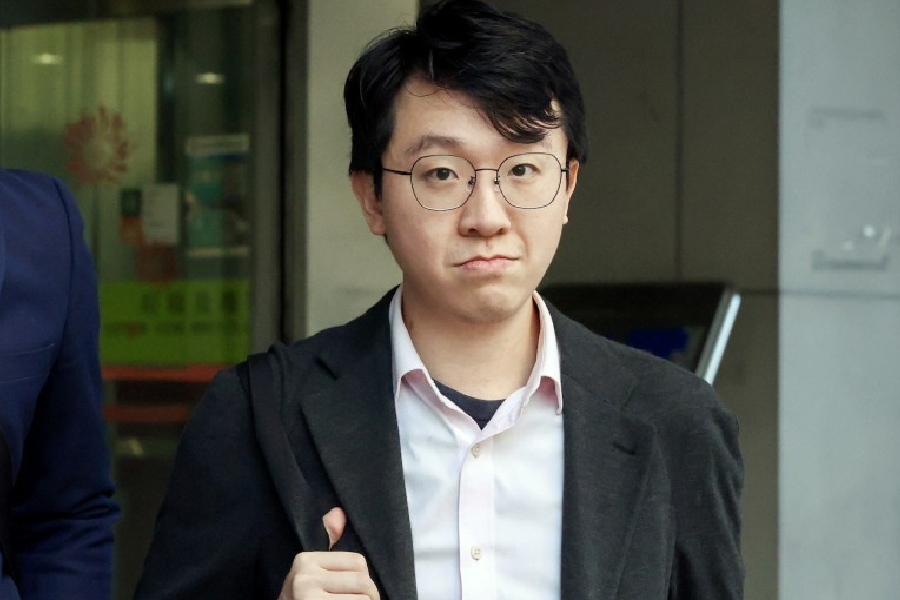
The High Court has refused an urgent application by a 39 year old barrister seeking an interim injunction against his former girlfriend, ruling that the alleged harassment had continued for several years and did not present the kind of immediate threat that would justify granting emergency relief before the evidence could be fully examined.
Barrister Winky So Wing brought proceedings against Lee Lok tung, asking the court to impose a wide range of restrictions on her alleged contact with him, his family, colleagues, associated barristers and law firms. The application also sought to prevent Lee from approaching several people connected to So and from carrying out activities that he said amounted to harassment, intimidation, surveillance and online targeting.
The court did not determine the truth of those allegations at the interim stage. Instead, Judge Yvonne Cheng Wai sum ruled that the circumstances did not establish sufficient urgency for an immediate injunction and adjourned the case so that both sides could formally submit evidence and legal arguments.
Barrister Sought Broad Protection Orders
So asked the court to restrain Lee from contacting, harassing or intimidating him and three other named individuals: his mother, Anita Kho Mei soang, Yang Dongyue and Koe Yeet.
The proposed restrictions extended beyond those four people. So also sought orders covering current and former members and staff of Sir Oswald Cheung’s Chambers, Resolution Chambers and Rede Chambers.
The application called for Lee to stay at least 100 metres away from the four named individuals. It also sought a 50 metre exclusion zone around So’s residence, Yang’s home and the three barristers’ chambers.
The proposed orders went further than physical distancing. So asked the court to prevent Lee from causing nuisances to Y.W. Mak & Co. and C.T. Tse & Co., two law firms named in the proceedings.
Except for the legitimate service of court documents, the requested restrictions would have prevented Lee from directly or indirectly approaching or contacting the people identified in the application. So also sought orders preventing the publication of derogatory statements and alleged private surveillance or background investigations targeting the individuals concerned.
Such a broad injunction would have imposed significant restrictions on Lee’s conduct and communications. The court therefore had to consider not only the allegations but also whether the circumstances justified granting such relief before the dispute had gone through a fuller evidential examination.

Allegations Include Online Targeting and Deceptive Calls
At the hearing, So argued that the situation had continued to cause disruption and that recent incidents demonstrated a need for immediate court intervention.
According to So’s submissions, Lee had recently visited his barristers’ chambers. He also alleged that she had engaged in online doxxing involving individuals whose names she had obtained.
So further alleged that Lee had made deceptive telephone calls from different numbers while impersonating other people.
Those allegations formed part of his argument that an interim injunction was needed to stop what he described as continuing disruptive conduct.
The court, however, was not asked at this stage to make final findings on whether each allegation had been proved. The immediate question was whether the circumstances justified granting an injunction before both parties had formally filed and served their evidence.
Judge Cheng concluded that they did not.
Judge Rejects Request for Private Hearing
The dispute also raised questions about whether the proceedings themselves should remain partly shielded from public scrutiny.
Before the hearing, So submitted applications seeking an anonymity order, a gag order and an in camera hearing. All three requests were rejected by Judge Cheng.
The judge referred to the principle of open justice, under which court proceedings are generally conducted publicly so that the administration of justice can be observed and scrutinised.
The judge acknowledged that litigation can attract public and media attention and that parties may face embarrassment, professional concerns or references to other criminal matters as a result of proceedings becoming public.
But those consequences, the court held, do not by themselves justify departing from open justice.
The ruling means that the dispute will proceed without the level of confidentiality sought by So at this stage. The decision also reinforces the distinction between a party’s concern about reputational consequences and the legal threshold required before a court restricts public access to proceedings.

Court Finds No Immediate Emergency
The central issue in the failed injunction application was urgency.
So argued that recent alleged incidents warranted immediate intervention. The court took a different view after considering the history presented to it.
Judge Cheng noted that the alleged harassment had been continuing for years. That history was significant because an interim injunction is intended to address circumstances where immediate protection is required before the court can conduct a full hearing.
The judge found that the alleged conduct did not present an acute enough situation to justify granting the requested interim relief immediately.
That does not mean the court has ruled that the alleged harassment did not occur. Nor does it amount to a final determination in Lee’s favour.
Instead, the court has required the parties to follow the ordinary evidential process. Both sides will have an opportunity to put forward their formal submissions and supporting evidence before the court considers the dispute further.
Proceedings to Continue After Evidence Is Filed
The High Court rejected So’s application for an immediate interim injunction and adjourned the proceedings.
The next stage will involve the formal filing and service of legal submissions and evidence by both parties. That process should allow the court to examine the allegations in greater detail and assess the evidence supporting the competing accounts.
For So, the unsuccessful urgent application means that the restrictions he sought will not take immediate effect through an interim order. For Lee, the ruling does not end the proceedings or prevent the court from considering the allegations at a later stage.
The case also illustrates an important feature of civil proceedings involving allegations of harassment. A claimant may present a series of incidents that appear serious when viewed together, but the court must still decide whether the legal requirements for immediate intervention have been met. The existence of a long running dispute can affect that assessment, particularly where the claimant asks the court to impose extensive restrictions before the full evidence has been tested.
The same principle applies to applications seeking limits on speech, movement, contact and access to workplaces or professional organisations. Courts must balance the protection sought by one party against the legal rights of the other and must be satisfied that the evidence and circumstances justify such restrictions.
For now, the High Court has chosen evidence over emergency intervention. The allegations remain to be examined through the formal proceedings, with the parties expected to file their respective cases before the court considers the matter further.
What evidence will emerge when the parties formally present their cases, and will it satisfy the court that wider protective orders are justified?