


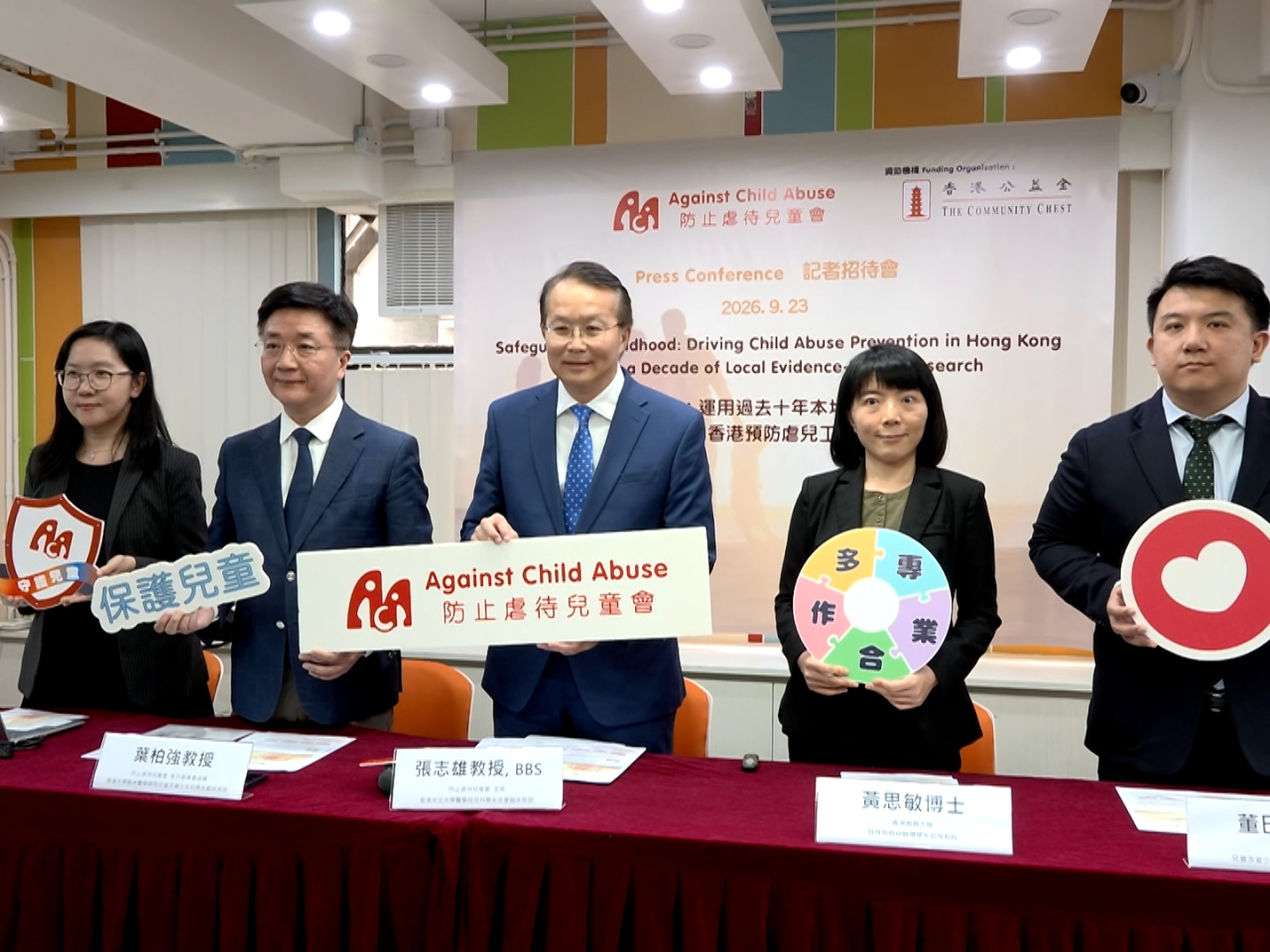
Registered child abuse cases in Hong Kong increased by 67 percent between 2020 and 2025, according to figures cited by child protection group Against Child Abuse, which is calling on the government to review its reporting laws and introduce further legal safeguards.
The organisation said on Wednesday that the rate of registered child abuse cases rose from 0.92 cases per 1,000 children in 2020 to 1.54 cases per 1,000 children five years later. The figures come from the Social Welfare Department's Child Protection Registry.
The rise has also been accompanied by a substantial increase in reported sexual abuse. Cases involving child sexual abuse climbed from 313 in 2020 to 501 in 2025, representing a 60 percent increase over the five year period.
Sexual abuse accounted for 37 percent of the 1,354 child abuse cases registered in Hong Kong last year. For the first time, it stood level with physical abuse as the most common category recorded by authorities.
Against Child Abuse said the figures should prompt a regular assessment of whether Hong Kong's child protection system is responding effectively to changing risks. The organisation also called for additional legal measures to protect children and greater support for victims.
Child abuse cases have increased steadily
The figures cited by the organisation show a notable change in the recorded rate of child abuse over five years.
In 2020, authorities registered 0.92 cases for every 1,000 children. By 2025, the figure had reached 1.54 cases per 1,000 children.
That represents a 67 percent increase in the registered rate.
The number of sexual abuse cases followed a similar upward trend. Authorities recorded 313 cases in 2020, compared with 501 in 2025. The increase means sexual abuse cases rose by almost three fifths during the period.
The figures do not by themselves establish why reported cases increased. Against Child Abuse said several factors may have contributed, including the effects of the Covid 19 pandemic, financial and social pressures on families, greater awareness of child protection issues and changes to legislation.
An increase in registered cases can reflect several developments at the same time. More abuse may be coming to the attention of authorities, while victims, families and professionals may also be more willing or required to report suspected cases.
The organisation said these factors should be examined when the government assesses the effectiveness of its child protection measures.
Sexual abuse becomes one of the largest categories
Sexual abuse represented 37 percent of all 1,354 child abuse cases recorded last year.
That put it level with physical abuse, making the two categories the most frequently recorded forms of child abuse in the registry.
The figures come as concerns about children's exposure to abuse extend beyond homes, schools and other physical settings.
Against Child Abuse pointed to online child sexual exploitation as an emerging threat that requires greater attention. The widespread use of digital platforms has created additional ways for offenders to contact children, share abusive material and exploit young people.
The organisation said child protection services need to keep pace with these changing forms of abuse.
It also raised concerns about staffing shortages and the need for more professional training. Child protection work often involves social workers, teachers, healthcare professionals and other specialists who must recognise warning signs and know when suspected abuse requires intervention.
Shortages of trained personnel can place additional pressure on services dealing with vulnerable children and families.
Mandatory reporting law came into effect this year
The concerns come months after Hong Kong introduced the Mandatory Reporting of Child Abuse Ordinance.
The law came into effect on January 20 this year and requires 25 categories of professionals working in areas including social welfare, education and healthcare to report suspected serious child abuse cases.
The legislation represents a major change in the responsibilities placed on professionals who work closely with children.
Under the reporting system, professionals covered by the law must act when they have reasonable grounds to suspect that a child has suffered serious abuse or is at significant risk.
Against Child Abuse said the legislation should not be treated as a measure that requires no further review after its introduction.
Instead, the organisation wants the government to assess its effectiveness regularly and examine whether the law should eventually cover additional situations.
Such reviews could examine how frequently professionals make reports, whether suspected cases are identified earlier and whether children receive appropriate protection after a report is made.
The organisation also called for clearer and stronger measures to deal with situations in which adults fail to protect children from abuse.
Calls for new offences
Against Child Abuse has proposed adding two statutory offences to Hong Kong's child protection framework.
The first is an offence covering the failure to protect a child. The second would address continuous sexual abuse of a child.
The proposals are aimed at situations in which existing criminal provisions may not fully capture the conduct surrounding prolonged or repeated abuse.
The organisation argued that the government should consider expanding the scope of the Mandatory Reporting of Child Abuse Ordinance as experience with the new system develops.
It also called for stronger child protection policies within organisations that work with children.
That could include schools, childcare providers, community organisations, sports groups and other institutions where adults regularly interact with children.
The organisation's position is that child protection should not depend solely on what happens after abuse has already occurred. Policies within institutions can set expectations for staff behaviour, reporting procedures and responses to concerns before a case develops into a serious incident.
Early intervention remains a key concern
Against Child Abuse also urged greater attention to families considered vulnerable to abuse.
The organisation called for earlier intervention and additional support for families facing difficulties, including social and economic pressures.
Its argument comes against the backdrop of concerns that family stress can increase risks for children when support systems are inadequate.
Early intervention can involve identifying problems before they develop into serious harm and connecting families with appropriate social, financial, educational or psychological services.
The organisation also called for more assistance for children and other victims recovering after abuse.
Reporting an incident is only one stage of the child protection process. Victims may require continuing care and support after an investigation has ended, particularly where abuse has affected their education, family relationships or ability to feel safe.
Against Child Abuse said stronger support should form part of the broader response to the increase in registered cases.
Digital risks add pressure to child protection services
The growth of online child sexual exploitation has added another challenge for professionals.
Children increasingly communicate through digital platforms, while offenders can use online services to approach potential victims. Abuse can also involve the creation, distribution or possession of illegal material, making the protection of children a concern that extends beyond traditional child welfare settings.
The organisation's call for additional training reflects the changing nature of these risks.
Teachers, healthcare workers, social workers and other professionals may encounter warning signs in different circumstances. Recognising those signs requires training that reflects both established forms of abuse and newer risks associated with digital communication.
Staff shortages create another problem. Even when professionals identify a concern and report it, child protection agencies need enough trained personnel to assess the case, coordinate with other authorities and provide appropriate assistance to the child and family.
Government faces calls to measure the new system
The increase in registered cases gives the government a set of figures against which future child protection policies can be assessed.
The rate rose from 0.92 cases per 1,000 children in 2020 to 1.54 in 2025. Sexual abuse cases rose from 313 to 501 during the same period.
The introduction of mandatory reporting this year means future statistics will also provide an opportunity to assess how the new legal duties affect the identification of serious cases.
For Against Child Abuse, the next step is regular review rather than simply introducing legislation and leaving the system unchanged.
The organisation wants authorities to examine whether the current law reaches enough professionals, whether reporting procedures work effectively, whether frontline staff receive adequate training and whether children receive sustained support after abuse is identified.
Its proposed offences concerning failure to protect a child and continuous sexual abuse would also require further consideration by the government and lawmakers.
With 1,354 child abuse cases registered in 2025 and sexual abuse accounting for more than one third of them, the figures have put renewed attention on how Hong Kong detects abuse, responds to reports and protects children after concerns are raised.
Should Hong Kong expand its mandatory reporting law and introduce stronger legal protections for children?