

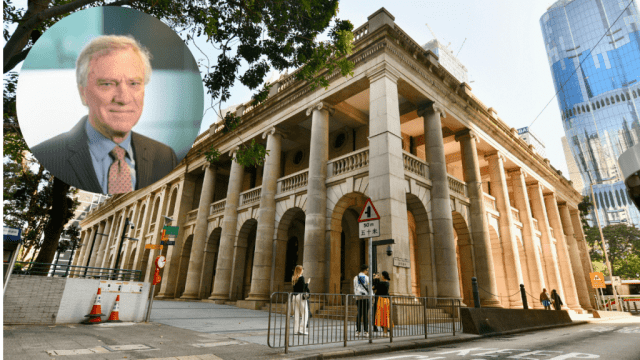
Hong Kong has recommended retired New Zealand Supreme Court judge Sir Terence Arnold for appointment as a non permanent judge of the Court of Final Appeal, adding decades of senior judicial experience to the city's highest court. The proposed appointment, accepted by the Chief Executive following a recommendation from the Judicial Officers Recommendation Commission, now requires formal endorsement by the Legislative Council before it can proceed.
Chief Justice Andrew Cheung welcomed the Chief Executive's acceptance of the recommendation, according to the announcement. The appointment will be made under the Basic Law and the Hong Kong Court of Final Appeal Ordinance, which govern the city's highest appellate court and its judicial appointments.
Arnold's proposed return to judicial service comes after a career spanning senior legal and judicial positions in New Zealand. He served as the country's Solicitor General before joining its Court of Appeal and later its Supreme Court. He retired from the permanent bench in 2017.
If formally appointed, he will join a group of overseas jurists who can sit on Hong Kong's highest court when it hears major appeals. The move will increase the number of non permanent judges from other common law jurisdictions from five to six, giving the court greater flexibility when arranging hearings and selecting judicial panels.
Legislative Council endorsement remains necessary
The recommendation has passed an important executive stage, but the appointment is not yet complete. The government must seek the Legislative Council's formal endorsement in accordance with the applicable legal framework.
The process reflects the distinct stages involved in appointing judges to Hong Kong's Court of Final Appeal. The Judicial Officers Recommendation Commission makes recommendations, the Chief Executive accepts the recommendation, and the appointment proceeds through the required legislative process.
The Basic Law provides the constitutional framework for Hong Kong's judicial system, while the Court of Final Appeal Ordinance sets out arrangements governing the court's operation, including its judicial composition.
The court serves as Hong Kong's final appellate authority, hearing cases that have progressed through lower courts and raise questions requiring a final judicial determination. Its decisions can affect the interpretation and application of laws across a broad range of civil and criminal proceedings.
Arnold's proposed appointment would add another experienced common law jurist to the available pool of judges. However, his nomination should not be confused with an immediate change to the court's composition. The formal endorsement and appointment process must first be completed.

Overseas judicial roster expands to six
Arnold's addition would bring the number of non permanent judges from overseas common law jurisdictions serving on the Court of Final Appeal to six. The group includes jurists from New Zealand, Australia and the United Kingdom.
They serve alongside four local non permanent judges, according to the information provided in the appointment announcement.
The court maintains separate rosters for local non permanent judges and judges from overseas common law jurisdictions. These arrangements allow the court to draw on a wider range of judicial experience while maintaining its established structure.
The Court of Final Appeal Ordinance sets a combined statutory ceiling of 30 judges across the relevant rosters. The increase in overseas judges therefore adds to the available pool without changing the basic structure of the court.
For an appellate court, having a larger roster can help when judges have conflicting commitments or when several cases require hearings within the same period. A broader pool also gives the court more options when assembling panels for complex appeals.
The proposed appointment does not mean Arnold will automatically sit on every case or that the court's decisions will change because another judge has joined the roster. His participation would depend on the court's arrangements and the cases assigned to him.
The expansion is primarily an administrative and judicial staffing development. It gives the court more flexibility while retaining the existing rules governing the composition of appeal panels.
How Hong Kong's highest court hears appeals
Substantive appeals before the Court of Final Appeal are heard by a five member panel. Under the arrangement described in the announcement, the panel consists of the Chief Justice, three permanent judges and one non permanent judge selected from either the local or overseas roster.
The choice of a non permanent judge allows the court to draw on the experience of senior jurists who may have served in other common law jurisdictions. Their participation can bring additional perspectives to cases involving complicated legal questions.
Common law systems share historical and methodological links, including the importance of judicial precedent and reasoned decisions. However, individual jurisdictions develop their own legislation, procedures and legal principles. A judge's experience in one jurisdiction does not mean that its laws automatically apply in another.
That distinction makes familiarity with common law reasoning useful, while requiring judges to apply the law governing the case before them.
The five member structure also means the court must coordinate the availability of its judges before hearings can proceed. A larger roster of non permanent judges can ease scheduling pressures, particularly when several appeals require substantial preparation or extended hearings.
The court's work extends beyond resolving disputes between individual parties. Final appellate decisions can clarify legal principles, guide lower courts and influence how legislation is interpreted in future cases.
Arnold brings decades of New Zealand legal experience
Arnold held several senior positions in New Zealand before retiring from its permanent judiciary in 2017.
He served as Solicitor General, a senior government legal role, before moving to the Court of Appeal and subsequently the Supreme Court of New Zealand. Those positions placed him within the country's senior legal and appellate institutions.
His professional background spans government legal work and judicial decision making. Experience in both areas can provide an understanding of how legal arguments develop, how courts assess competing interpretations and how appellate rulings affect the wider legal system.
The proposed appointment would draw on that experience in Hong Kong, where the Court of Final Appeal operates within its own constitutional and statutory framework.
The announcement presents Arnold's experience as an addition to the court's existing judicial resources. It does not identify any particular case he is expected to hear, nor does it suggest that his appointment is connected to a specific pending appeal.
His retirement from New Zealand's permanent bench in 2017 also does not prevent him from being considered for a non permanent judicial role in another jurisdiction, subject to that jurisdiction's appointment requirements.
What the appointment means for the court
The recommendation comes within Hong Kong's established system of appointing overseas judges to its highest appellate court. Their participation provides access to experienced jurists from other common law jurisdictions while allowing the court to retain its prescribed panel structure.
Increasing the overseas roster from five members to six could make it easier to arrange hearings when judges are unavailable. It also expands the number of senior jurists available to contribute to the court's work.
The practical effect will depend on the appointment being completed and on how the court uses its expanded roster. The change does not alter the five member panel arrangement described in the announcement, the court's legal jurisdiction or the requirement that judges apply Hong Kong law.
The next formal step is for the government to seek the Legislative Council's endorsement. Until that process is completed, Arnold remains a recommended candidate rather than an appointed non permanent judge of the Court of Final Appeal.
Will the addition of another experienced overseas jurist improve the court's scheduling flexibility and appellate capacity once the appointment receives formal endorsement?