

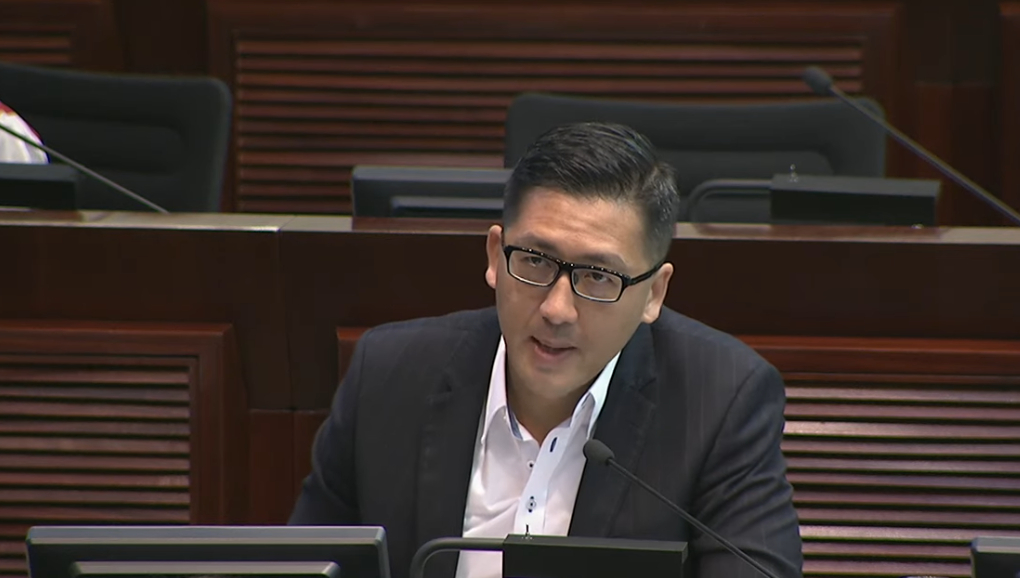
Hong Kong’s Court of Appeal has rejected the government’s attempt to overturn former lawmaker Lam Cheuk Ting’s acquittal in a case linked to the city’s 2019 protests. The three judge panel upheld the lower court’s decision after finding that prosecutors could not establish whether the photographs at the centre of the allegations had actually existed.
The ruling, delivered on Friday, is a legal victory for Lam in a case that began with a confrontation at Tuen Mun Park on July 6, 2019. Prosecutors alleged that Lam and two other defendants pressured a man to delete photographs from his mobile phone after protesters suspected he had taken close up images of demonstrators outside police headquarters in Wan Chai.
The Department of Justice had challenged the original acquittals, arguing that the case warranted a different outcome. But appeal judges Derek Pang, Keith Yeung and Judianna Barnes upheld the District Court’s decision, leaving the acquittals intact.
The judges acknowledged that deleting photographs could obstruct police investigations and legal proceedings. However, they found that the prosecution had not established whether the images in question existed in the first place.
The decision highlights a central issue in criminal proceedings: allegations must be supported by evidence that establishes the elements of an offence. Even in a politically sensitive case arising from major public unrest, suspicion alone cannot replace proof.
What Happened in the 2019 Hong Kong Protest Case?
The case originated during a period of widespread demonstrations that transformed Hong Kong’s political climate in 2019.
On July 1 that year, protesters gathered outside the police headquarters in Wan Chai. Some participants later suspected that a man, identified in court as X, had taken close up photographs of demonstrators. Four days later, on July 6, a confrontation involving X took place at Tuen Mun Park.
Prosecutors alleged that Lam and two co defendants pressured X to delete images from his phone. They argued that the alleged conduct interfered with the course of justice.
Lam was charged with perverting the course of justice. Social worker Aggie Chung faced charges of criminal damage and accessing a computer with dishonest intent. Journalist Ronnie Tsang was charged with perverting the course of justice and participating in an unlawful assembly.
The case required the court to examine what happened during the confrontation and whether the prosecution had established the offences beyond the applicable criminal standard of proof.
The wider political context was significant, but the legal question remained specific. Prosecutors had to establish the facts supporting each charge rather than rely solely on the tense atmosphere surrounding the protests.
That distinction became central to the eventual acquittals and the government’s unsuccessful appeal.

Why the District Court Acquitted Lam Cheuk Ting
In January 2023, District Court judge Douglas Yau acquitted Lam and the other defendants of their charges, except for Tsang’s unlawful assembly charge.
Yau found that Lam had acted as a peacemaker during the confrontation. The judge concluded that Lam was trying to defuse a tense situation and get X out of danger after the man had been surrounded by protesters.
The court considered the circumstances in which Lam asked for X’s phone to be checked. The prosecution alleged that the conduct amounted to interference with potential evidence, while the judge’s assessment placed emphasis on Lam’s actions in managing the confrontation.
The distinction mattered because the court was not simply deciding whether a disagreement had occurred. It had to determine whether the evidence supported the specific criminal allegations brought against each defendant.
The Department of Justice subsequently appealed the acquittals, seeking to have the lower court’s decision overturned.
That challenge brought the case before the Court of Appeal, where three judges considered the prosecution’s arguments and the evidential basis for the original verdict.
Their decision left the acquittals unchanged.
Court of Appeal Focuses on Whether the Photos Existed
The key issue in the appeal was whether prosecutors could establish that the photographs allegedly targeted for deletion had actually existed.
The Court of Appeal recognised that destroying photographs could obstruct an investigation if the images constituted relevant evidence. Investigators may rely on photographs and other digital material to establish what happened during an incident, identify individuals or assess competing accounts of events.
But the judges distinguished that general principle from the evidence available in this particular case.
They found there was no way to confirm whether the photographs in question had existed. That uncertainty undermined the prosecution’s attempt to overturn the acquittals.
The ruling did not establish that deleting photographs is always lawful or that such conduct can never amount to obstruction of justice. Instead, the judges assessed whether the prosecution had established the factual basis needed to challenge the original verdict.
That distinction is important. A court cannot assume that disputed evidence existed simply because a witness or another person suspected that it did. The prosecution must establish the relevant facts through admissible evidence and satisfy the legal requirements of the charge.
By upholding the acquittals, the Court of Appeal rejected the government’s effort to secure a different result in this case.
How the Failed Appeal Affects Lam’s Legal Position
The ruling preserves Lam’s acquittal on the charge of perverting the course of justice arising from the Tuen Mun Park incident. It also leaves the acquittals of Chung and Tsang on their respective charges unchanged, apart from Tsang’s separate unlawful assembly conviction.
However, the decision does not mean Lam will be released from prison.
The former Democratic Party lawmaker is serving a six year and nine month sentence following his conviction in the Hong Kong 47 national security proceedings. That separate case concerned an unofficial primary election held in 2020 involving pro democracy figures.
Prosecutors in the national security case argued that the participants had taken part in a plan to use legislative powers in a way that would undermine the government. Lam pleaded not guilty but was convicted in May 2024.
The protest case and the national security proceedings involve different allegations and legal issues. The Court of Appeal’s decision in the photograph case does not automatically alter Lam’s conviction or sentence in the other proceedings.
This distinction is essential to understanding the ruling. Lam has secured a favourable outcome in one criminal case, but he remains imprisoned because of the separate national security conviction.
What the Judgment Means for Hong Kong’s 2019 Protest Cases
The failed appeal brings renewed attention to the role of evidence in prosecutions connected to Hong Kong’s 2019 unrest.
The demonstrations led to confrontations, police investigations and numerous criminal cases. Courts examining allegations arising from that period have had to assess the conduct of individual defendants against the evidence presented in each case.
The Lam judgment demonstrates why that process matters. The political sensitivity of an incident does not remove the need to establish the facts supporting a criminal charge.
It also illustrates the difference between a court recognising that certain conduct could obstruct an investigation and finding that the prosecution has proved the relevant offence in a particular case.
For the Department of Justice, the appeal’s failure means the original acquittals stand. For Lam, the decision closes another legal challenge arising from the 2019 protests, although his separate prison sentence remains in effect.
Readers should also distinguish the court’s findings from the wider political arguments surrounding the protests. The judgment addressed the evidence and charges before the court, not every question about policing, protest activity or Hong Kong’s political future.
The central outcome is clear: the Court of Appeal found insufficient grounds to overturn the acquittals because prosecutors could not establish whether the disputed photographs existed.
Do you believe this ruling reinforces the importance of evidence in politically sensitive court cases? Share your perspective on Hong Kong’s latest appeal judgment.