

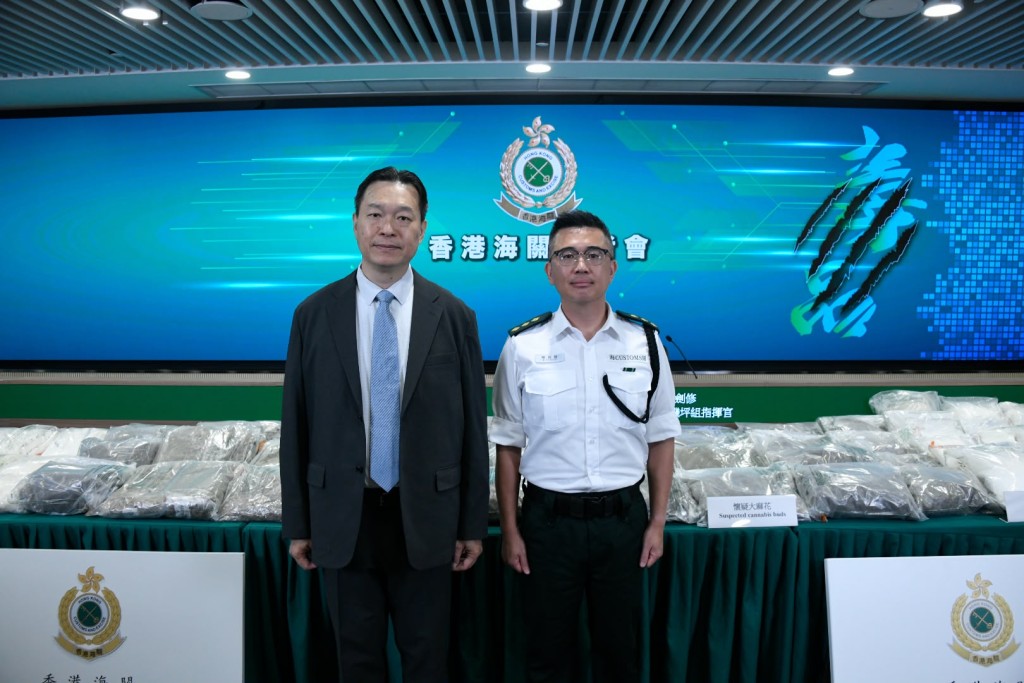
Hong Kong Customs seized about 6.1 tonnes of drugs worth an estimated HK$1.4 billion and arrested 150 people during a four month anti narcotics operation conducted with mainland Chinese and overseas law enforcement agencies.
The joint operation ran from May through August and resulted in the detection of 424 suspected drug trafficking cases, according to Customs. Of those cases, 118 involved passengers travelling through arrival channels, while 306 involved cargo shipments.
The scale of the seizures reflects the range of trafficking methods being used to move illegal drugs across borders, with Customs officers uncovering narcotics hidden inside luggage, disguised as everyday products and concealed within commercial cargo.
HK$500 Million Drug Case
The largest individual case recorded during the operation involved drugs with an estimated value of HK$500 million.
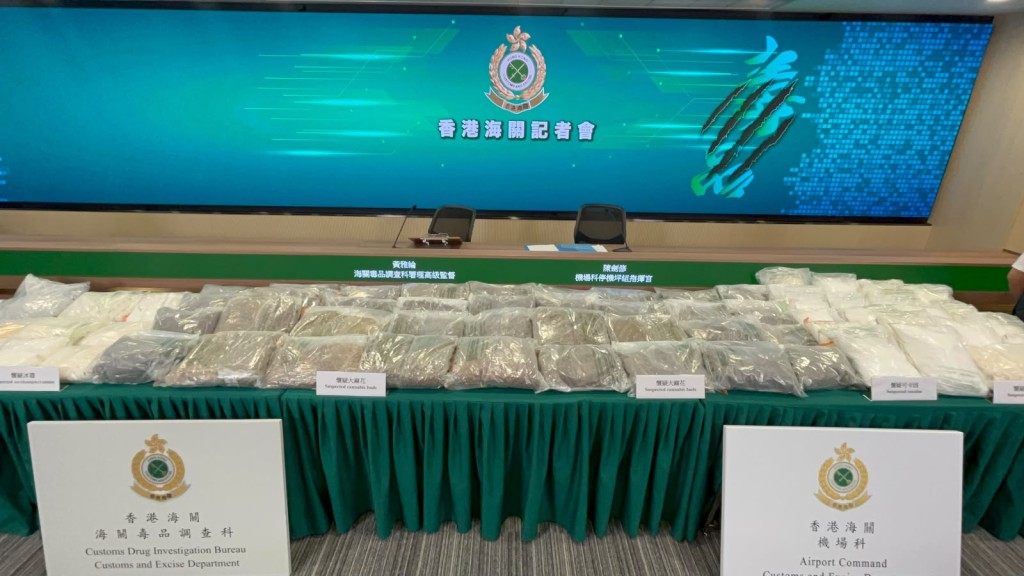
Customs officers said intelligence sharing with overseas law enforcement agencies helped authorities intercept 2.4 tonnes of suspected cannabis concealed in cargo. The investigation also led to the dismantling of a major transnational drug trafficking syndicate.
The case illustrates how cooperation between law enforcement agencies in different jurisdictions can provide investigators with information about suspicious shipments before they reach their intended destinations.
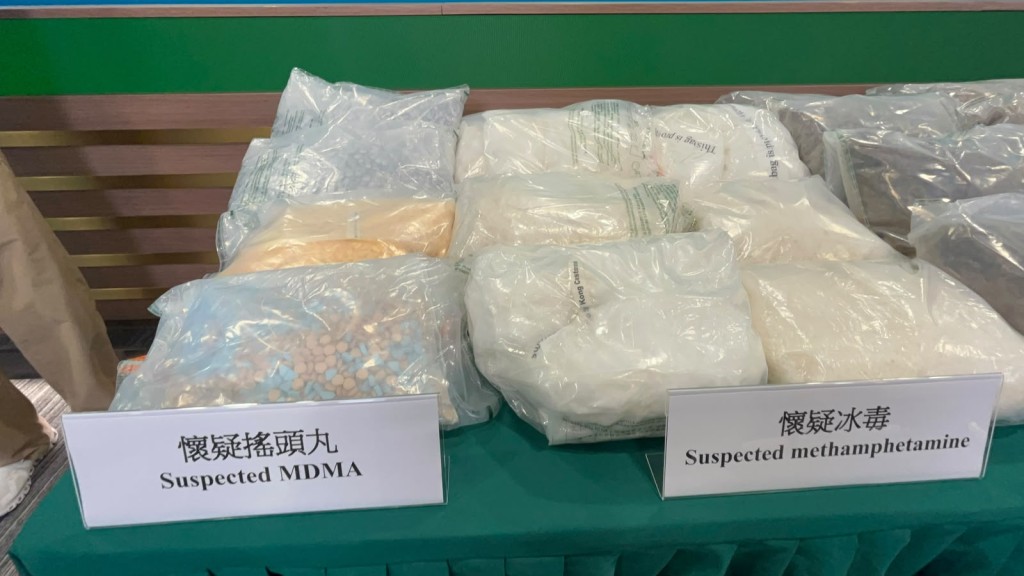
Customs said the four month operation resulted in the seizure of several major categories of narcotics. Authorities confiscated about 3.6 tonnes of cannabis, 2.2 tonnes of ketamine, 199 kilograms of cocaine, 60 kilograms of heroin and 48 kilograms of methamphetamine.
The seizures covered drugs arriving through both passenger and cargo channels, showing that traffickers continued to use multiple routes rather than relying on a single method of transportation.
Drugs Hidden Inside Statues and Luggage
Customs officers encountered a range of concealment techniques during checks on arriving passengers.
In one case, a 23 year old passenger travelling from Brazil through Turkey was found carrying 3.4 kilograms of cocaine hidden inside two plaster statues.
The statues were used to disguise the cocaine as ordinary objects, allowing the drugs to be carried through the passenger channel without being immediately visible.
In another case involving a passenger arriving from Malaysia, Customs officers discovered two kilograms of ketamine concealed beneath false wooden bottoms inside luggage.
The methods differed, but the objective was the same: to make illegal substances appear to be part of legitimate personal belongings.
Such concealment techniques can make traditional visual checks more difficult because officers must identify irregularities in objects that may appear harmless at first inspection.
Ketamine Disguised as Paint
Cargo shipments provided another set of challenges for Customs officers, who found narcotics disguised as legitimate commercial products.
In one shipment originating from the Netherlands, inspectors discovered 100 kilograms of ketamine concealed inside metal tins that were presented as solid paint.
The contents were not what the containers suggested. Instead, the tins were being used to conceal a large quantity of illegal drugs within an apparently ordinary cargo shipment.
Another shipment from Germany contained 131 kilograms of ketamine molded into shapes resembling sugar cubes and packed inside plastic tubs.
The disguises were designed to make the narcotics resemble commercially traded goods rather than controlled substances.
The cases demonstrate why cargo inspections can involve more than checking labels and declarations. Drug traffickers can alter the physical appearance of narcotics and place them inside common containers in an attempt to avoid detection.
Young People Among Those Arrested
The 150 people arrested during the operation ranged in age from 18 to 68.
Customs said young people accounted for a significant share of the arrests. Around 70 percent of those detained were between 18 and 40 years old.
The age profile has prompted concern among authorities over the recruitment of young people by international drug trafficking groups.
Customs warned that syndicates are actively targeting young people and students to carry drugs across borders. Authorities said the risk is particularly pronounced during periods of heavy travel, including the summer holiday season.
Young travellers can be approached to carry luggage or packages without fully understanding what they are transporting, while others may knowingly become involved after being offered financial incentives.
The warning comes as Customs continues to monitor passenger movements alongside commercial shipments passing through Hong Kong.
Drug Offences Rise at Hong Kong Airport
Drug related offences at Hong Kong International Airport increased year on year, while the total quantity of drugs seized and the number of arrests also rose.
Customs linked part of the increase to changes in international air traffic and passenger movements.
Officials pointed to continuing geopolitical tensions, including conflicts in the Middle East, which have contributed to changes in flight routes between Asia and Europe. Some flights have been redirected through regional transit hubs, increasing the movement of passengers and cargo through alternative aviation routes.
At the same time, the summer travel period brought a seasonal increase in passenger traffic.
For Customs officers, higher passenger volumes and more cargo movements create additional opportunities for traffickers to attempt cross border shipments. The increase in traffic also means that law enforcement agencies must distinguish legitimate travellers and commercial consignments from those being used by criminal networks.
Intelligence Sharing Across Borders
The operation involved cooperation between Hong Kong Customs, mainland Chinese authorities and overseas law enforcement agencies.
Information exchanged between agencies played a role in identifying suspicious cargo and intercepting large quantities of drugs before they could enter the wider distribution chain.
The seizure of 2.4 tonnes of suspected cannabis, in particular, followed intelligence sharing with foreign counterparts and was linked to the dismantling of a major transnational syndicate.
Drug trafficking networks frequently operate across several jurisdictions. Drugs may be produced in one country, transported through several transit points and eventually delivered to a different market. Investigators therefore rely on cooperation between agencies that may be responsible for different stages of the same trafficking route.
For Hong Kong, its position as an international aviation and cargo hub makes passenger screening, freight inspection and intelligence cooperation important parts of the anti narcotics effort.
Traffickers Continue to Change Their Methods
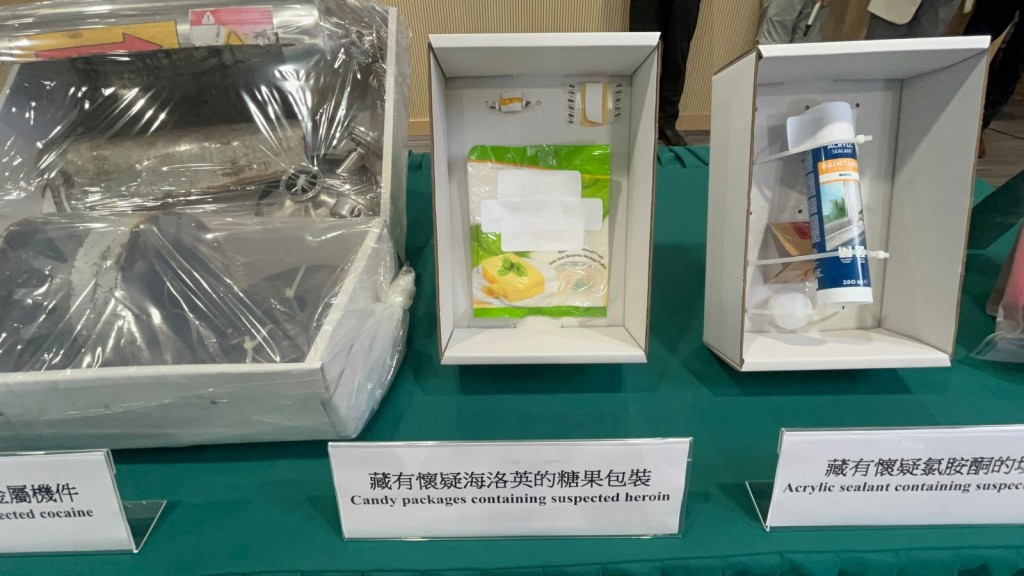
The cases uncovered during the four month operation show how traffickers continue to experiment with ways of hiding drugs.
Cocaine was placed inside plaster statues. Ketamine was hidden beneath false luggage compartments. Other quantities were disguised as paint or molded into shapes resembling sugar cubes.
The variety of methods means that enforcement officers cannot rely on a single form of detection. Passenger baggage, commercial consignments and unusual packaging can all become part of an investigation.
The figures from the operation also show the scale of the challenge. More than six tonnes of drugs were seized across 424 cases, while 150 suspects were arrested.
Customs has also warned young people and students about the risks of becoming involved in cross border drug trafficking. A person carrying a package or piece of luggage for someone else can face serious consequences if the contents are illegal, regardless of who originally packed the items.
With international travel increasing during peak holiday periods and global flight routes continuing to shift, Customs is maintaining checks on both passenger and cargo channels.
The four month operation has already produced major seizures and arrests, but the cases also provide investigators with information about the methods and networks being used to move drugs through Hong Kong. Authorities will continue relying on inspections, intelligence sharing and cooperation with overseas agencies to intercept shipments before they reach the streets.