


Thousands of cyclists who joined Hong Kong’s 2026 Cyclothon on Sunday missed a planned ride across Ting Kau Bridge after a lead vehicle mistakenly directed the 32km group towards Nam Wan Tunnel. The organisers apologised for the route error, which also caused brief congestion along parts of the course, including near the finish line.
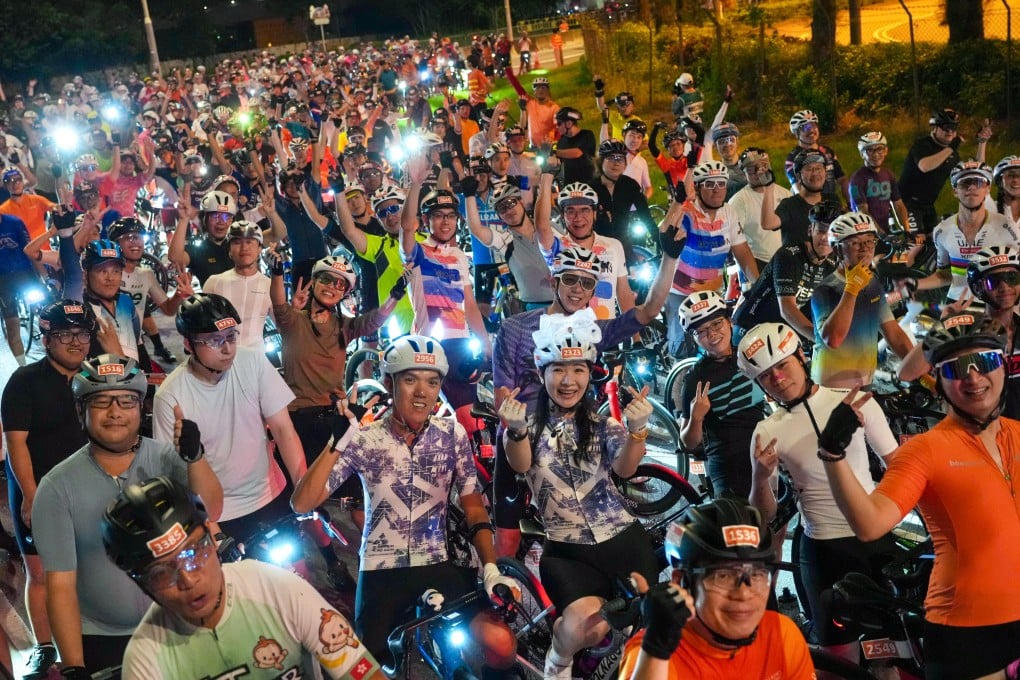
The incident occurred during the Sun Hung Kai Properties Hong Kong Cyclothon on October 11, an event that attracted around 6,000 cyclists to the city’s streets. Participants in the 32km race had expected to follow a route featuring Ting Kau Bridge and Stonecutters Bridge, two prominent structures offering views of Hong Kong’s western waters and surrounding urban scenery.
In a statement issued on Sunday evening, the Cycling Association of Hong Kong, China, which organised the event, explained that the mistake followed an earlier accident involving two cyclists in the separate 56km race.
The association said its lead vehicle misinterpreted changes to the placement of traffic cones near the Nam Wan Tunnel entrance. Those changes had been made to create an emergency lane for ambulances responding to the injured riders.
The organisers apologised to participants who missed the planned bridge section and experienced disruption during the event.
How an Emergency Lane Led to the Wrong Turn
According to the association, two cyclists taking part in the 56km event were injured in an accident earlier on Sunday morning while travelling towards Ting Kau Bridge.
On-site staff placed traffic cones near the entrance to Nam Wan Tunnel to open an emergency lane. The arrangement was intended to help ambulances reach the injured cyclists as quickly as possible and ensure they could receive medical attention without unnecessary delay.
However, the adjusted positions of the cones confused the pilot car guiding the 32km group, the association said.
The driver assumed that the course had been changed and failed to turn towards Ting Kau Bridge as originally planned. Instead, the vehicle continued straight towards Nam Wan Tunnel.
The mistake affected the riders following the lead vehicle. Because the group was travelling downhill, cyclists could not safely make a sudden change of direction after the vehicle took the wrong route.
The association said the riders therefore continued into the tunnel rather than attempting to turn back towards the intended bridge route.
The incident illustrates how a change made for emergency access can affect a large sporting event when route guidance does not account for the revised traffic arrangements. In this case, the cones were positioned to help emergency services, but their altered placement contributed to the lead vehicle's mistaken decision.
The association did not provide further details about the injuries sustained by the two cyclists or identify the precise point at which the lead vehicle's route was checked.
Organisers Apologise for Disappointment and Congestion
In its statement, the Cycling Association of Hong Kong, China expressed regret over the disruption and acknowledged that participants had missed an important part of the course.
The association apologised for the lead vehicle's misjudgment, the loss of the planned Ting Kau Bridge experience and the brief traffic congestion that followed.
The intended route was one of the event's attractions. Ting Kau Bridge is a recognisable part of Hong Kong's transport infrastructure, and its setting offers cyclists views of the city's western waters that differ from the scenery along tunnel sections.
For participants who had registered expecting to complete the advertised course, missing the bridge section meant that their race experience differed from what had been planned.
The association also acknowledged that the mistake caused brief bottlenecks at several points along the route, including the finish area.
Although the statement explained how the error happened, the available information did not establish whether the organisers would offer compensation, refunds or another form of remedy to affected participants.
The apology came after the race had already concluded, with the association publicly addressing the mistake that had disrupted the 32km event.
Cyclists Push Their Bikes Towards the Finish
The route error also affected the atmosphere around the finish line.
Images and videos shared after the event showed groups of cyclists dismounting and pushing their bicycles towards the finishing area. Some participants described the experience as a "push-a-thon", a comment that captured their frustration with the disruption.
The scenes contrasted with the experience participants would normally expect from a mass cycling event, where riders aim to complete the course on their bicycles rather than walk through sections of the route.
The association attributed the congestion to the route adjustment but did not specify how many participants were affected or how long the bottlenecks lasted.
With around 6,000 cyclists taking part in the overall event, even a relatively short disruption could affect the movement of large groups, particularly where riders converge near a shared finishing area.
The available statement did not indicate that the entire event had been cancelled. Instead, it focused on the incorrect turn taken by the lead vehicle and the resulting diversion of the 32km group.
The incident nevertheless raised questions about how route changes are communicated during large sporting events, especially when emergency arrangements require staff to alter the placement of traffic controls.

Hong Kong Cyclothon Draws Around 6,000 Participants
The 2026 Hong Kong Cyclothon began at the West Kowloon Cultural District on Sunday, October 11.
Organised by the Cycling Association of Hong Kong, China, the event was presented under the name Sun Hung Kai Properties Hong Kong Cyclothon. It attracted approximately 6,000 cyclists across its different race categories.
The programme included a 32km race and a separate 56km event. The longer race was the one in which the two cyclists were injured before the route error affected the shorter group.
The planned 32km course included Ting Kau Bridge and Stonecutters Bridge, combining sections of Hong Kong's road network with views of its bridges, harbour areas and surrounding urban environment.
The Hong Kong Tourism Board's description of the route promoted its distinctive urban and natural scenery. The bridge sections were therefore more than simple connections between roads; they formed part of the experience advertised to participants.
For a mass participation cycling event, route planning requires coordination among organisers, lead vehicles, road management staff and emergency services. Each group must work from the same route information, particularly when an incident forces changes to traffic arrangements.
The Cyclothon incident showed how an incorrect interpretation by a lead vehicle can affect hundreds or potentially thousands of riders following its directions. The association's statement identified the cone placement as the immediate source of confusion, although it did not provide a detailed account of the event's route verification procedures.
Emergency Access and Race Safety Remain Central Issues
The accident involving the two cyclists added an important safety dimension to the incident.
Opening an emergency lane allowed ambulances to reach injured participants, according to the organisers. That response was intended to prioritise medical access, even as the cycling event continued.
However, the subsequent wrong turn demonstrated the need to ensure that emergency arrangements do not create uncertainty for vehicles guiding participants through a course.
Clear communication between route marshals, lead vehicle crews and event control teams can help prevent similar mistakes. When cones or barriers move, staff need to make sure the updated arrangement is understood by everyone responsible for directing riders.
Lead vehicles also need reliable instructions for responding to unexpected changes. If the intended route becomes unclear, a coordinated decision from event control can reduce the risk of sending a large group into the wrong section of a course.
The association's public statement explained why the lead vehicle continued towards Nam Wan Tunnel, but it did not outline any additional safety measures or changes planned for future editions of the Cyclothon.
It also did not announce whether a formal review would examine the incident, the route marking arrangements or the communication between the lead vehicle and on-site staff.
Those details would help clarify how organisers intend to prevent a similar disruption at future events.
For participants, the immediate issue was the missed bridge section and the congestion that followed. For organisers, the incident highlighted the need to maintain clear route guidance while ensuring emergency services can reach injured riders without delay.
The Cycling Association of Hong Kong, China has acknowledged the mistake and apologised to affected participants. The next step is to establish whether changes to route coordination and emergency procedures will be introduced before the next Cyclothon.
Did the route error affect your experience of the 2026 Hong Kong Cyclothon? Share your thoughts on how organisers can prevent similar incidents at future cycling events.