

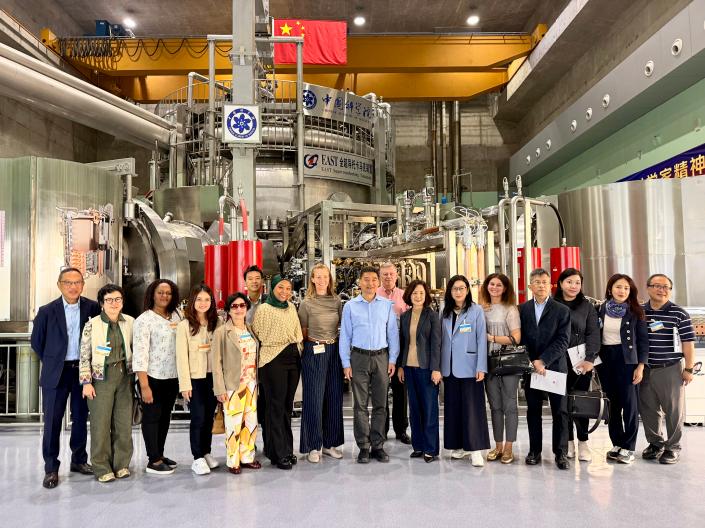
A Hong Kong-based delegation visiting Hefei, eastern China, on Thursday examined one of the country’s most ambitious scientific projects, the Experimental Advanced Superconducting Tokamak (EAST), widely known as China’s “artificial sun”. The visit brought foreign consular representatives and business leaders closer to the research behind controlled nuclear fusion and opened discussions about stronger commercial and technological ties between Hong Kong and Anhui province.
Located on Science Island in Hefei, the capital of Anhui, EAST is designed to help scientists understand how to reproduce the process that powers the Sun. Its complex engineering and experimental capabilities attracted considerable interest from delegation members, who asked researchers about the facility’s purpose and the prospects for turning fusion research into a practical energy source.
The visit formed part of a broader opportunity for representatives from Hong Kong and the international business community to learn about technological developments in mainland China and identify areas for future cooperation.
Inside the machinery of China’s artificial sun
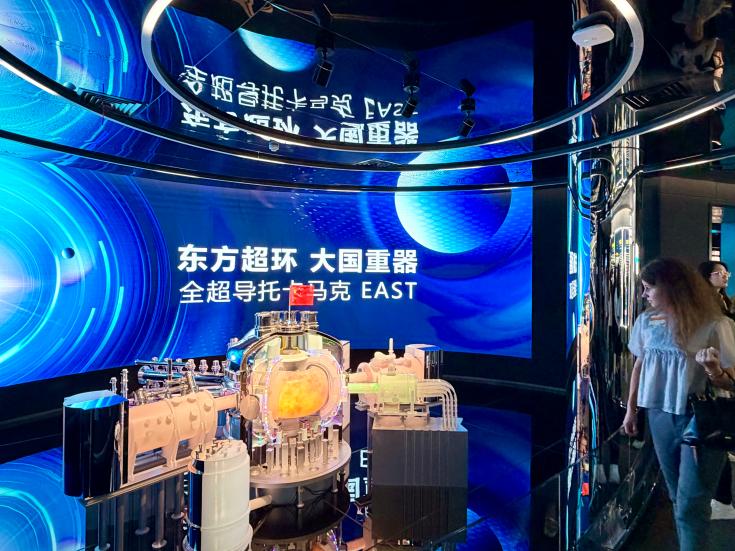
EAST is a large experimental fusion device made up of nearly one million components working together within a complex metal structure. Its scale and engineering requirements reflect the difficulty of recreating on Earth the conditions under which atomic nuclei combine and release energy.
During the visit, researchers introduced the delegation to the facility and explained its role in studying controlled nuclear fusion. The technology seeks to reproduce the basic process that powers stars, using specialised equipment to confine extremely hot plasma under carefully controlled conditions.
Unlike conventional nuclear power stations, which generate energy through nuclear fission, fusion research focuses on combining light atomic nuclei. Scientists are investigating whether this process can eventually provide a reliable source of electricity for human use.
The potential attraction of fusion lies in its promise of producing substantial energy without the carbon emissions associated with burning fossil fuels during operation. However, turning experimental results into a commercially viable power source remains a major scientific and engineering challenge.
Researchers must find ways to heat plasma to extremely high temperatures, keep it confined long enough for fusion reactions to occur and develop systems capable of operating reliably under demanding conditions. They must also address the energy required to run the equipment and the practical costs of building and maintaining future power plants.
EAST provides a research platform for investigating these problems. Its work contributes to the broader scientific effort to improve understanding of plasma behaviour and the technologies required to sustain fusion experiments.
The delegation’s questions reflected interest not only in the machinery itself but also in the long-term objectives behind the project. The facility offered a tangible example of how advanced scientific research can require extensive technical infrastructure, specialised expertise and sustained investment.
A new stage in fusion research
Scientists in Hefei are also developing the Burning Plasma Experimental Superconducting Tokamak, a project intended to build on the work conducted at EAST. According to the information presented during the visit, the new facility is expected to be completed by the end of 2027.
The project is designed to bring fusion research closer to the conditions needed for future power generation. Research involving burning plasma is particularly important because the energy produced by fusion reactions would help sustain the plasma itself, reducing the amount of external heating required to maintain the process.
Achieving and controlling such conditions would represent a significant step in the development of fusion technology. Nevertheless, the construction of a new experimental facility does not, by itself, mean that commercial fusion electricity is imminent. Researchers will still need to demonstrate that the technology can operate effectively and economically before it can be adopted for widespread power production.
The planned facility illustrates the continuing investment in experimental infrastructure needed to advance fusion science. It also points to the scale of the work required to move from laboratory research towards practical applications.
For the visiting delegation, the projects provided an opportunity to understand the direction of scientific development in Anhui and consider how businesses, research institutions and international partners might contribute to related fields.
Hong Kong seeks stronger links with Anhui
Andrew Tsui, associate director of international and mainland relations at the Hong Kong Trade Development Council, said he was impressed by the advanced technologies being developed in Hefei, including the artificial sun.
Tsui said Hong Kong was strengthening its position as an international innovation and technology centre alongside its established role as an international financial and trade hub.
He pointed to the complementary strengths of Hong Kong and Anhui, suggesting that closer engagement could create opportunities for businesses and research communities on both sides.
Hong Kong offers international financial connections, professional services and a network of universities. These resources can help businesses access funding, establish overseas partnerships and connect with international markets. Anhui, meanwhile, has scientific research capabilities and industrial expertise that may provide a foundation for technology development and commercial expansion.
Combining these strengths could support cooperation in areas where scientific research meets business development. Research institutions may benefit from wider international connections, while companies seeking to expand beyond mainland China could draw on Hong Kong's experience in trade, finance and professional services.
Tsui also highlighted the role of Hong Kong's universities in creating opportunities for talent exchanges. Academic partnerships can help researchers and students share expertise, develop professional networks and build connections between institutions.
Such exchanges may be particularly relevant to advanced technology fields, where progress often depends on cooperation among scientists, engineers, investors and commercial organisations.
For Anhui companies looking to expand internationally, Hong Kong's business networks and professional services could provide assistance with overseas market access. Potential areas of cooperation would depend on the needs of individual companies, the availability of suitable partners and the commercial viability of specific projects.
From scientific research to international business
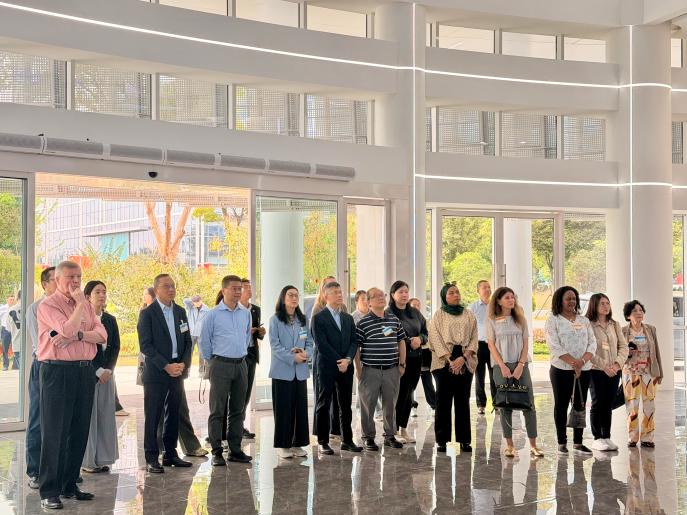
The visit to EAST also demonstrated how scientific facilities can serve as points of contact between research communities and business representatives. Although fusion research remains highly specialised, the wider technology ecosystem supporting such projects can involve engineering, advanced materials, precision manufacturing and other technical fields.
These connections may offer opportunities for companies operating beyond the energy sector itself. Businesses involved in specialised equipment, industrial systems and technical services can contribute to research infrastructure, while universities and research organisations can help develop the expertise needed to support new technologies.
However, turning scientific cooperation into commercial results requires more than an introductory visit. Partnerships generally depend on identifying shared objectives, establishing clear arrangements and determining how each organisation can contribute. For businesses considering international expansion, market research, regulatory understanding and access to suitable professional services also remain important.
Hong Kong's position as an international business centre could help facilitate these connections, while Anhui's research and industrial capabilities could give potential partners a practical basis for collaboration.
The delegation's visit provided an opportunity to examine these possibilities directly and to learn about the scientific work taking place in Hefei. It also brought attention to the relationship between technological development and the networks required to move research towards wider industrial use.
Tsui said Hong Kong hoped to deepen exchanges with Anhui and explore additional business opportunities in global markets.
His remarks reflected an interest in building longer-term relationships rather than limiting engagement to individual visits. Sustained cooperation could involve universities, technology companies, investors and professional service providers, depending on the areas where both sides identify common interests.
As Hefei continues its fusion experiments and develops the next stage of its research programme, the challenge for prospective commercial partners will be to identify realistic opportunities arising from the region's scientific and industrial work.
For Hong Kong and Anhui, the next step is to turn the interest generated by visits such as this one into specific research links, business partnerships and international projects. Which areas of technology and trade could offer the strongest opportunities for cooperation between the two regions?