

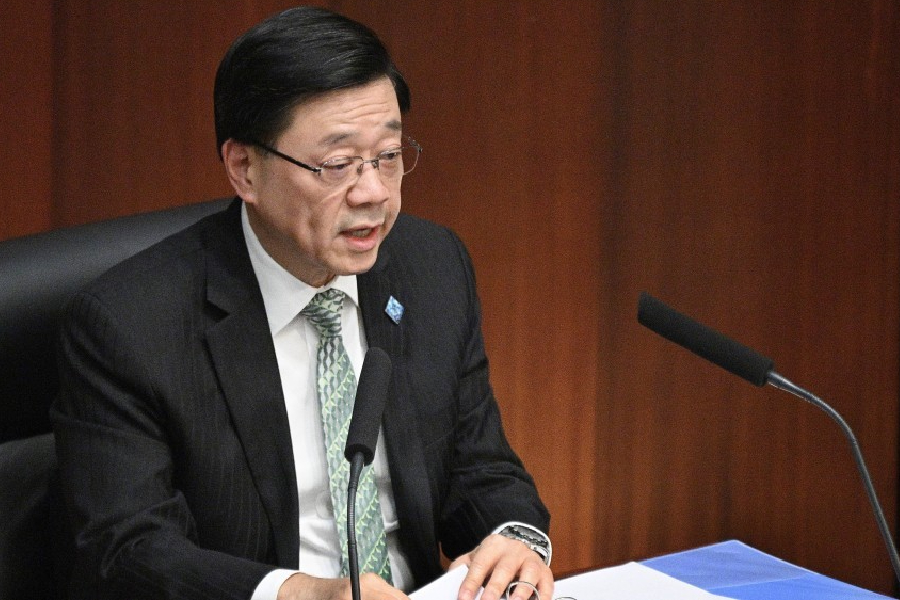
Hong Kong is preparing to open a new International Young Talent Exchange Base this year, alongside expanded internship opportunities with United Nations agencies and placements in mainland financial institutions, as Chief Executive John Lee Ka-chiu outlined a broader programme aimed at giving young people more international and professional experience.
Lee announced the measures in a video address to a youth entrepreneurship event, linking the initiatives to the government’s 2026 Policy Address and its First Five Year Plan for Economic and Social Development. The plans are designed to give young people more opportunities in international organisations, finance, aerospace, scientific research and other fields. (GovHK)
New base to expand international opportunities
The International Young Talent Exchange Base is scheduled to launch this year under the Home and Youth Affairs Bureau. According to the Policy Address, the base will promote international youth exchanges and invite members of the Youth Link network to participate.
One of its main programmes will be the HYAB United Nations Youth Leaders Internship Programme, which will offer internship placements at various United Nations agencies. The initiative is intended to give young people direct exposure to international organisations while allowing them to build professional experience outside Hong Kong. (GovHK)
The move follows existing efforts to increase Hong Kong youth participation in international organisations. Earlier this month, the government announced that a record 16 young public officers would join the United Nations Junior Professional Officer Programme. They are scheduled to work at UN offices in New York, Geneva, Vienna and Nairobi for two year assignments as Chinese personnel. (Hong Kong Government News)
For university students and young professionals, the new internship programme could provide another route into international work, particularly for those who have not previously had access to overseas placements.

More internships in mainland finance
The government is also planning a dedicated mainland finance internship programme for Hong Kong young people.
The scheme will place participants at major financial institutions on the mainland, giving them an opportunity to experience financial markets and professional working environments beyond Hong Kong.
The initiative fits into a wider policy direction set out in Hong Kong’s First Five Year Plan, which calls for young people to gain broader career experience in the Guangdong Hong Kong Macao Greater Bay Area and to make use of opportunities arising from the region's development. The plan also says the government will continue the Greater Bay Area Youth Employment Scheme and support employment, internships and entrepreneurship for Hong Kong youth in other mainland cities. (GovHK)
Hong Kong already has experience running mainland and overseas internship programmes. In February, the government announced its 2026 enterprise mainland and overseas summer internship programme, involving 29 major companies and placements across mainland cities and several overseas markets. The positions covered sectors including financial services, innovation and technology, pharmaceuticals, logistics, property, construction, retail, hotels and utilities. (Hong Kong Government News)
The new finance focused programme would add another route for young people interested in one of Hong Kong's strongest professional sectors.
Aerospace and scientific research opportunities
Lee also announced plans to expand training opportunities in aerospace on the mainland and increase research internships with the Chinese Academy of Sciences.
The measures are part of a broader effort to encourage more young people to enter innovation and technology fields.
Hong Kong has been increasing its involvement in China's aerospace programme. Earlier this month, Lee joined students from Hong Kong and Macao in a special Tiangong Class session featuring astronauts and space experts. The event included a live exchange with the Shenzhou 23 crew aboard China's space station. (Hong Kong Government News)
The government has also identified aerospace as an area for further development. Its 2026 Policy Address includes a new Special Call on Aerospace Technology to support national space missions, while Hong Kong is also seeking to strengthen its position as an international innovation and technology centre. (Hong Kong Government News)
The planned mainland training opportunities would give young Hong Kong participants exposure to China's growing aerospace sector and potentially connect students with research and technical career paths.
Research placements with the Chinese Academy of Sciences would provide another route into advanced scientific work. For students considering careers in research, engineering and technology, such programmes could offer practical experience that complements university study.
Youth policy tied to Hong Kong's five year plan
Lee presented the new opportunities as part of a wider approach to youth development.
The government's First Five Year Plan says Hong Kong will create more platforms for young people to gain education, employment, entrepreneurship and international exchange experience. It also calls for broader opportunities in areas including public affairs, science, arts and sports. (GovHK)
The plan sets out an ambition to develop a generation of young people with a stronger connection to Hong Kong and China, while also giving them an international outlook and encouraging them to pursue professional and entrepreneurial goals.
The government says more than 290 initiatives have already been introduced since the Youth Development Blueprint was announced. The latest policy measures extend that approach by placing greater emphasis on internships, employment, international exchanges and experience in emerging sectors. (GovHK)
The Youth Development Commission has also welcomed the new measures, describing the package as covering youth exchanges, internships, employment and entrepreneurship. It specifically pointed to expanded opportunities in finance, aerospace technology, high end scientific research and artificial intelligence. (GovHK)
International exposure alongside national development
The policy combines two strands of youth development that have become increasingly prominent in Hong Kong's government planning: greater international exposure and closer participation in national development.
The First Five Year Plan calls for youth exchanges with the mainland and international organisations, while also encouraging young people to make use of opportunities linked to national development. It says the Youth Development Summit will be developed as a flagship event for international youth exchange and collaboration. (GovHK)
Lee has repeatedly linked young people's international experience with Hong Kong's wider role between China and the rest of the world.
At a ceremony earlier this month for the 16 young public officers heading to the United Nations, he said Hong Kong youth could apply their professional expertise internationally while contributing to the city's role in national development and diplomacy. (Hong Kong Government News)
That approach is reflected in the new exchange base. The government intends to give young people opportunities to work with international organisations while also creating pathways into mainland industries and research institutions.
Opportunities across several career paths
The range of programmes means the new youth strategy is not limited to one sector.
Students interested in international affairs could pursue United Nations internships. Those considering banking and investment could seek placements with mainland financial institutions. Young people interested in engineering and space science could access aerospace training, while aspiring researchers could seek placements connected to the Chinese Academy of Sciences.
The government's wider two year 30,000 Youth Employment and Internship Programme will also cover the business sector, innovation and technology, start ups, construction and financial services. (GovHK)
Together, the initiatives are intended to provide practical experience rather than relying solely on classroom education.
For young people entering an increasingly competitive employment market, internships can also provide exposure to professional workplaces, industry contacts and specialised skills before graduation or at the beginning of their careers.
The next step will be implementation. Details such as eligibility requirements, application procedures, participating organisations and available placements will determine how widely young people can make use of the new programmes.
For Hong Kong students and graduates looking beyond the city's traditional career routes, the government's message is clear: international organisations, mainland financial institutions, aerospace programmes and scientific research are being positioned as additional avenues for gaining experience.
Which of these new opportunities would give Hong Kong's young people the skills and international experience they need to compete in the next stage of their careers?