

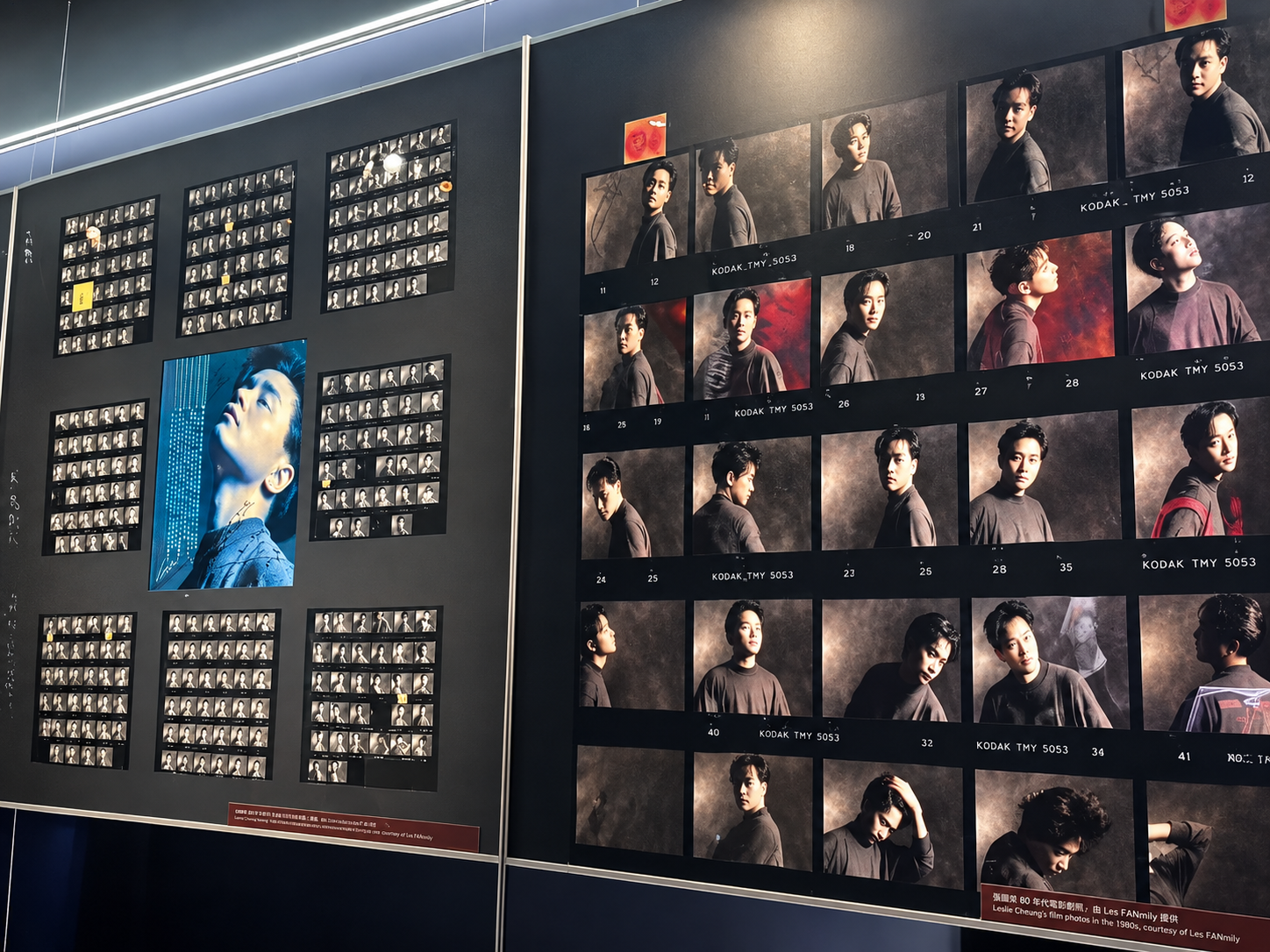
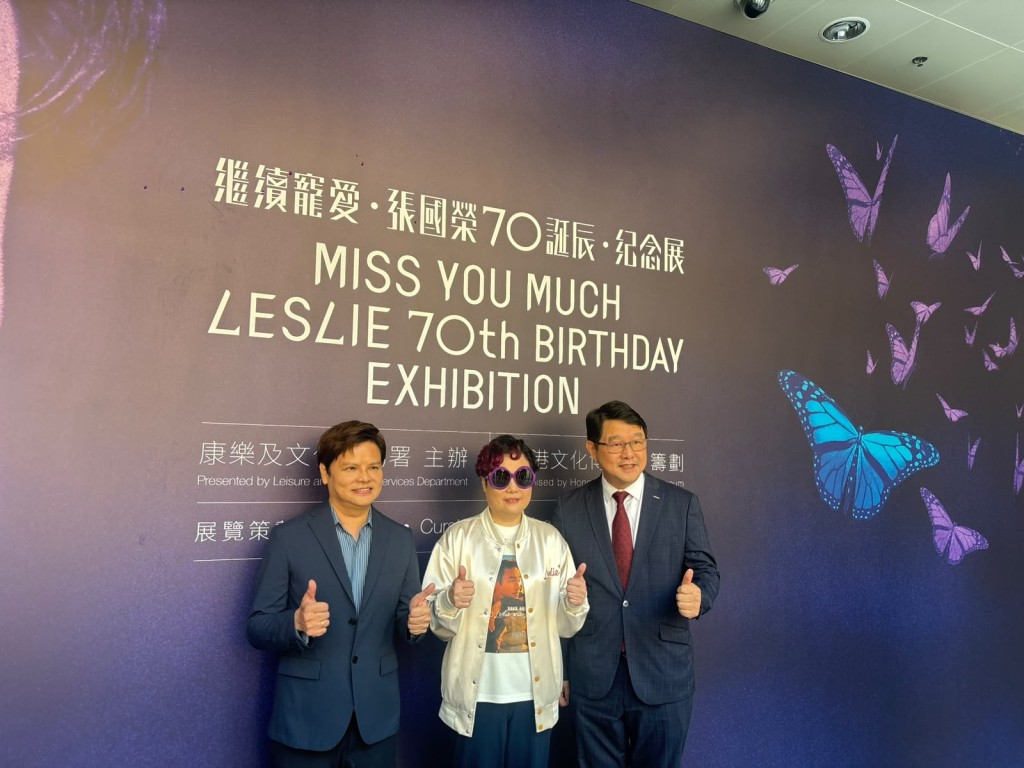
Hong Kong’s Heritage Museum has opened a major exhibition celebrating the life and career of Leslie Cheung Kwok wing, bringing together more than 300 items linked to one of the city’s most influential entertainers.
The “Miss You Much.Leslie 70th Birthday.Exhibition” begins on Wednesday and will run until May 10, 2027. It brings together records, photographs, film material, awards, costumes, musical instruments and personal belongings, with a number of the exhibits being shown publicly for the first time.
The scale of the exhibition reflects the continuing interest in Cheung, whose music and films have remained closely associated with Hong Kong popular culture decades after his death.
Cheung, who became one of the leading figures of the Cantopop era, built a career across music, cinema and live performance. His work reached audiences well beyond Hong Kong, while his distinctive stage presentation helped establish him as one of the best known performers of his generation.
The new exhibition looks beyond his public image. It combines material from his professional career with objects connected to his everyday life, offering visitors a chance to see how the performer worked, lived and developed his artistic identity.
More Than 300 Items on Display
The exhibition includes contributions from people and groups closely connected with Cheung.
Among the lenders are his former manager Florence Chan Suk fan, his partner Daffy Tong Hok tak, fan club Les FANmily and independent local artists. Their collections have allowed the museum to bring together material that would otherwise remain scattered among private owners and collectors.
Some of the most unusual pieces have never previously been displayed to the public.
They include Cheung’s musical instruments, selected stage costumes, rare audio cassettes and furniture from his former home. The exhibition also features commemorative portraits produced by local artists, adding contemporary interpretations of a performer whose image remains instantly recognisable to many Hong Kong residents.
The museum said the current exhibition is substantially larger than the memorial exhibition held in 2023.
Brian Lam Kwok fai, Assistant Director of Leisure and Cultural Services for Heritage and Museums, said the museum expects strong attendance, particularly around September 12, Cheung’s birthday.
Because of the anticipated crowds, the Sha Tin museum will introduce a ticket queuing system during busy periods. Visitors will be admitted according to timed entry arrangements when attendance reaches peak levels.
The system is intended to control visitor flow while allowing people to spend more time viewing the exhibits without excessive congestion inside the galleries.
A Look Inside Cheung’s Private Life
For curator Florence Chan, the exhibition is not simply a collection of memorabilia.
She has sought to create a fuller portrait of Cheung, placing his public achievements alongside details of his private life. That approach has shaped the way the galleries are arranged, including the recreation of parts of his former residence.
Several areas of Cheung’s Kadoorie Hill home have been reconstructed for the exhibition with assistance from his former interior designer.
One recreated setting is his study desk, where he wrote lyrics. Another is the living room, giving visitors a sense of the domestic environment in which he spent time away from recording studios, film sets and concert stages.
The reconstruction was based partly on a photograph taken on Cheung’s first birthday after his death in 2003.
Rather than presenting the residence simply as a historical display, the museum has used it to connect familiar objects and spaces with the person behind the public image.
That distinction is central to the exhibition. Cheung was widely known for elaborate performances and carefully constructed stage appearances, but his creative process also developed through quieter, everyday activities.
The recreated rooms therefore sit alongside records, photographs and performance material, allowing visitors to move between different parts of his life rather than viewing his career as a series of isolated achievements.
Costumes From Some of His Best Known Performances
Eleven of Cheung’s classic concert outfits form another major part of the exhibition.
Among them is the cloak he wore while performing “For Your Heart Only” during the Final Encounter of the Legend concert in 1989.
Chan has preserved the cloak for more than 30 years, making its inclusion particularly significant for fans who remember Cheung’s stage performances during that period.
The exhibition also includes a golden jacket and sequin top worn during Concert 97.
Cheung’s costumes were an important part of his stage identity. They helped him create performances that went beyond the delivery of songs, combining music with movement, fashion and visual presentation.
By displaying the original garments, the museum allows visitors to examine details that are difficult to appreciate in photographs or concert recordings, including their construction, materials and design.
The costumes also help trace changes in Cheung’s performance style across different stages of his career.
Art Installations Mark His 70th Birthday
The exhibition uses contemporary art elements alongside archival material.
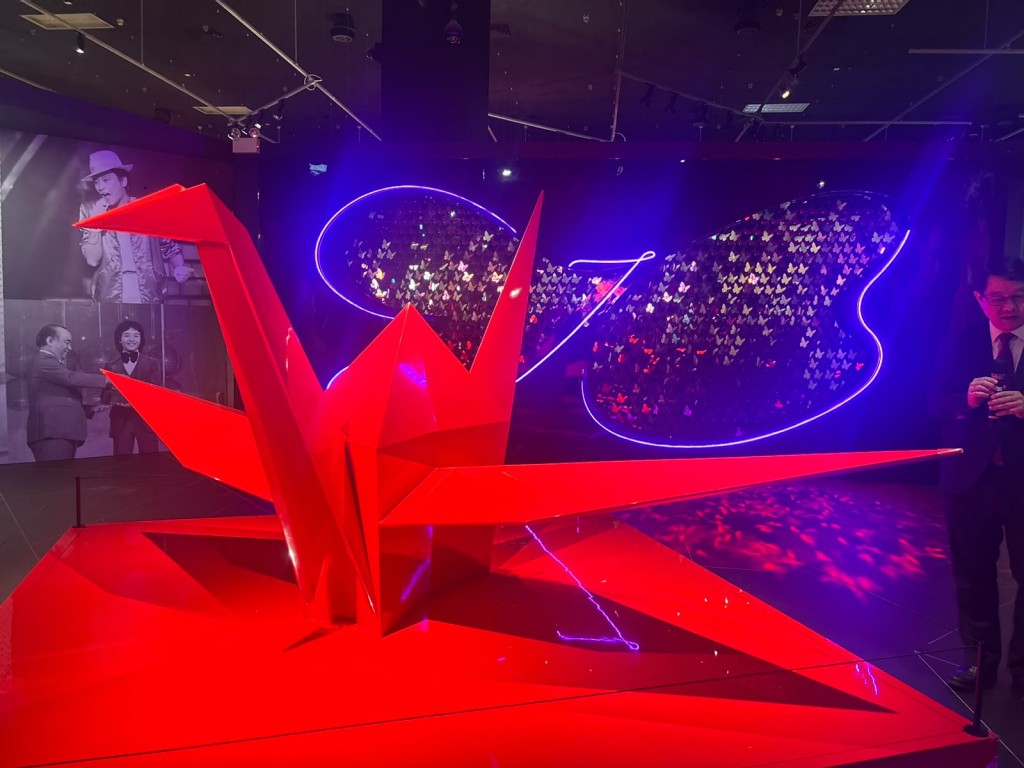
A giant origami paper crane installation is among the multimedia works created for the exhibition. Another display uses butterflies arranged in the shape of the number seven, creating a visual reference to Cheung’s 70th birthday.
These installations give the exhibition a modern presentation while retaining connections to themes associated with remembrance and Cheung’s artistic image.
The combination of archival objects and new artistic works also means that the exhibition is not structured solely as a conventional collection of historical memorabilia. Instead, visitors encounter original belongings alongside installations designed specifically for the anniversary.
For fans who followed Cheung throughout his career, those elements provide a different way to revisit familiar memories. For younger visitors who did not see him perform during his lifetime, the displays provide an introduction to the scale and variety of his work.
Museum Examines His Artistic Identity
Museum Director Joseph Chow Chi lim said the exhibition also examines Cheung’s aesthetic preferences and personal values outside the stage environment.
That includes the relationship between his everyday life and his artistic work.
Cheung's career crossed several areas of entertainment. He became known as a singer, actor and live performer, moving between recording studios, film productions and major concerts.
The museum's approach places those different parts of his career in the same narrative.
A musical instrument can be viewed alongside a concert costume. A recreated room from his home can be seen near material from his film career. The arrangement allows visitors to consider how his personal surroundings and creative habits influenced the public performances for which he became famous.
The exhibition consequently avoids presenting Cheung only through awards and headline performances. Personal belongings and domestic details occupy an important position in the galleries.
Six Films to Be Screened
The museum will also hold screenings of six films associated with Cheung's acting career.
The programme includes He's a Woman, She's a Man, released in 1994, A Better Tomorrow from 1986, Behind the Yellow Line from 1984, Rouge from 1988, For Your Heart Only from 1985 and A Chinese Ghost Story from 1987.
The film programme complements the exhibition by giving visitors an opportunity to see Cheung's work on screen rather than only through photographs, posters and other archival material.
His film career was an important part of his public identity, and several of the selected titles represent different stages and styles of his work as an actor.
Together, the exhibition and screenings provide a broad view of Cheung's career, from his music and concert performances to his film roles and private creative life.
Exhibition Runs Until May 2027
The Heritage Museum's latest tribute is scheduled to remain open until May 10, 2027, giving fans and members of the public an extended opportunity to see material that has rarely been available in one place.
The museum expects the largest crowds around September 12, Cheung's birthday, and will use timed entry arrangements when visitor numbers rise sharply.
For visitors planning to attend during peak periods, checking the museum's admission arrangements before travelling will be important.
More than two decades after Cheung's death, the exhibition brings together objects that tell a story extending beyond his status as a Cantopop star. His records, costumes, instruments, film material and personal belongings document a career that moved across several forms of entertainment while leaving a lasting mark on Hong Kong culture.
The most direct way to understand the exhibition is to see those pieces together. The 300 plus items offer a rare opportunity to move from the stage to the studio, from the cinema to the home, and to view Leslie Cheung not only as a performer remembered by millions, but also as an artist whose working life was shaped by the details surrounding him.