


Hong Kong judges and judicial officers have been recommended for a 2 per cent salary increase this financial year, ending a pay freeze imposed last year as the government dealt with a prolonged budget deficit.
The proposed increase follows the annual review of judicial salaries and conditions, which covers judges as well as judicial officers working in positions including magistrates, coroners, court registrars and tribunals handling labour, small claims and competition cases.
While the recommendation restores an annual salary adjustment after last year’s freeze, the 2 per cent increase is the smallest awarded under Hong Kong’s current judicial pay review system since it began in 2008, excluding years when salaries were left unchanged altogether.
The Standing Committee on Judicial Salaries and Conditions of Service said it had found no major change in the responsibilities or working conditions of judges and judicial officers. However, the committee also pointed to a heavy criminal caseload, an increasing number of complex cases linked to the 2019 protests and unrest and cases arising from national security legislation.
The findings offer a picture of a judiciary dealing with a demanding workload while the government weighs public sector spending against Hong Kong’s wider economic position.
Judicial workload remains under pressure
The annual review considers several factors when assessing judicial pay, including workload, private sector salary trends and Hong Kong’s economic conditions.
In its latest report, published on Wednesday, the Standing Committee said the Judiciary had faced a heavy criminal caseload in recent years.
The workload has become more complicated as courts handle an increasing number of cases connected to the 2019 protests and unrest, as well as prosecutions and other proceedings related to national security legislation.
The committee said the Judiciary had been required to give priority to those cases. That prioritisation, it said, had affected the progress of other cases before the courts.
The report also said the Judiciary expected the effect of this workload to ease in the coming years.
That does not mean the pressure on the courts has disappeared.
Judges and judicial officers must continue to manage cases that can involve lengthy hearings, extensive evidence and complex legal questions. The demands extend beyond the High Court and other higher courts, with magistrates, tribunals and other judicial bodies also handling large volumes of cases.
The review therefore takes into account not only salary trends outside the Judiciary but also the demands placed on those responsible for administering justice.

Asylum related cases add to court workload
Another source of pressure identified in the report is a sustained influx of judicial review applications involving non refoulement claims.
Non refoulement protection concerns people who argue that they should not be returned to a place where they could face serious harm.
In Hong Kong, asylum seekers can bring legal challenges connected to such claims, creating additional work for the courts.
The Standing Committee noted the continued flow of these judicial review applications as part of the broader workload facing the Judiciary.
For judges, such cases can involve detailed examination of individual circumstances, government decisions and legal obligations. Their presence adds another layer to an already demanding court schedule.
The committee nevertheless concluded that there had been no major overall change in judges’ responsibilities or working conditions that would require a different approach to the annual review.
Two per cent increase stands out in salary history
The recommended 2 per cent increase is notable because of where it sits within Hong Kong’s recent history of judicial pay adjustments.
The current annual review mechanism has operated since 2008.
Since then, there have been five years when judges and judicial officers received no salary adjustment.
Those years included 2009 and 2010, during the global financial crisis, and 2020 and 2021, during the Covid 19 pandemic.
Last year also brought no adjustment as Hong Kong recorded its third consecutive budget deficit.
Apart from those five years without an increase, the recommended 2 per cent rise is the smallest adjustment since the current review mechanism began.
The increases in other years have been higher. In 2022, judicial salaries rose by 2.5 per cent, while the increase reached almost 7 per cent in 2014.
The difference reflects the changing economic circumstances considered by the annual review.
Judicial salaries are reviewed against several indicators rather than being automatically tied to a single measure such as inflation or average private sector wages.
That means the latest recommendation needs to be viewed alongside Hong Kong’s broader fiscal position and the economic conditions facing the city.
Pay freeze came during years of budget deficits
Last year’s salary freeze came after Hong Kong recorded three consecutive financial years of budget deficits.
The government had been under pressure to control spending while dealing with weaker revenues and the financial impact of the pandemic period and its aftermath.
The latest figures, however, show a significant change in the government’s fiscal position.
In April, the government announced a surplus of HK$11.2 billion for the financial year that ended in March.
The final figure was considerably higher than the HK$2.9 billion surplus forecast in the February budget address.
The improvement provides a different backdrop for this year’s judicial salary recommendation.
Although a 2 per cent increase remains modest compared with several previous adjustments, it comes as the government has moved from several years of deficits to a stronger than expected surplus.
That change does not automatically determine judicial salaries, but the economic position is one of the factors considered under the review system.
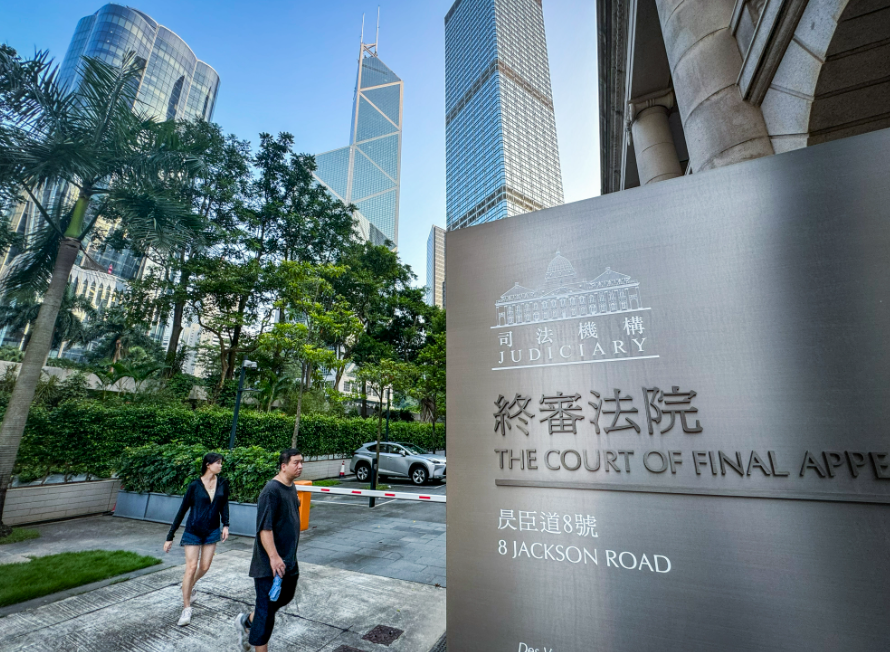
What the recommendation means for judicial officers
The proposed increase covers a broad group of people working within Hong Kong’s judicial system.
Judges form the most visible part of the group, but the annual review also covers judicial officers serving as magistrates and coroners, as well as officials working in court registries and tribunals.
The Labour Tribunal deals with employment related disputes, while the Small Claims Tribunal handles lower value civil claims. The Competition Tribunal deals with matters arising under Hong Kong’s competition law framework.
Together, these bodies form part of the wider court system through which individuals, businesses and government authorities bring legal disputes and seek judicial decisions.
Salary conditions can therefore affect a wide range of judicial personnel rather than only judges sitting in the territory’s higher courts.
Why judicial pay is reviewed separately
Hong Kong maintains a separate review process for judicial salaries because judges and judicial officers occupy positions that carry different responsibilities from most public sector employees.
The Standing Committee on Judicial Salaries and Conditions of Service conducts the annual review and considers economic conditions alongside factors such as judicial workload and private sector pay.
The process is intended to provide an assessment of whether existing remuneration remains appropriate under changing circumstances.
The latest report found no major change in the responsibilities and working conditions of judges and judicial officers.
At the same time, it recorded the continuing pressure created by complex criminal cases and judicial review applications.
That combination has produced a recommendation for a relatively small increase rather than a larger adjustment.
Hong Kong's fiscal recovery adds a new backdrop
The timing of the recommendation is significant.
Hong Kong has moved from a period of repeated deficits to recording an HK$11.2 billion surplus for the financial year ending in March. The final result was nearly four times the surplus initially forecast.
Against that backdrop, the recommended 2 per cent increase marks a return to annual salary adjustments after last year's freeze.
It also shows how the judicial pay review system responds to a mixture of factors rather than simply following the government's latest budget result.
For judges and judicial officers, the proposed increase comes while courts continue to manage complex cases and substantial workloads.
For the government, it comes as public finances have improved but spending decisions remain closely watched.
The recommendation will now move through the relevant government process before the salary adjustment is finalized.
Should Hong Kong's improving fiscal position lead to larger salary increases for judges and judicial officers, or should pay remain closely tied to the established annual review system?