

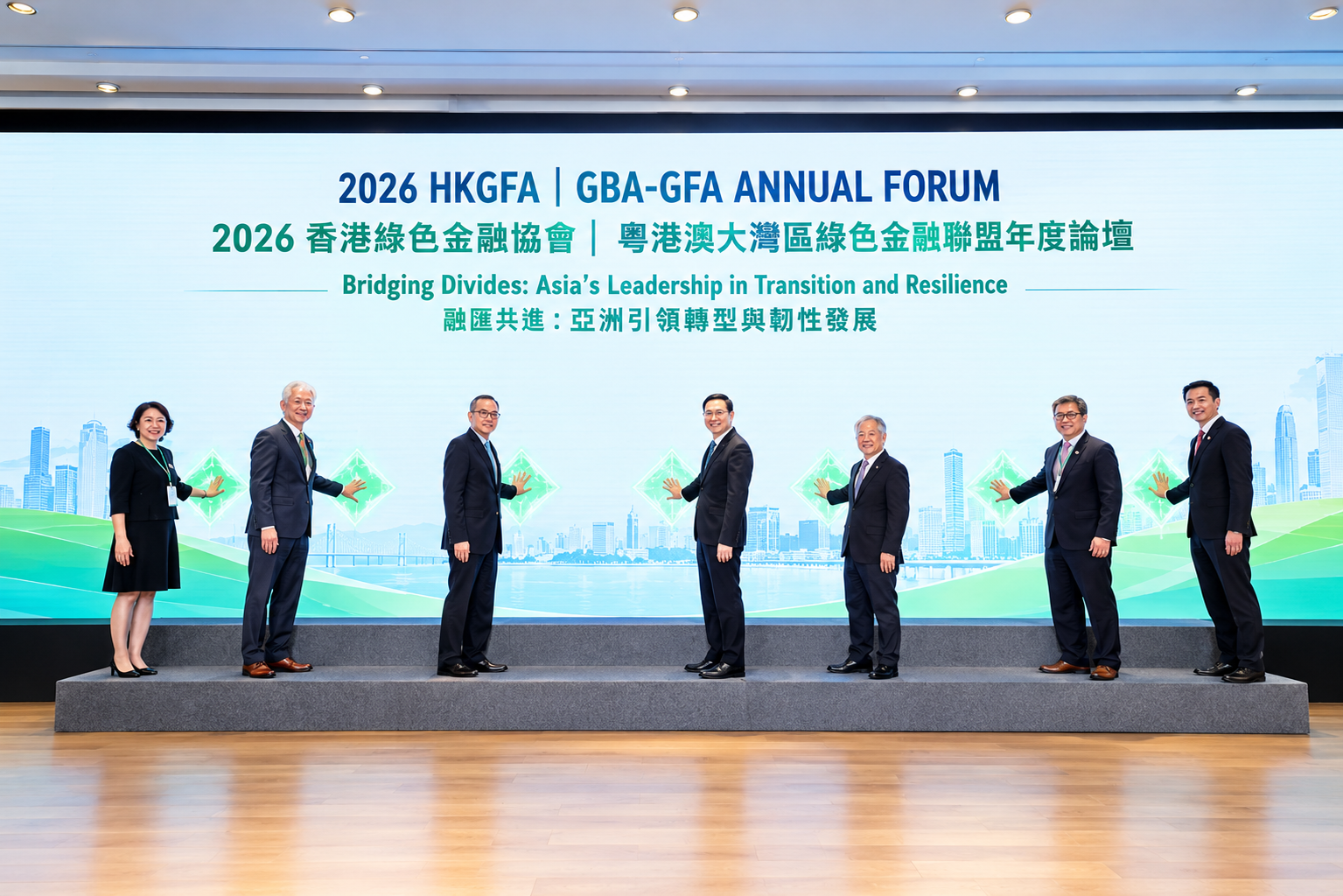
Hong Kong has launched the Green Accelerator to help turn promising climate technologies into investment ready projects, as financial officials and industry leaders called on the Guangdong Hong Kong Macao Greater Bay Area to use its combined capital, manufacturing and connectivity strengths to expand green finance across Asia and the developing world.
The initiative was unveiled on Monday at the 2026 Hong Kong Green Finance Association and Greater Bay Area Green Finance Alliance Annual Forum, which opened Hong Kong Green Week. The week long programme will continue through Friday, bringing together policymakers, regulators, banks, investors and industry representatives to discuss financing for climate and environmental projects.
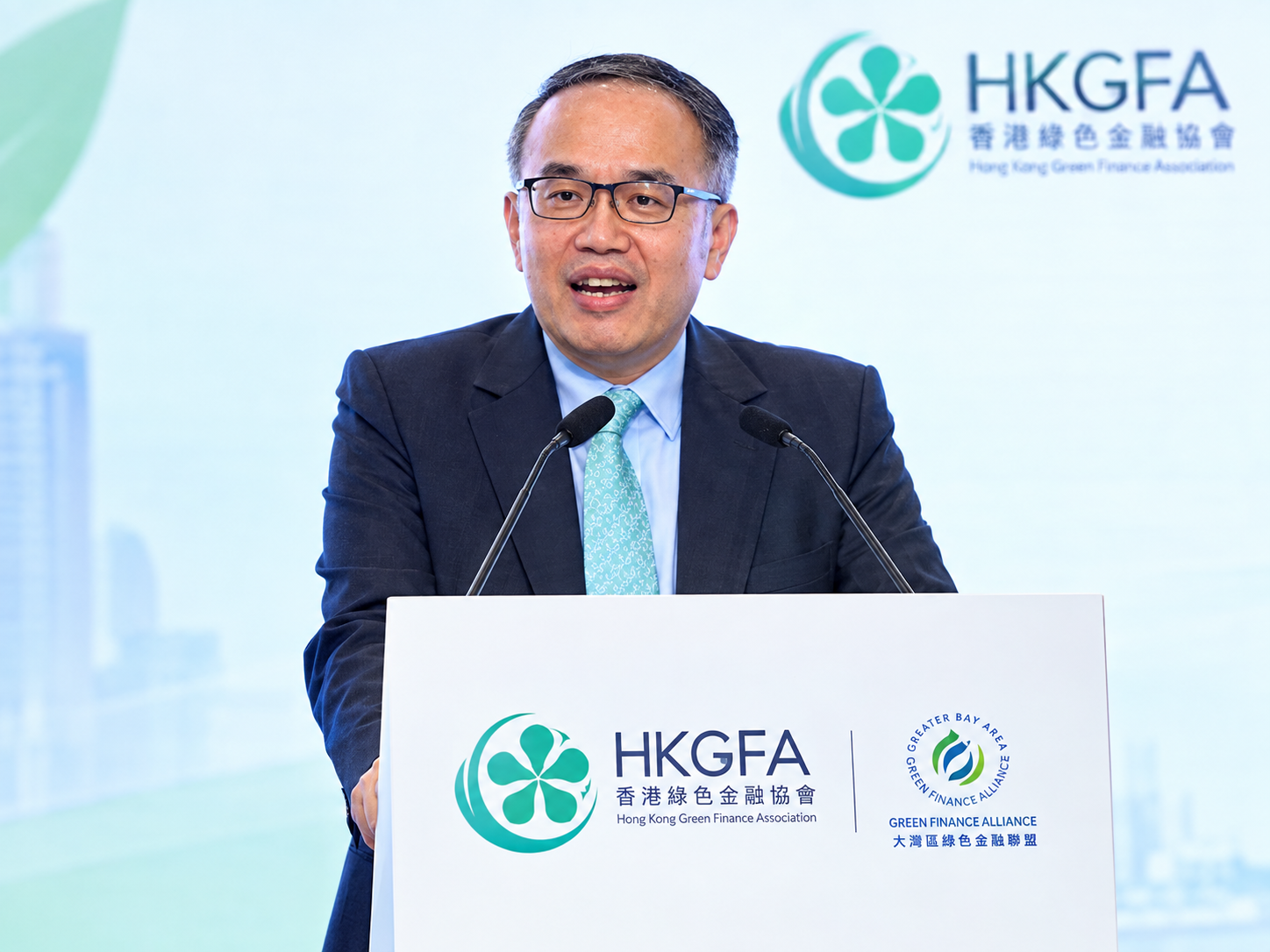
Secretary for Financial Services and the Treasury Christopher Hui Ching yu said the Green Accelerator would focus on one of the biggest obstacles facing climate investment: turning promising ideas and technologies into projects that investors and financial institutions can actually support.
Green Projects Need More Than Technology
Hui said the accelerator is designed to transform green technologies into investable and scalable projects in emerging markets and developing economies.
Many climate projects have access to technology but struggle to secure financing because they are not yet structured in a way that meets the requirements of investors and banks. Some lack reliable revenue models, while others need technical assessments, financial restructuring or early stage funding before they can reach the market.
The Green Accelerator aims to address that gap by providing what Hui described as systemic pre finance support and project restructuring.
The objective is to prepare projects for private investment rather than leaving promising climate solutions dependent on government support.
Hui said this approach could help direct private capital towards climate projects in markets where financing is most needed. At the same time, it could create additional business for Hong Kong’s professional services sector, including financial advisers, legal firms, accountants, consultants and other specialists involved in structuring international investment projects.
The initiative comes as Asian economies continue to expand and demand for infrastructure grows. Hui said that growth is creating a large need for investment in low carbon and climate resilient infrastructure.
He argued that Asia should not simply import financial models developed elsewhere. Instead, countries across the region should develop solutions that reflect their own economic conditions, industrial structures and different stages of development.
“Hong Kong is in a unique position to facilitate this leadership,” Hui said.
He described Hong Kong as more than a financial centre, saying the city serves as a “super connector” between the manufacturing and productivity strengths of the Chinese mainland and international capital and expertise.
Falling Technology Costs Improve Investment Prospects
Ma Jun, chairman and president of the Hong Kong Green Finance Association, said falling technology costs are changing the economics of green investment.
He pointed to solar modules produced in China as one example. Their cost has fallen by 67 percent over the past seven years, while battery costs have declined by 17 percent.
Those reductions can make a significant difference when investors assess whether a renewable energy or energy storage project can generate sufficient returns.
Ma said technologies that were too expensive to support commercially five to seven years ago are now becoming profitable and capable of attracting bank financing.
“These technologies mean that the green projects that were not profitable five to seven years ago are becoming profitable and therefore bankable,” he said.
The change could also reduce the need for government subsidies in some projects, allowing private investors and financial institutions to play a larger role in funding the transition to cleaner energy and infrastructure.
But cheaper technology alone does not solve the financing problem.
A solar installation, battery storage facility, clean transport project or other climate related development still needs to be properly designed, assessed and structured before banks and investors can commit funds. The Green Accelerator is intended to help bridge that gap.
Ma said the programme would promote wider adoption of green technologies in the Global South while addressing the persistent difference between projects that have sound technology and those that are sufficiently prepared to attract financing.
AIIB Signals Long Term Hong Kong Commitment
Hun Kim, chief partnerships officer at the Asian Infrastructure Investment Bank, said Asia has no shortage of green ideas.
The bigger challenge is creating dependable routes through which those ideas can become investment opportunities.
AIIB is one of the founding members of the Green Accelerator. Kim said the bank’s plan to open an office in Hong Kong within the year reflects its long term interest in the city’s financial community and its position within regional capital markets.
Kim described the planned office as “a long term commitment to Hong Kong’s financial community and to the city’s role in connecting Asia with global capital”.
The presence of AIIB in Hong Kong could give the accelerator stronger links to infrastructure financing and international investors, particularly as countries across Asia seek funding for energy, transport, water and other projects needed to support economic growth while reducing emissions.
The initiative also places Hong Kong within a wider regional effort to connect financial markets with climate investment opportunities.
Greater Bay Area Expands Green Finance Cooperation
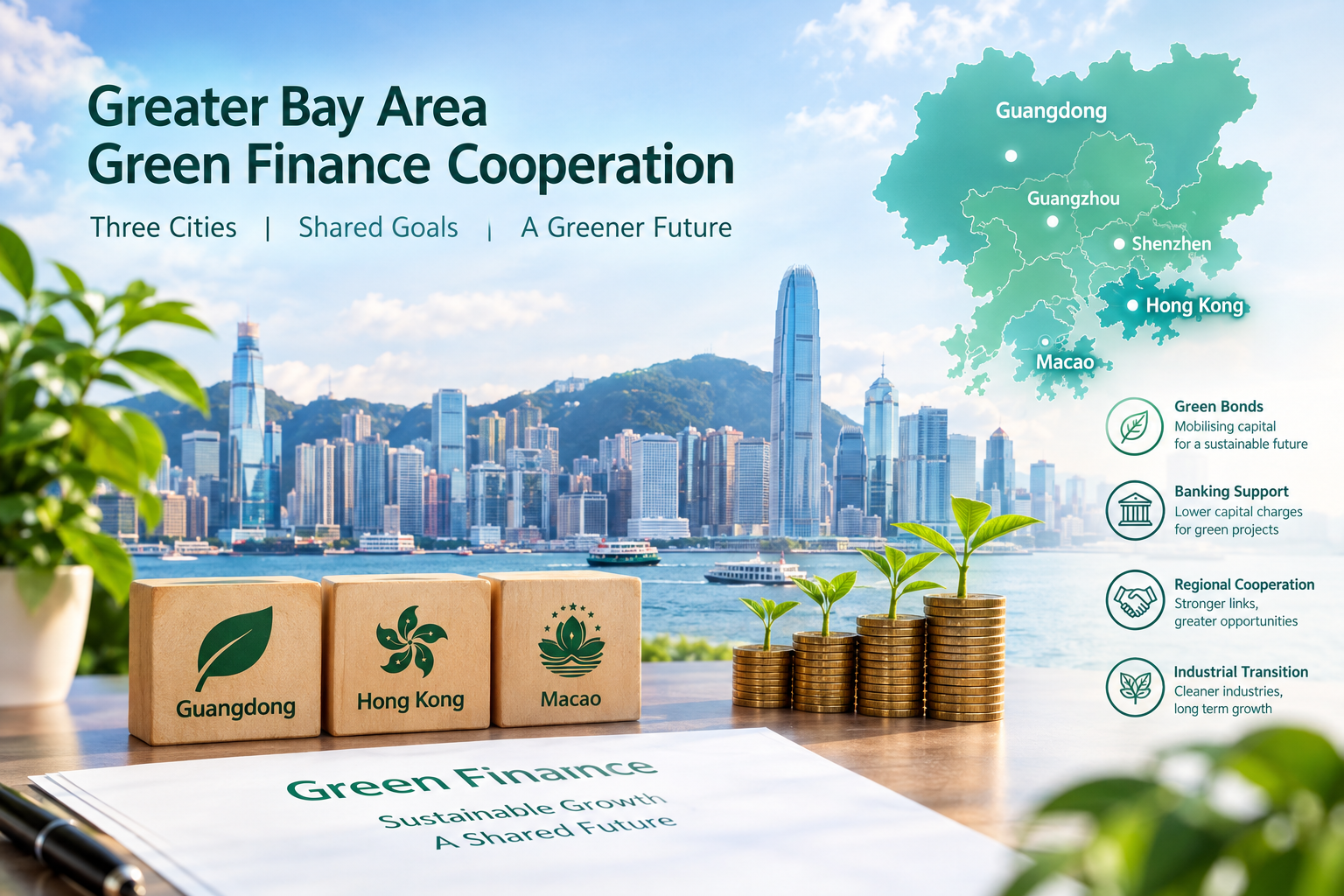
Speakers at the forum also pointed to growing cooperation between Guangdong, Hong Kong and Macao in green finance.
Henrietta Lau Hang kun, executive director of the Monetary Authority of Macao, said the authority is finalising supervisory guidelines on climate risk management and expects to implement them within this year.
The guidelines will include an incentive allowing banks to reduce capital charges for green exposures.
Such measures can affect how banks assess and price lending to environmentally focused projects. By reducing the capital burden associated with qualifying green exposures, regulators can encourage financial institutions to increase lending in areas linked to environmental and climate goals.
Lau also said Macao is encouraging green bond issuance.
She added that another sustainability themed bond issuance by Shenzhen is expected soon. The planned transaction would follow the Shenzhen government’s first climate focused green bond sale in Macao last year.
Green bonds have become an increasingly important financing tool for governments, financial institutions and companies seeking to raise money for projects with environmental objectives.
For the Greater Bay Area, increased use of these instruments could create stronger links between regional projects and investors seeking sustainability related assets.
Guangdong Seeks Funding for Industrial Transition
Cheng Wen, deputy director general of the Guangdong Local Financial Regulatory Bureau, said Guangdong has already used bond markets in Hong Kong and Macao to raise funds for environmental protection projects.
The province is now stepping up efforts to transform and upgrade traditional industries while continuing to expand infrastructure, creating further demand for green and transition finance.
Cheng identified several areas that will require additional financial support, including water networks, new power grids and computing power networks.
The scale of these projects means that public funding alone is unlikely to meet the investment requirements. Green finance and transition finance can provide additional sources of capital while helping traditional industries reduce their environmental impact.
For Guangdong, the challenge extends beyond building new clean energy facilities. Existing industries also need to upgrade equipment, improve energy efficiency and adopt cleaner production methods.
That creates a broader set of financing opportunities for banks and investors across the Greater Bay Area.
Hong Kong Seeks Larger Role in Regional Climate Finance
The Green Accelerator gives Hong Kong an opportunity to build on its existing financial infrastructure while addressing a practical problem in climate investment.
The city already has deep connections with mainland Chinese markets and international investors. Its financial institutions and professional services firms can structure transactions, assess projects and connect developers with sources of capital.
The Greater Bay Area adds another dimension through its manufacturing base, infrastructure capacity and technology sector.
Officials at the forum argued that combining those strengths could help Asian economies move climate projects from the planning stage into construction and operation.
The focus on bankable projects is particularly significant for emerging markets, where climate investment needs can be large but financing conditions are often more difficult.
A project may have clear environmental benefits and proven technology but still fail to attract investment if its financial structure is weak. Preparing such projects before they approach banks and investors can reduce that barrier.
That is the role the Green Accelerator is being designed to fill.
As Hong Kong Green Week continues through Friday, discussions are expected to remain focused on how financial markets can support climate action while creating commercially viable investment opportunities.
The message from Monday’s forum was practical rather than theoretical. Asia already has many of the technologies needed for cleaner growth. The next task is to structure those technologies into projects that banks can finance, investors can understand and developing economies can put to work.
For Hong Kong and the wider Greater Bay Area, the Green Accelerator is intended to provide that connection between technology, capital and projects ready to move forward.