


Hong Kong has opened nominations for the next Election Committee, beginning a process that will determine who sits on the powerful 1,500-member body responsible for selecting the city’s chief executive and 40 members of the Legislative Council.
The nomination period runs from October 7 to October 20, with the Election Committee Subsector Ordinary Elections scheduled for November 22. The Electoral Affairs Commission confirmed the timetable as preparations began for the five-year term that will start in February 2027.
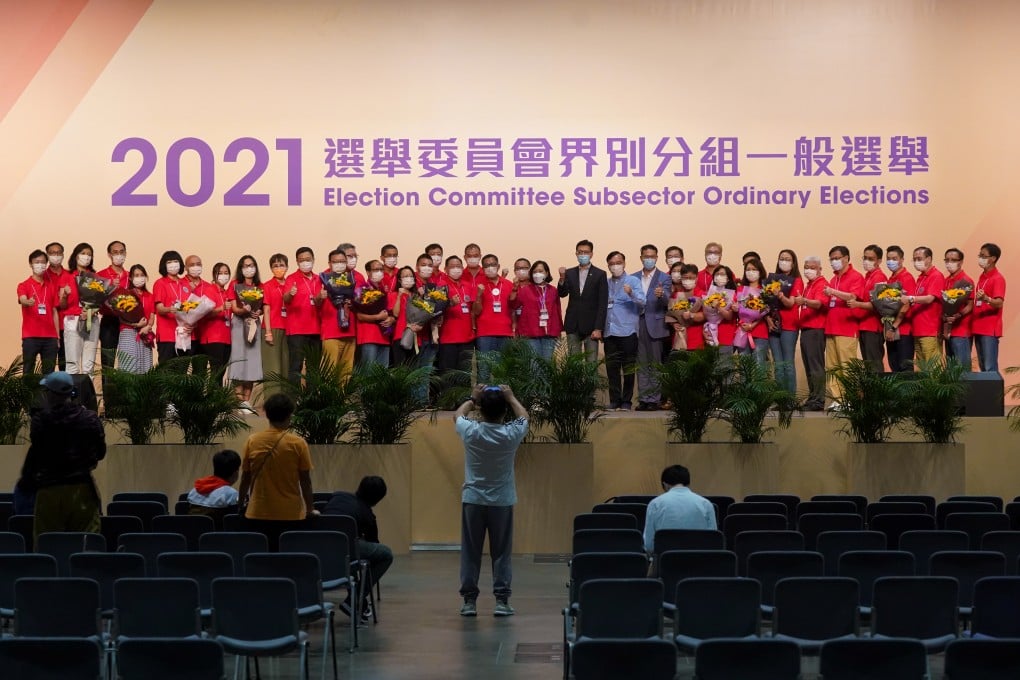
A total of 982 seats are being contested through subsector elections. If the number of validly nominated candidates exceeds the available seats, voters will go to the polls on November 22. The remaining members of the Election Committee will enter through nomination by designated bodies or as ex officio members.
Why the Election Committee matters
The Election Committee occupies a central position in Hong Kong’s electoral system.
Its most prominent responsibility is choosing the chief executive. It also nominates candidates for the chief executive election and selects 40 members of the 90-seat Legislative Council.
Under the current system, the other 50 LegCo seats are divided between 30 functional constituency seats and 20 geographical constituency seats returned through direct elections.
The committee therefore has a direct role in determining Hong Kong’s top political leadership and a substantial share of the city’s legislature.
The Basic Law provides for a 1,500-member Election Committee divided equally among five sectors, with 300 members allocated to each. These sectors cover industrial, commercial and financial interests; the professions; grassroots, labour, religious and other groups; lawmakers and district organisations; and representatives connected to national organisations, including Hong Kong deputies to the National People’s Congress and Hong Kong members of the National Committee of the Chinese People’s Political Consultative Conference.
The committee is made up of 40 subsectors.

How the 1,500 seats are filled
The 1,500 members do not all enter the committee through the same process.
A maximum of 982 members will be returned through subsector elections in the current election cycle. Another 156 seats are filled through nomination by designated bodies, while at least 362 members hold ex officio positions.
The ex officio category includes all 90 members of the Legislative Council and 190 Hong Kong deputies to the National People’s Congress and Hong Kong members of the National Committee of the Chinese People’s Political Consultative Conference.
Other ex officio members come from professional subsectors including architecture, surveying, planning and landscape, education, engineering, law, medical and health services and social welfare.
The nomination system also applies to several subsectors. These include accountancy, Chinese medicine, legal, sports, performing arts, culture and publication, technology and innovation, religious organisations and representatives of Hong Kong residents’ associations on the mainland.
The remaining seats are decided through elections involving eligible corporate or individual voters within the relevant subsectors.
Five sectors with 300 members each
The committee’s five sectors each contain 300 members, creating an overall structure of 1,500 seats.
The first sector covers industrial, commercial and financial interests and includes subsectors such as finance, financial services, insurance, real estate and construction, tourism, catering, wholesale and retail, transport and small and medium-sized enterprises.
The second sector represents the professions.
The third covers grassroots associations, labour, agriculture and fisheries, religious groups and other community organisations.
The fourth sector includes Legislative Council members, the Heung Yee Kuk, representatives of Hong Kong residents’ associations on the mainland and representatives connected to district organisations.
The fifth sector consists of Hong Kong deputies to the National People’s Congress, Hong Kong members of the National Committee of the Chinese People’s Political Consultative Conference and representatives of Hong Kong members of relevant national organisations.
This arrangement means that the committee draws its members from a wide range of professional, business, community and political organisations, rather than through a single citywide ballot.
Who can seek a seat?
Eligibility depends on the particular subsector.
Generally, candidates must meet the relevant voter registration requirements and have the required connection to the subsector in which they are seeking to stand. The electoral authorities set separate rules for individual and corporate voters, depending on the subsector.
The official election guidelines state that eligible voters in the relevant subsectors can include registered corporate or individual voters. For many corporate voters, organisations must have operated for at least three years after acquiring the relevant qualifications before they can register under the electoral rules.
Nomination forms are available through the Registration and Electoral Office, while candidates can also obtain them from designated government offices.
The nomination period is the first major stage of the process. Once nominations close, election officials will determine whether contests are required in individual subsectors based on the number of valid candidates.
A system reshaped in 2021
The current Election Committee system emerged from Hong Kong’s electoral changes introduced in 2021.
Before those changes, the Election Committee had a different composition and played a narrower role in the Legislative Council electoral system. The 2021 reforms expanded the committee to 1,500 members and restored its role in returning 40 Legislative Council members.
The Election Committee Constituency had previously been abolished in 2004 and replaced by directly elected geographical constituency seats. It returned as part of the electoral reforms adopted in 2021.
The changes also introduced a candidate eligibility review mechanism and altered the composition of the Legislative Council. Hong Kong authorities have described the revised system as one designed to ensure that the city is governed by people who support the constitutional order and the principle of “one country, two systems.”
Critics and foreign governments have taken a different view of the reforms, arguing that they reduced the scope for political opposition and democratic competition. The changes have remained a major point of disagreement between Hong Kong and several international governments.
Those competing assessments form part of the political context surrounding the 2026 Election Committee elections, but the immediate process is administrative: candidates must submit their nominations, election officials must determine which nominations are valid, and contested subsectors will proceed to a November 22 vote.

New five-year term begins in 2027
The newly formed Election Committee will serve for five years.
Its term will begin on February 1, 2027, and run until January 31, 2032, according to the Electoral Affairs Commission.
During that period, the committee will have responsibility for nominating and electing the chief executive and for nominating and electing the 40 Legislative Council members returned through the Election Committee constituency.
The chief executive election follows a separate nomination threshold. Under the Basic Law, a chief executive candidate must receive nominations from at least 188 Election Committee members, including at least 15 members from each of the five sectors. The committee then elects the chief executive designate by secret ballot, while the final appointment is made by the Central People’s Government.
For the 40 Legislative Council seats returned by the committee, candidates must receive nominations from between 10 and 20 Election Committee members, with representation required from each sector. The committee then votes by secret ballot.
That gives the November election significance beyond the individual subsector contests. The people selected in 2026 will form the body that carries out these responsibilities for the next five years.
Election preparations already underway
Electoral officials have been preparing for the nomination period ahead of its October 7 opening.
On October 6, Electoral Affairs Commission Chairman Justice David Lok visited the Returning Officer’s office at the Central Government Offices in Tamar to inspect arrangements for receiving nomination forms.
The commission said staff and facilities were ready for the nomination period and would process nomination forms according to established procedures.
The election is also expected to carry a significant public cost.
Authorities have estimated the total cost of the Election Committee election at about HK$260 million. The estimate includes around HK$135 million for staff costs, HK$9 million for publicity and HK$116 million for other expenses, including venue bookings, printing, transportation and postage.
The next deadline is now clear: October 20 marks the close of nominations. After officials determine the valid candidates, attention will turn to which subsectors require contested elections on November 22.
For Hong Kong voters eligible to participate in the relevant subsectors, the question is now straightforward: who will put their name forward to help shape the Election Committee that will choose the city’s next political leadership?