

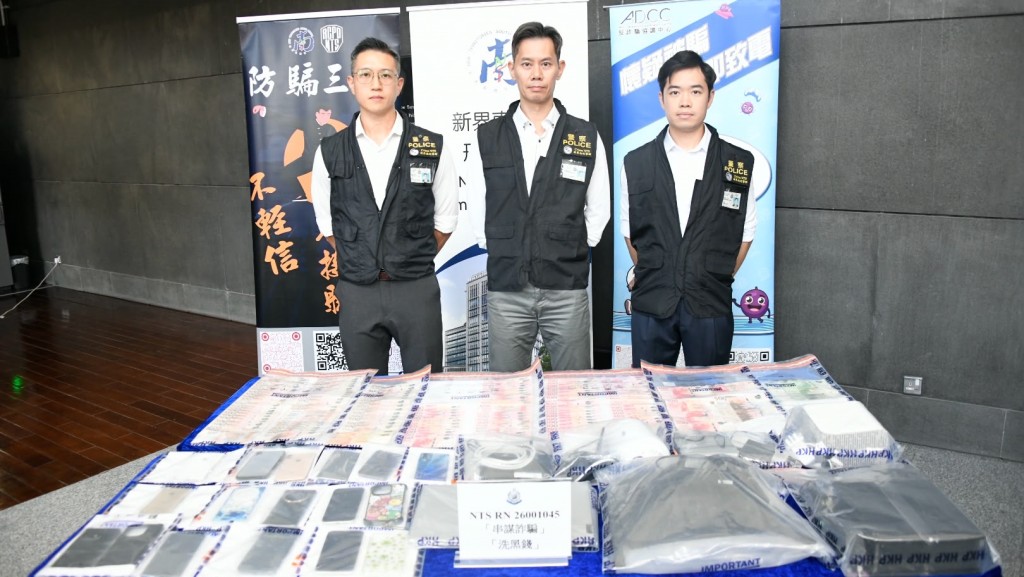
Hong Kong police have arrested 10 people, including a university student couple, over an alleged fraud and money laundering operation that used fake model recruitment advertisements to gain control of victims’ electronic wallets and move millions of Hong Kong dollars in suspected illicit funds.
The arrests followed an investigation into a syndicate allegedly linked to at least 43 online shopping and escort scams. Police said the group persuaded job seekers to create new digital wallet accounts using telephone numbers supplied by the syndicate, allowing criminals to control the accounts and use them to receive and transfer money obtained from unrelated scams.
The suspects, five men and five women aged between 13 and 68, are all Hong Kong identity card holders. Investigators identified three people as core members of the alleged syndicate, including a local university student couple believed to be in a romantic relationship.
Police said more than HK$2 million in suspected criminal proceeds passed through eight electronic wallet accounts controlled by the group. Officers also froze a further HK$3.5 million found in the bank account of one suspect, although the source of that money had not been explained.
Investigation began after more than HK$800,000 in losses
The investigation developed after police received multiple reports between October 2024 and May 2026 from people who said they had lost money in online shopping and escort-related scams.
According to investigators, the reported losses exceeded HK$800,000. Police then examined financial transactions, digital wallet activity and surveillance footage in an effort to determine how money from the separate scams was being moved.
Their investigation eventually uncovered what police described as a three-stage operation.
The first stage focused on recruitment.
The syndicate allegedly posted social media advertisements offering modelling work and quick earnings. The advertisements were designed to attract people looking for easy part-time income, particularly young job seekers and students.
Applicants were then told that they needed to deactivate their existing electronic wallets and open new accounts using mobile phone numbers provided by the recruiters. The explanation given was that the new accounts were needed to make salary payments easier.
Instead, investigators allege, the arrangement gave the syndicate control over the newly created accounts.
Those accounts became what police described as puppet accounts, allowing the criminals to receive and move money without using accounts registered directly in their own names.
Students among the main targets
The second stage involved the use of those accounts in separate online fraud schemes.
Police said the puppet wallets received money connected to at least 43 online shopping and escort scams. The alleged victims included 13 men and 30 women aged between 13 and 37.
Students made up almost 60 percent of the victims, according to investigators.
In one of the methods used to attract victims, scammers offered discounted tickets to popular concerts. Such offers can appear especially attractive to younger people who are looking for cheaper access to highly sought-after events.
Once victims transferred money, the funds could enter the network of electronic wallets controlled by the syndicate.
The use of accounts belonging to people who had been recruited through apparently legitimate employment advertisements also created another layer between the original victims and the alleged organisers of the fraud.
Police said the suspects continued moving the suspicious funds through the puppet accounts between 2024 and 2026.
More than HK$1 million reached core members
The third stage involved moving and dispersing the money to make its origins harder to trace.
Investigators found that more than HK$2 million in suspected illicit funds had passed through the eight puppet electronic wallet accounts. More than HK$1 million was then transferred directly into bank accounts belonging to members identified as core figures in the syndicate.
Those funds were subsequently distributed among different personal accounts, according to police.
The movement of money across multiple accounts complicated the financial trail and made it harder to connect individual transactions with the original scams.
For investigators, following that trail became central to identifying the people allegedly coordinating the operation.
The case also demonstrated why police examined not only digital transactions but how suspects spent money in their everyday lives.
Spending trail leads police to suspects
A major breakthrough came when investigators began examining real-world purchases made with money believed to have originated from the scams.
Police discovered that two of the alleged core members had spent some of the funds at a high-end massage parlour. Other transactions were linked to a local university cafeteria and a medical clinic.
Those apparently ordinary purchases gave investigators physical locations to examine.
Police reviewed security camera recordings from the relevant premises and used the footage to help identify the individuals connected to the financial transactions. The investigation eventually led officers to the alleged members of the syndicate and enabled them to carry out arrests.
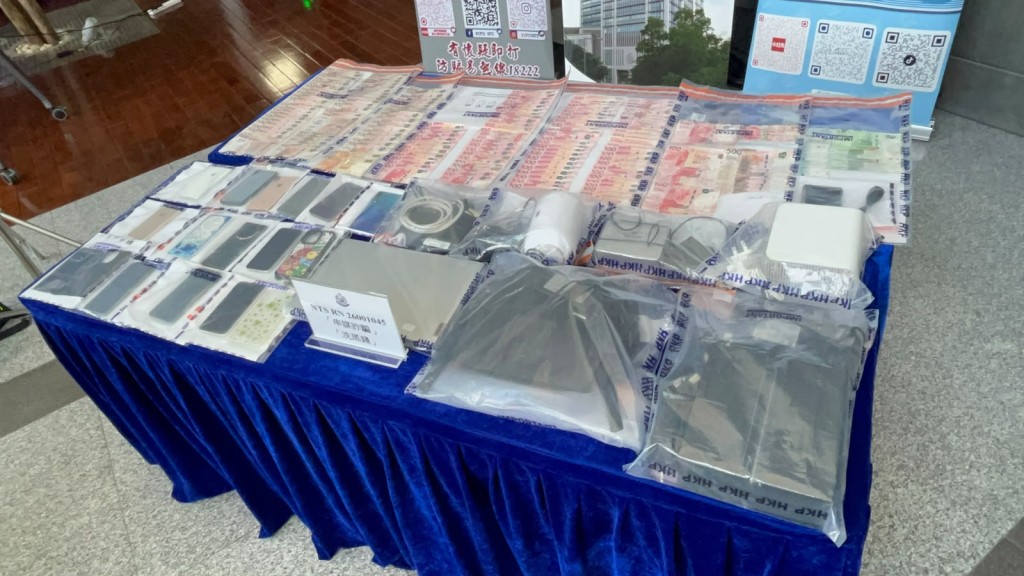
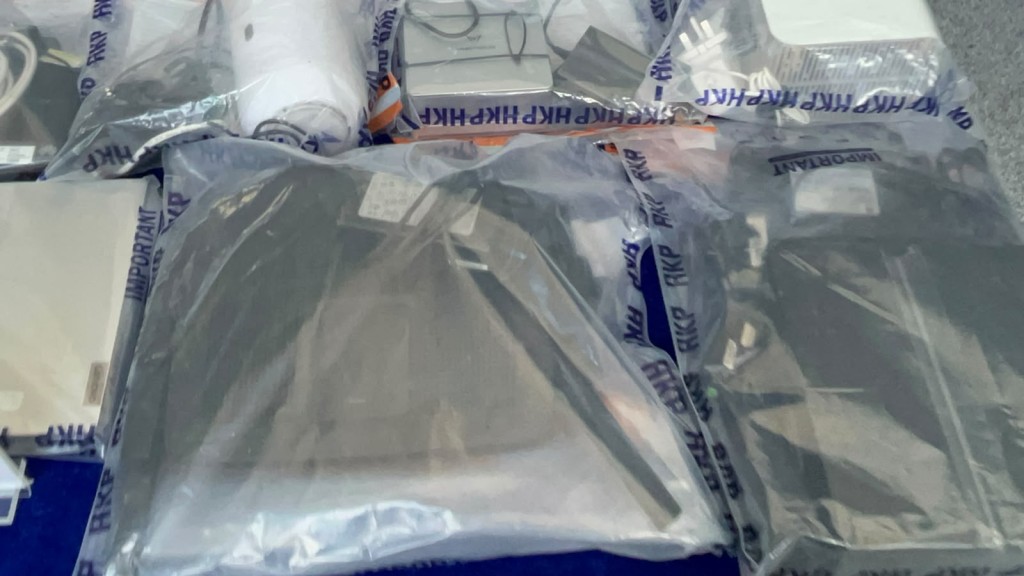
The operation resulted in the seizure of 17 mobile phones, two computers, three routers and HK$43,000 in cash.
Police have not disclosed the identities of the suspects, and the investigation remains ongoing.
Police warn against handing over digital wallets
The case has prompted renewed warnings from Hong Kong authorities about online employment advertisements that promise unusually high earnings while requiring little or no experience.
Police have urged members of the public, particularly students and young job seekers, to check recruitment offers carefully before providing personal information or opening financial accounts at another person's request.
The warning goes beyond traditional bank accounts. Electronic wallets can also become tools for criminals when account holders surrender control of them or allow another person to use their credentials.
A legitimate employer should not require a prospective employee to hand over control of a personal bank account or digital wallet. Nor should job seekers be asked to create financial accounts using telephone numbers or other details supplied by unknown recruiters.
Authorities have stressed that people should never allow strangers to control their financial accounts, even when the request is presented as a routine requirement for receiving wages.
For students searching for part-time work online, the message is straightforward: a job offer that asks you to surrender control of your money or digital wallet is not a normal employment arrangement. Would you know how to spot the warning signs before accepting one?