

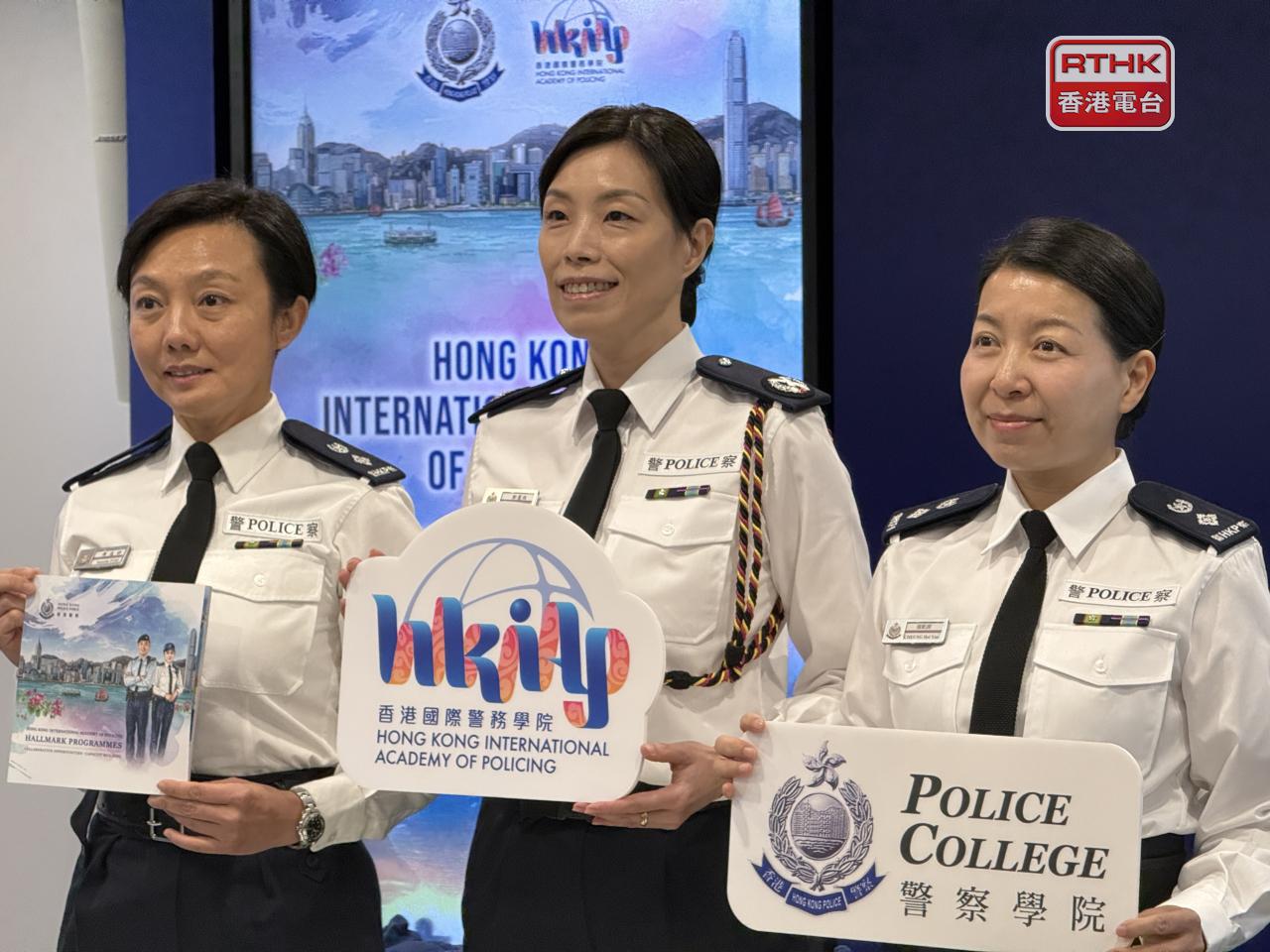
The Hong Kong Police College will begin offering its first bachelor’s degree programmes for junior police officers, giving serving personnel without a university degree a fully funded route to higher education and professional advancement.
The new Security and Criminal Investigation (Honours) Bachelor of Policing is an applied degree designed for non-commissioned police officers who do not already hold a bachelor’s qualification. Applications are expected to open towards the end of this year, with the first cohort scheduled to begin in March next year.
The Hong Kong Police Force said the programme could also help strengthen recruitment by giving prospective officers a clearer path from joining the force to earning a university degree while continuing their police careers.
The Police College became the first department of the Hong Kong SAR Government approved to provide bachelor’s degree programmes after passing an assessment by the Hong Kong Council for Accreditation of Academic and Vocational Qualifications (HKCAAVQ) in August.
Two routes will be available to serving officers
The programme will be divided into Junior Level and Senior Level study routes, allowing officers with different educational backgrounds to enter at an appropriate stage.
The Junior Level programme will offer 80 places each year for police officers who have completed secondary education but do not hold a higher qualification. The full degree is expected to take about four years to complete.
A separate Senior Level route will provide 40 places each year. It will be open to serving constables or sergeants who already hold an associate degree or higher diploma. These officers will be able to complete the degree in about two years, building on their previous academic qualifications.
The structure is intended to accommodate officers at different stages of their education without requiring those who already have post-secondary qualifications to repeat earlier coursework.
The police said the new programme also reflects the educational profile of recent recruits. About 40% of newly recruited police officers last year and this year held a bachelor’s degree or higher, while the remaining 60% did not.
That split means a substantial proportion of new officers enter the force without a university degree, creating a potential pool for the new programme.

Police College combines classroom learning with frontline work
Principal of the Police College Cheng Lai-ki said the degree programme is intended to improve officers’ personal and professional development while helping them serve the public more effectively.
She also described the programme as a pathway for career progression and said the police hope the opportunity will encourage more people to consider joining the force.
The degree will not be structured as a conventional university course conducted mainly in classrooms. Police officials said the curriculum will combine academic study with practical training and actual police duties.
Principal of the Police College Specialized Training School Cheung Hoi-yin said applicants must first pass a selection interview. Once admitted, trainees will study areas including police theory, criminal investigation, police training, police internships, workplace studies and academic languages.
The programme will place particular emphasis on applying classroom knowledge to police work.
After completing the relevant training, students will undertake frontline internships in police districts and criminal investigation units. Their normal daily police duties will count towards their internship hours, allowing them to gain practical experience without separating academic study entirely from their work.
The arrangement is designed to keep officers connected to operational policing throughout their studies. Cheung said that even when officers pursue further education, their work and operational requirements should remain the priority.
Graduation projects will involve senior academic supervision
Students will also have to complete graduation project reports as part of their degree requirements.
According to the Police College, these projects will be supervised by senior officers at the rank of superintendent or above who are graduates of institutions including Tsinghua University and the University of Cambridge.
The research component is expected to give officers experience in examining policing issues systematically while linking academic work to problems encountered in daily operations.
That approach could also give the force a way to turn practical policing experience into structured research, particularly in areas such as criminal investigation, public safety, crowd management and police operations.
For officers who entered the force directly after secondary education, the programme represents a substantially different career route from the traditional model in which university education is completed before joining the police.
Instead, participants will be able to work, train and study as part of the same career pathway.
Police hope degree programme will strengthen recruitment
The recruitment implications are an important part of the new initiative.
The Hong Kong Police Force has said it wants the degree programme to attract more applicants, particularly people who may previously have viewed police work and university education as separate choices.
A fully funded degree could make the profession more appealing to candidates who want higher education but also want to begin working at an earlier stage.
For serving officers, the arrangement removes one of the practical barriers associated with returning to university. Participants will not have to leave the force simply to pursue a bachelor’s degree, while their police duties will form part of the practical component of the programme.
The initiative also gives officers without a bachelor’s degree a formal academic qualification that could support future career development within the force.
The Senior Level route provides a faster option for officers who already possess associate degrees or higher diplomas. Rather than completing the full four-year Junior Level programme, eligible constables and sergeants can apply for the two-year route.
The two pathways therefore target different groups while maintaining the same broader objective: combining professional police training with higher education.
Hong Kong International Police Academy to launch next month
The degree programme is not the only major education initiative planned by the Hong Kong Police Force.
The force will officially establish the Hong Kong International Police Academy on the 11th of next month. The academy will focus on international police training, leadership forums and exchanges with law enforcement agencies from other regions.
Its planned training programmes will cover a wide range of specialist subjects, including security for large-scale events and crowd management, counter-terrorism and explosive ordnance handling, major crime investigation and forensic science.
Police officials said the academy will provide a platform for international policing exchanges and cooperation, while strengthening Hong Kong’s position as a centre for professional police training.
The force also intends to use international training and exchanges to present Hong Kong’s policing experience to overseas law enforcement agencies and promote what it describes as the professional image of Hong Kong’s police.
The academy will therefore operate alongside the Police College’s domestic education and training functions, but with a broader international focus.
Education and operational policing to remain closely linked
Taken together, the two initiatives point to a wider expansion of the Police College’s role. The institution will not only train new officers and provide specialist instruction but will also offer a formal university-level qualification and organise international policing programmes.
For junior officers without degrees, the new bachelor’s programme provides an opportunity to gain a recognised academic qualification while remaining in active service. For experienced officers with existing post-secondary qualifications, the Senior Level route offers a shorter pathway.
At the same time, the International Police Academy will bring overseas training and professional exchanges into the force’s education system.
The first bachelor’s cohort is expected to begin in March next year, following admissions later this year. With tuition fully funded by the police force, the programme could become a significant new recruitment incentive for people considering a career in policing.
Would a fully funded bachelor’s degree while working in the police force make you more likely to apply?