

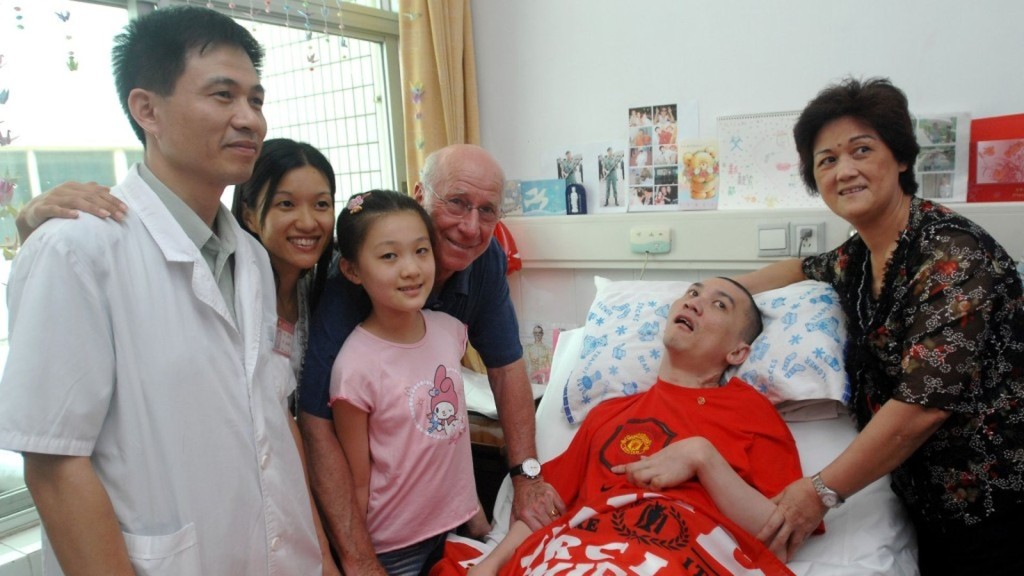
Constable Chu Chun Kwok died on September 16, 2026, more than 21 years after a knife attack during a routine patrol left him severely brain damaged and unable to care for himself. His wife and daughter remained closely involved in his care throughout the years, turning a single morning on duty into a lifelong family ordeal.
Chu was 30 when he was attacked on July 19, 2005, in Cheung Sha Wan. He had been patrolling alone when he approached a suspicious man carrying a fruit knife. The encounter lasted only moments, but it changed the lives of Chu, his wife and their young daughter permanently.
The man, identified as Liu Chi Yung, was 23 at the time. According to court records, Chu stopped him in the Po On Road area and asked him to produce his identity card. While the officer was checking it, Liu suddenly pulled out a knife and stabbed Chu in the left side of the neck. The wound cut the left common carotid artery.
The Attack That Changed Everything
After being stabbed, Chu chased the attacker for a short distance while holding his injured neck. He eventually collapsed from massive blood loss.
Passers by rushed to help him. One of them, Siu King Sang, later recalled pressing against the wound and urging Chu to remain conscious while waiting for emergency assistance. Siu had first noticed a crowd gathering and crossed the road after seeing that someone was in trouble.
The attack left Chu in a critical condition.
He was taken to Caritas Medical Centre, where doctors found that the injury had severed his carotid artery. Court records later described the extent of the damage and the severe brain injury caused by the loss of oxygen.
Liu fled after the attack and discarded the knife. He later surrendered at Prince Edward MTR station that afternoon.
The case eventually resulted in a prison sentence. According to later reporting, Liu served five years and nine months before being released on parole in April 2011.
For Chu’s family, however, the consequences of that morning did not end with the arrest, prosecution or imprisonment of the attacker.
They were only beginning.
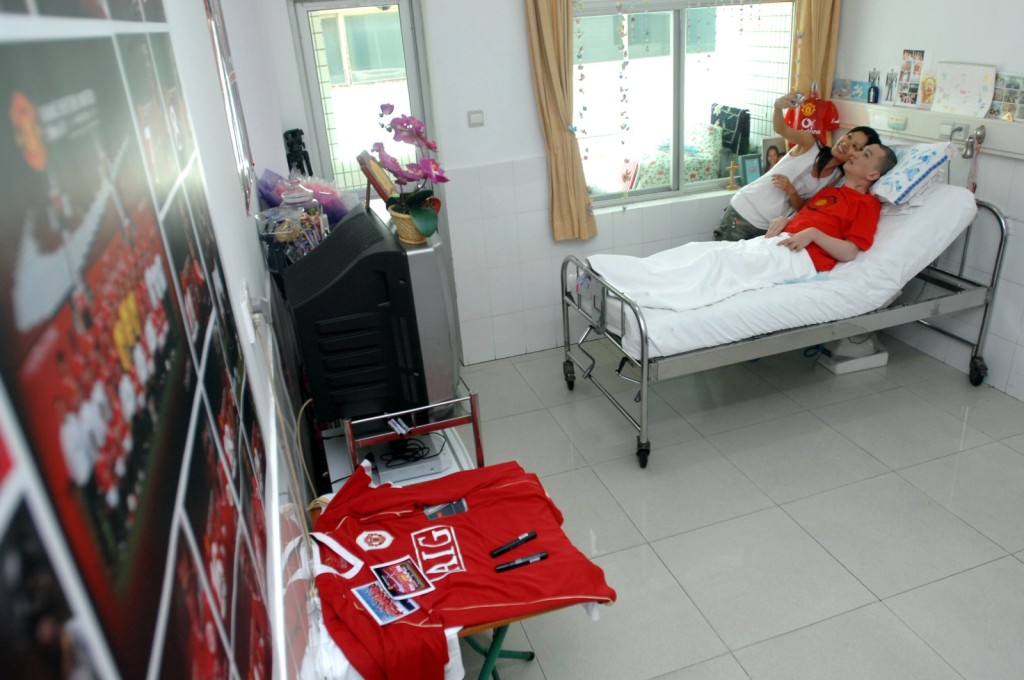
A Life Spent at the Bedside
The brain damage caused by the attack left Chu severely disabled and dependent on others for basic care.
His family searched for treatments and pursued medical options in Hong Kong and mainland China. In 2006, specialist treatment was arranged in Guangzhou, where he received therapies including hyperbaric oxygen treatment, acupuncture, massage and assisted exercises.
A contemporary South China Morning Post report described a demanding treatment programme in Guangzhou. Chu underwent high pressure oxygen treatment six days a week, while doctors also used medication, acupuncture, massage and assisted physical exercises. His family hoped the programme could improve his condition.
The treatment reflected the determination of those around him to find a way forward, even after doctors had described the severity of his brain injury.
The Hong Kong Police Force also continued to support Chu and his family. In 2006, the force recorded that Chu had received special medical treatment in Guangzhou following the attack. He was awarded the Gold Medal for Bravery that year for his conduct while carrying out his duties in Cheung Sha Wan.
The medal recognised what had happened during the attack. But for his wife, Choi Yin Ping, the years that followed were defined less by official recognition than by the daily demands of caring for her husband.
A Police Officer Who Could Not Switch Off
Before the attack, Chu was remembered by his wife as someone deeply committed to police work.
She recalled that he found it difficult to ignore wrongdoing even when he was not on duty. On one occasion, while the couple were shopping in Tsim Sha Tsui, Chu suddenly released her hand and ran after a suspected pickpocket.
It was a small incident compared with what happened later, but it captured something his family remembered about him. Being a police officer was not simply a job that ended when his shift was over.
That sense of duty was also reflected in the official recognition he received after the attack.
The Hong Kong Police Force described Chu as having displayed gallantry while carrying out his constabulary duties in Cheung Sha Wan. His Gold Medal for Bravery was presented in 2006.
The award became part of his public story. His family lived with a different reality, one centred on hospital rooms, medical appointments and the long process of adapting to a life that had changed without warning.
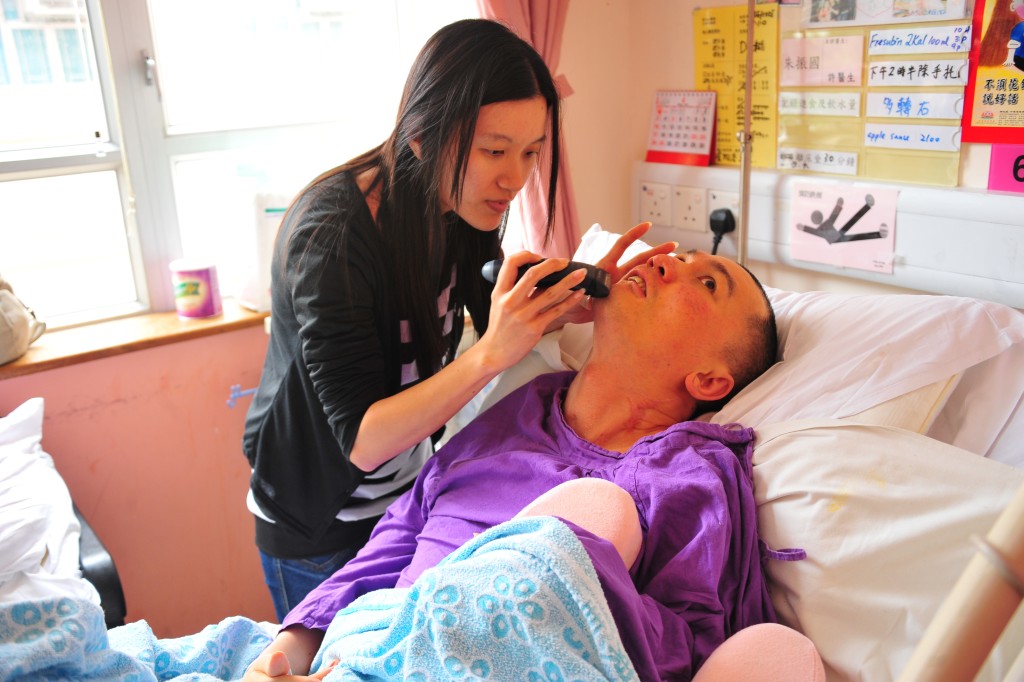
His Daughter Grew Up Beside Him
Chu’s daughter was only eight years old when her father was attacked.
She grew up with her father still present, but unable to speak or move normally. The hospital became a place where she studied, talked to him and shared parts of her childhood.
She would sometimes do her homework at his bedside because she believed he could still hear her.
Those moments became important to her as she grew older. She recalled that when she told him stories or became emotional, he sometimes shed tears. She could not know exactly what he understood, but those responses gave her a reason to continue speaking to him.
One Father's Day, she placed a card reading “I Love Dad” on his chest and kissed him on the cheek. Unable to respond physically, Chu looked at her intently.
For a child, the distinction between communication and silence can be difficult to understand. For Michelle, those small reactions became part of the relationship she continued to have with her father.
Her childhood and adult life unfolded alongside his illness.
She later studied art and design in Melbourne and remained in Australia for work. She did not describe her father’s condition as something for which she blamed him or her family. Instead, she said she was proud that he had been injured while carrying out his duties as a police officer.
A Family Shaped by One Morning
More than two decades passed after the stabbing.
During those years, Chu's condition did not return to what it had been before the attack. His family continued to care for him while medical teams tried different forms of treatment.
The Police Force also maintained contact with the family. In 2013, police records noted that colleagues and members of the Sham Shui Po community continued to visit and express concern for Chu and his family years after the attack. His wife and daughter had also expressed gratitude for the support they received.
The length of Chu’s survival meant that his daughter grew from an eight year old child into an adult while her father remained in a severely disabled condition.
That passage of time changed the meaning of the original attack.
For the public, the stabbing became a case remembered from 2005. For Chu’s family, there was no such distance. Each year brought another birthday, another Father's Day and another reminder of the life he had before the injury.
Michelle eventually built her own life overseas but returned to Hong Kong when her father’s condition deteriorated in his final days.
A Final Goodbye
Chu died peacefully on September 16, 2026, surrounded by his family.
He was 52.
His death ended a 21 year period that began with a routine patrol and a sudden knife attack. The officer who had once chased a suspect through the streets of Cheung Sha Wan spent the following years unable to speak, move independently or care for himself.
His story is also the story of the people who remained beside him.
His wife continued to care for him. His daughter grew up visiting him, doing homework beside his bed and speaking to him even when he could not answer. Medical teams tried different treatments. Police colleagues and members of the community continued to visit.
In 2006, the Hong Kong Police Force recognised Chu with the Gold Medal for Bravery. The award recorded the courage he displayed while carrying out his duties on the day of the attack.
More than two decades later, his death closes a chapter that began with a few moments on a Cheung Sha Wan patrol. What remains is a record of an officer whose working life was interrupted by violence and a family that spent the years afterward adjusting to an entirely different life.
Chu’s final days were spent with the people who had stayed with him throughout those years. His wife and daughter were there when his long vigil finally came to an end.