

HONG KONG — Hong Kong has emerged as Asia’s leading market for startups with the potential to achieve rapid growth and global scale, ranking fifth worldwide in a new assessment of high potential technology ventures.
The finding comes from a study released by the Hong Kong Science and Technology Parks Corporation (HKSTP) on Monday, which placed Hong Kong at the top of the Asian rankings for startups combining disruptive technology, strong growth prospects and the ability to expand into international markets.
The report, titled Inside Asia’s Fast Track to Global Tech Scale, gave Hong Kong a score of 370 on CB Insights’ proprietary Mosaic index. The index is designed to assess companies with characteristics associated with high potential ventures and future unicorns, including technological innovation, growth prospects, market opportunity and investment appeal.
Hong Kong’s position reflects what the report describes as a concentrated pool of ventures that are already positioned for expansion and capable of attracting international investment.
The ranking comes as the city seeks to strengthen its position as a technology and innovation centre while connecting companies from across Asia with international investors, research institutions and overseas markets.
Hong Kong’s role in Asia’s technology network
The HKSTP white paper was produced jointly with CB Insights, a global technology intelligence and predictive data platform whose clients include Fortune 500 companies.
Rather than portraying Asia as a single technology centre, the report describes the region as a collection of specialised hubs. Each market has developed particular strengths within the innovation cycle, from research and advanced technology development to manufacturing, commercialisation, fundraising and international expansion.
That structure gives Hong Kong a role that differs from the Chinese mainland, Japan, India and Singapore.
The Chinese mainland has established a commanding position in frontier technologies and large scale manufacturing. Japan has become a major centre for corporate acquisitions and technology integration. India has developed extensive experience in bringing technology products to fragmented consumer and business markets, while Singapore provides companies with an environment in which new products and business models can be tested with customers before wider regional expansion.
Hong Kong, meanwhile, functions as a connection point between these innovation centres and international sources of capital and commercial opportunities.
The report describes the city as a bridge for global capital and technology commercialisation. Its financial markets, international business connections and position within the wider Greater Bay Area give startups access to both mainland China and overseas markets.
For companies that have developed a technology but need investment, customers or international partners to expand, that position can be particularly significant.
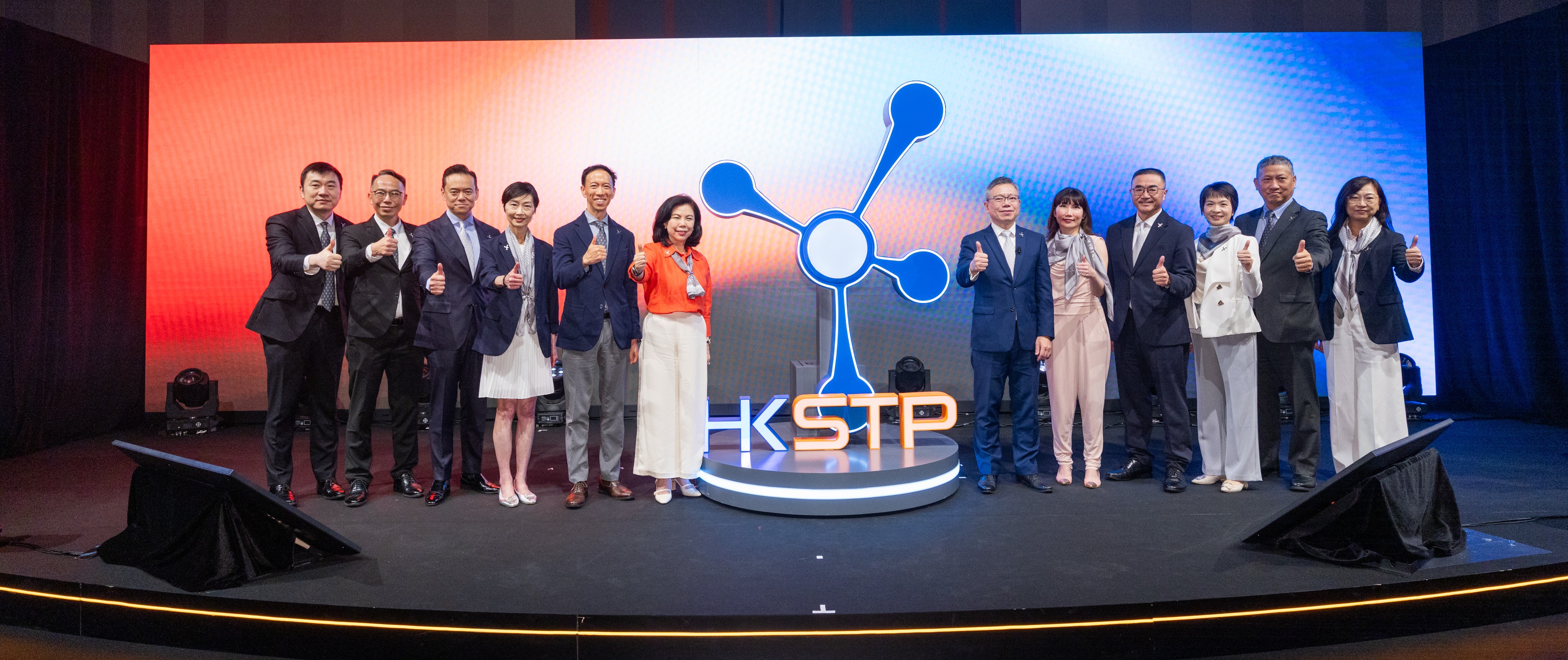
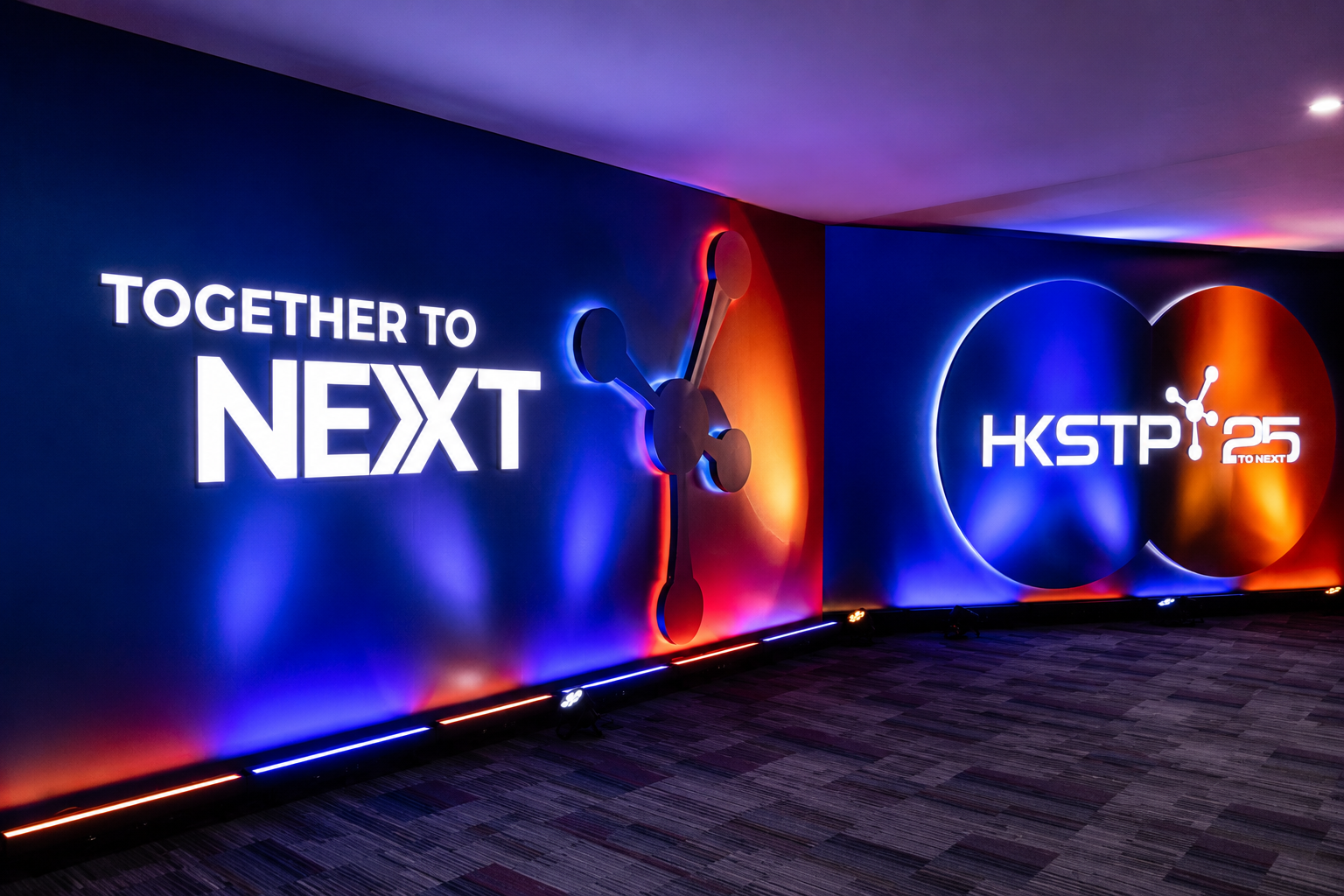
The study was released as HKSTP began a year long programme marking its 25th anniversary. The celebration opened with an event titled “Together to NEXT”, bringing the organisation’s focus on research, technology development and startup growth into a broader discussion about Asia’s changing role in global innovation.
Physical AI drives a new investment cycle
One of the report’s major findings concerns the rapid growth of artificial intelligence systems that operate in the physical world.
Investment in physical AI is rising across Asia, with robotics and AI infrastructure attracting large sums of capital in 2025. Robotics companies raised $26.1 billion during the year, while AI infrastructure attracted $21.4 billion, according to the study.
Those figures outpaced investment in areas such as generative AI and fintech, signalling growing investor interest in technologies that combine software intelligence with machines, industrial systems and physical environments.
The trend includes robotics, autonomous vehicles, industrial automation and AI systems capable of interpreting visual and physical information.
The Chinese mainland has taken a particularly strong position in several emerging areas. According to the report, mainland companies accounted for close to 100 percent of deals in a number of developing technology segments, including robot and industrial humanoid robot foundation models, vision language models and autonomous driving models.
That concentration reflects the mainland’s combination of research capacity, manufacturing infrastructure and a large domestic market in which new technologies can be deployed at scale.
Humanoid robotics has become one of the most closely watched areas. Advances in AI models, sensors, computer vision and robotics are allowing developers to build machines capable of performing increasingly complex tasks. Industrial applications could range from factory production and logistics to inspection and other physically demanding operations.
The report suggests that Asia’s advantage lies not only in developing these technologies but also in its ability to move them from laboratories into factories and consumer markets.
Asia’s growing share of global research
The report places the rise of Asian technology hubs within a much larger shift in global research and development.
Data from the World Intellectual Property Organization show that Asia’s share of worldwide R&D expenditure increased from 24 percent in 2007 to 45 percent in 2024.
The change has occurred alongside Asia’s established dominance in global manufacturing. The region now combines industrial capacity with a growing concentration of research institutions, engineers, technology companies and investment capital.
That combination is changing the geography of technological development.
For decades, Silicon Valley served as the most prominent example of a concentrated innovation ecosystem, bringing together universities, venture capital, technology companies and entrepreneurs in one geographic centre.
Asia is developing a different model, according to the HKSTP report. Instead of relying on a single dominant hub, the region is building a network of specialised centres, with different cities and economies contributing at different stages of the technology development process.
The Chinese mainland supplies major research and manufacturing capabilities. Hong Kong connects businesses and investors with international markets. Japan contributes corporate acquisition and technology integration expertise. India offers a huge and diverse market for commercialisation, while Singapore provides a platform for testing and expanding new business models across Southeast Asia.
The result is a regional system in which technology companies can move between markets depending on the stage of their development.
A larger consumer market
Asia’s influence is also being strengthened by its economic weight.
The Boao Forum for Asia estimates that the region accounted for 48.6 percent of global GDP in 2025. Rising incomes and expanding consumer purchasing power are creating a large market for technology products and services.
For startups, access to customers can be as important as access to capital. A company that can test a product in one Asian market, refine it and then enter several neighbouring markets has opportunities to expand without immediately relying on Western markets.
This is particularly relevant for technologies such as artificial intelligence, robotics, autonomous mobility and digital infrastructure, where scale can help companies reduce costs and improve their products through real world use.
Hong Kong’s position gives it an opportunity to participate in that process without competing directly with every other Asian hub in the same areas.
Hong Kong seeks a larger global role
Terry Wong Ping sau, CEO of HKSTP, said Asia’s growing innovation capacity was changing the way global technology ecosystems were organised.
“Asia’s rising innovation power is rewriting the global innovation map,” Wong said. “While Silicon Valley grew as a single, all in one hub, Asia, with the Chinese mainland as a key technology engine, is evolving an accelerated and more specialized network for global innovation.”
He said Hong Kong’s role as a “super connector” and value adding centre was becoming increasingly important as the region developed its technology industries.
The comments reflect a broader effort to position Hong Kong not simply as a financial centre, but as a link between research, startups, investors and commercial markets.
The city’s challenge will be to convert its strong position in startup potential and investment connectivity into companies that can achieve sustained international growth.
The Mosaic ranking provides one measure of that potential. The larger test will be whether Hong Kong based ventures can turn access to capital, technology networks and regional markets into products and companies capable of competing globally.
For HKSTP, which has spent 25 years building an ecosystem around science, research and technology companies, the latest ranking offers a measure of progress as Asia enters a new phase of competition for investment, talent and research leadership.