

Hong Kong is preparing to build an artificial intelligence-powered “City Brain” that will draw information from cameras, sensors, databases and digital platforms, prompting questions about how the system will be used once it becomes operational.
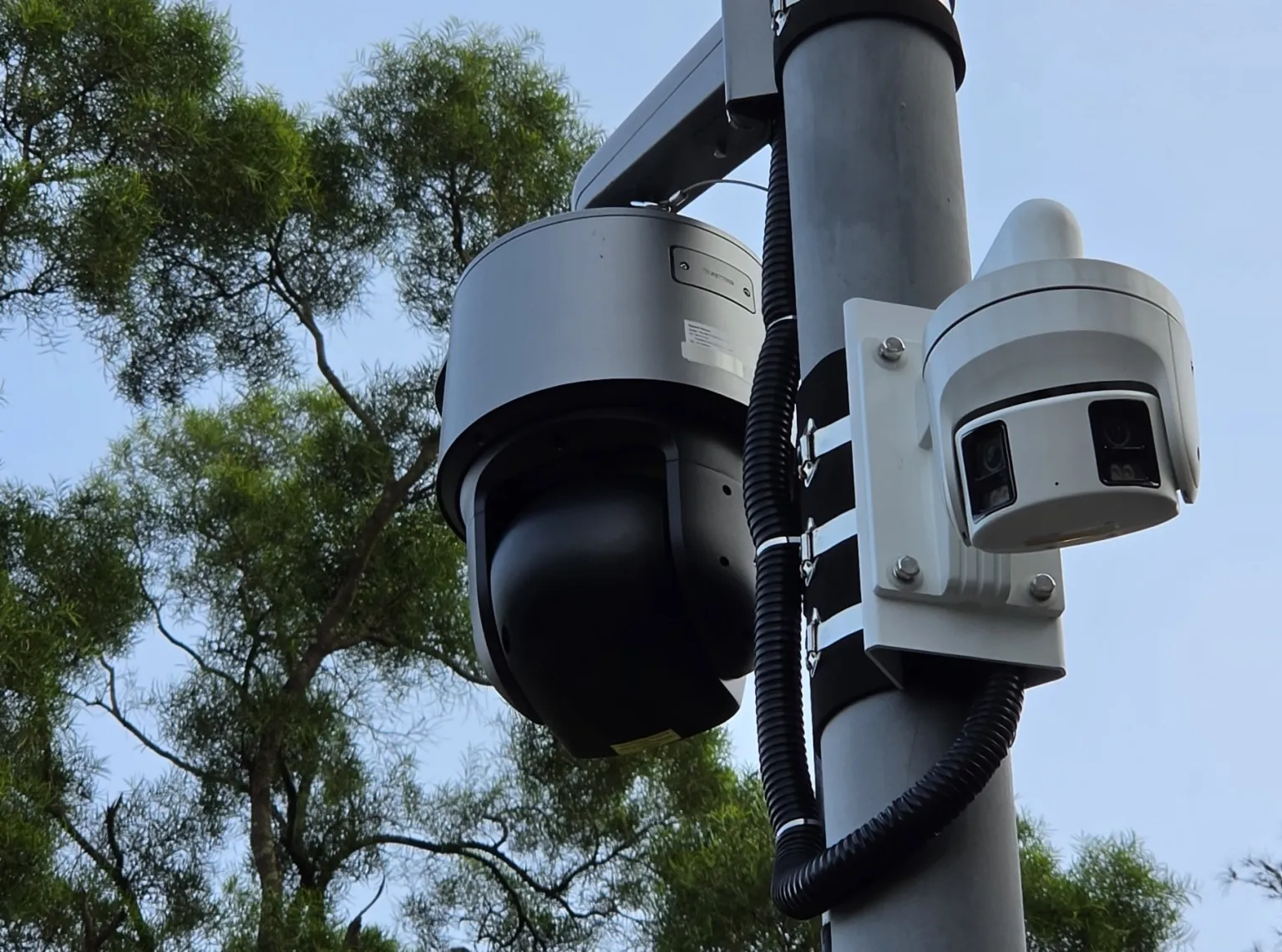
The proposed system has already begun to take physical shape on the city’s streets. Along Sui Wo Road in Sha Tin, clusters of cameras have appeared on lampposts, sometimes positioned near junctions or estate entrances. Their placement has attracted attention partly because the locations do not always appear to correspond to obvious traffic problems.
The equipment forms part of a wider expansion of smart-city infrastructure that the government says will help manage traffic and other urban conditions. But the arrival of more cameras in public spaces has also raised a separate question: where does traffic management end and broader surveillance begin?
That distinction has become particularly important following the government’s announcement of plans for the City Brain.
Cameras Appear Across Sha Tin
The unusual additions to local lampposts became noticeable on Sui Wo Road, where several poles now carry clusters of cameras and related equipment.
One installation stood near a road junction beside a road belonging to the Water Supplies Department. The road is blocked by a locked pole and eventually narrows into a footpath, making its apparent traffic-monitoring purpose less obvious.
The equipment itself has also changed since it first appeared. An early installation was covered with black plastic sheeting and secured with what appeared to be duct tape. The temporary-looking arrangement has since been replaced with a neater structure.
Similar camera clusters can now be seen at several points along Sui Wo Road. Some are positioned near entrances to residential estates, although the pattern is not consistent.
Shatin 33 has an installation while nearby Scenery Gardens does not. Sui Wo Estate Phase Two has one, while Phase One does not. Junctions appear to be another preferred location, yet a junction associated with recurring congestion outside an English Schools Foundation facility remains without the same visible equipment.
The uneven distribution makes it difficult for an ordinary observer to determine precisely what each installation is intended to monitor.
That uncertainty matters because the government is now preparing a much larger system capable of bringing information from multiple sources together.

What Is Hong Kong’s City Brain?
The City Brain was included in Hong Kong’s latest policy plans as an artificial intelligence-based platform intended to process real-time information and support urban management.
According to the government's description, the platform will centralise data from a range of sources, including CCTV cameras, tracking systems, smart sensors, government databases, social media and mobile applications.
The system is expected to use that information to improve traffic-light management, waste management and other areas of urban governance.
The concept is not entirely new. Similar AI-driven urban management platforms have been introduced in mainland Chinese cities, where large volumes of information can be processed to assist authorities with traffic flows and other city services.
For Hong Kong, however, the proposed system arrives at a time when the role of surveillance technology has become a particularly sensitive subject.
The government's stated purpose is urban management rather than monitoring individuals. Yet the breadth of the proposed data sources means the system could have access to information generated by people as they move around the city and use digital services.
The government has not said that the City Brain will be used to identify individuals for unrelated purposes. Its stated focus remains traffic and urban conditions.
The question is what safeguards will govern the system as it develops.
Security Bureau to Connect With the System
One detail in the government's plans has drawn particular attention: the first department scheduled to connect to the new system is the Security Bureau’s Emergency Monitoring and Support Centre.
The connection suggests that the City Brain will not operate solely as a traffic-management platform.
Government officials have described the Emergency Monitoring and Support Centre link in the context of emergency monitoring and support. The system is intended to bring information together so authorities can respond more efficiently to incidents and changing conditions.
That could have practical benefits during major traffic disruptions, emergencies or other citywide incidents.
But it also means the system's reach will extend beyond the management of traffic lights.
The government has said that the City Brain will combine information from numerous sources. The precise rules governing what data can be brought together, how long information can be retained and which departments can access it will therefore matter as much as the technology itself.
Those details will determine the practical limits of the system.
Eric Chan Rejects Surveillance Concerns
Chief Secretary for Administration Eric Chan has sought to address concerns that the City Brain could become a large-scale surveillance system.
Chan, who is expected to oversee the task force responsible for the project, said the platform was not intended to monitor individuals.
He said its purpose was to monitor traffic and urban conditions rather than people, crime or suspected thieves.
The task force overseeing the project is expected to be formed in the fourth quarter of 2026.
Chan's comments provide the government's stated position on how the system is intended to operate. They also establish an important distinction between using cameras and sensors to understand conditions in public spaces and using the same infrastructure to identify or track specific people.
Whether that distinction remains clear in practice will depend on the system's operating rules, technical capabilities and oversight arrangements.
Artificial intelligence does not itself determine how authorities use the information available to it. The scope of the system ultimately depends on decisions about what information enters the platform, what algorithms process it and which officials or departments can obtain the resulting information.

Why the Scope Matters
A traffic camera can be designed to measure vehicle flows, identify congestion and adjust signals without needing to identify individual motorists.
A much broader system could potentially process additional information. The government's description of the City Brain includes CCTV footage, tracking systems, government databases, social media and mobile applications. Bringing those sources into one platform creates a much larger pool of information than a conventional traffic-control network.
That does not mean the government will automatically use the system for personal surveillance. It does mean that the safeguards surrounding the platform will be important.
Questions about access, data retention, permitted uses and independent oversight are likely to become more significant as the system expands.
The distinction between collecting information and using it is also important. A camera positioned above a road may initially serve a narrow traffic-management purpose. If the surrounding infrastructure later becomes connected to other databases or analytical systems, the practical capabilities of that same camera could change.
For residents, that makes transparency particularly important.
People should be able to understand what public cameras are designed to record, which authority operates them, how the resulting information is processed and what restrictions apply to its use.
A City Brain With a Clearly Defined Job
Hong Kong's government has presented the City Brain as a tool for improving the management of a densely populated city. Better traffic coordination, faster responses to disruptions and more efficient handling of urban services are among the potential uses described by officials.
Those objectives are different from monitoring individuals.
The challenge will be maintaining that distinction as the system develops. The more data sources connected to an AI platform, the more important it becomes to define its limits in clear rules rather than relying solely on assurances about intended use.
The camera clusters appearing on Sha Tin lampposts may be relatively small pieces of infrastructure, but they offer a visible glimpse of a much larger technological project now taking shape.
The key question for Hong Kong residents is therefore not simply whether the City Brain can catch traffic problems. It is whether the government will establish clear, enforceable boundaries ensuring that a system created to manage the city remains focused on that purpose. What safeguards do you think should govern Hong Kong’s new AI-powered urban monitoring system?