

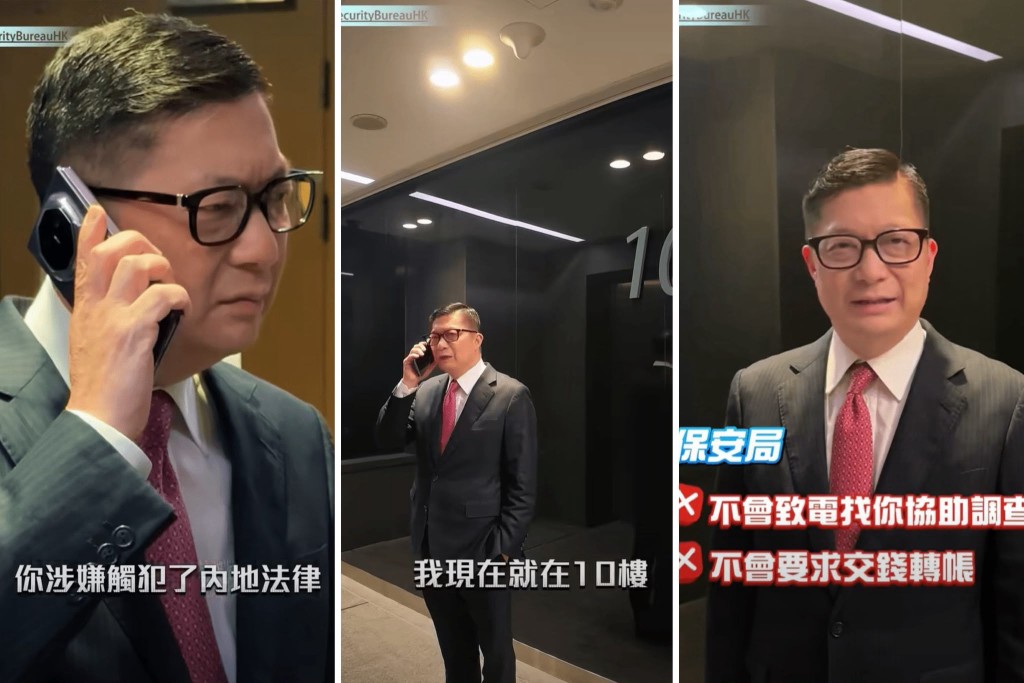
Hong Kong Secretary for Security Chris Tang Ping-keung has turned a suspected phone scam into a public warning after sharing a video in which he challenged a caller pretending to represent the Security Bureau. Instead of following the caller’s instructions, Tang questioned the person’s identity and invited him to come to the government offices in person.
The video, posted on Thursday, showed the caller claiming that Tang was suspected of violating mainland Chinese law. The person instructed him to report immediately to the 10th floor of the Central Government Offices to verify his identity and assist with an investigation.
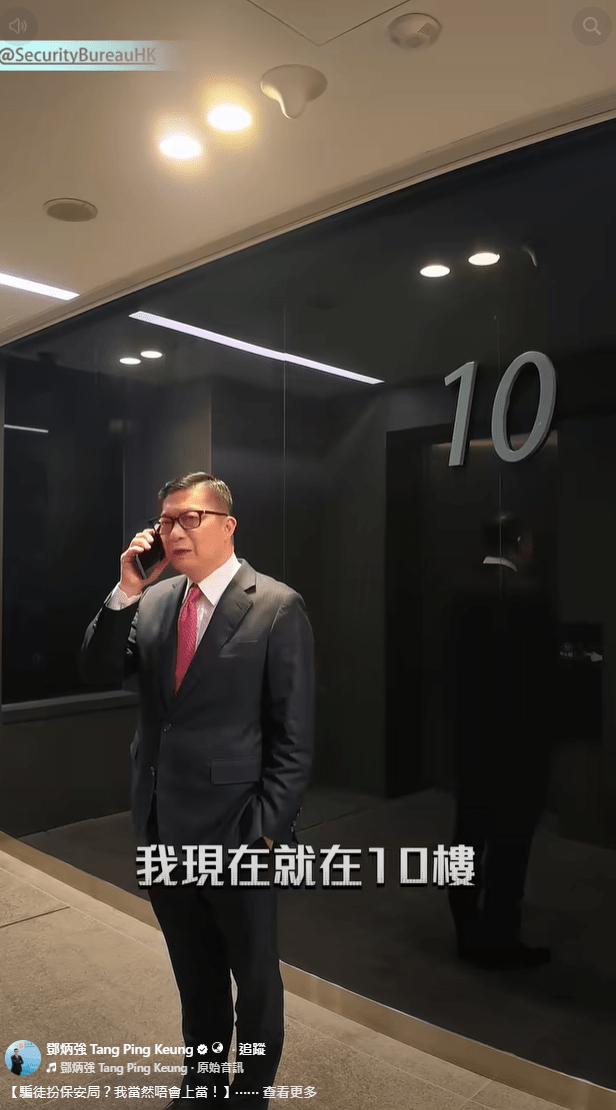
Tang responded by asking which unit of the Security Bureau the caller represented. He then pointed out that he was already on the 10th floor and challenged the caller to come and find him.
The exchange exposed the suspicious nature of the call and gave Tang an opportunity to remind the public how fraudsters use the names of government departments to frighten people into cooperating with them.
Tang warned residents not to trust callers simply because they claim to represent an official agency. He stressed that the Security Bureau would not telephone members of the public to demand assistance with investigations or ask them to transfer money.
Tang challenges caller claiming to represent the government
The caller reportedly attempted to establish authority by telling Tang that he was suspected of breaking mainland law. The instruction to appear at a specific government office was presented as part of a process to verify his identity and assist an investigation.
Such claims can put recipients under pressure, particularly when callers invoke alleged criminal offences or suggest that the person could face legal consequences for failing to cooperate.
Tang did not accept the caller’s claims at face value. Instead, he asked the person to identify the unit within the Security Bureau that he supposedly represented.
When the caller instructed him to report to the 10th floor of the Central Government Offices, Tang responded that he was already there. He invited the caller to meet him in person, challenging the credibility of the person on the other end of the line.
The video offered a practical example of how questioning an unexpected caller can interrupt a suspected fraud attempt. Rather than providing personal details or following instructions, Tang asked for information that could help establish whether the caller had a legitimate connection to the department.
The exchange also demonstrated why people should be cautious when an unsolicited caller claims that they are under investigation. A convincing story, official sounding language or knowledge of government institutions does not, on its own, prove that a call is genuine.
Tang shared the video to warn residents about these tactics and encourage them to treat suspicious calls with care.
Security Bureau warns against money transfer demands
Tang made clear that government officials would not call citizens to demand money or ask them to transfer funds as part of an investigation.
He warned that calls involving such demands should be treated as scams.
Fraudsters may impersonate government departments, law enforcement agencies or other official bodies to make their demands appear legitimate. They may claim that a recipient has broken the law, is connected to a criminal case or must verify their identity urgently.
The aim can be to obtain personal information, gain access to financial accounts or persuade victims to transfer money. By creating a sense of urgency, scammers try to prevent people from stopping to question what they have been told.
A caller may also discourage the recipient from speaking to family members or other people who could recognise the deception. In some schemes, victims are instructed to keep the alleged investigation confidential while following a series of demands.
Tang urged residents to remain calm when they receive suspicious calls and verify the information independently. People should not assume that a caller is genuine merely because the person uses the name of a government department or claims that a serious legal matter is involved.
His warning placed particular emphasis on the difference between a legitimate request for information and an attempt to pressure someone into handing over personal details or money.
How impersonation scams exploit fear
Government impersonation scams rely heavily on authority and fear. A caller who claims to be investigating a criminal offence may cause the recipient to worry about arrest, prosecution or other consequences.
That anxiety can make people more likely to comply with instructions without checking whether the claims are true.
The reference to mainland law in the call shown in Tang’s video illustrates how scammers can use the threat of legal trouble to make a conversation feel urgent. The caller allegedly told Tang that he was suspected of a breach and needed to report to a government office immediately.
For someone unfamiliar with official procedures, such a claim could be intimidating. A person might believe that refusing to cooperate could worsen their situation, especially if the caller speaks confidently or uses formal terminology.
However, an unexpected phone call is not proof that someone is under investigation. Recipients should avoid making decisions based solely on what an unknown caller says, particularly when the person demands secrecy, sensitive information or a financial transfer.
Tang’s response showed the value of pausing and asking questions instead of reacting out of fear. His position as Security Secretary also allowed him to demonstrate directly why people should be sceptical of someone claiming to represent the department he leads.
The key lesson is not that every unexpected call is fraudulent, but that callers must not be trusted solely on the strength of their own claims.
Steps residents can take to avoid phone scams
Tang encouraged residents to stay calm and verify information when they receive suspicious calls. Several practical steps can help people avoid becoming victims of impersonation fraud.
First, do not disclose identity numbers, banking details, passwords or verification codes to an unexpected caller. Personal information can be used to facilitate further fraud, even when the caller does not immediately request money.
Second, never transfer funds simply because someone claims that the payment is required for an investigation, identity verification or the settlement of an alleged legal problem. Tang specifically warned that the Security Bureau would not ask citizens to transfer money in this way.
Third, independently verify the caller’s identity. Rather than relying on a telephone number, name or explanation supplied by the person making the call, contact the relevant government department through its official communication channels.
Fourth, take time to think before responding. A caller who insists that a decision must be made immediately may be trying to prevent the recipient from checking the facts. Ending the call and seeking independent advice can help break that pressure.
Finally, anyone who suspects that they have been targeted should preserve relevant call records, messages and payment information. If money has already been transferred, contacting the bank promptly and reporting the incident to the appropriate authorities may help with the response.
These precautions are useful not only for older residents or people unfamiliar with digital services, but also for anyone who receives an unexpected call involving alleged criminal activity or demands for money.
Viral video turns warning into a public demonstration
By sharing his own encounter, Tang presented the warning in a format that residents could readily understand. Rather than relying solely on a general statement about fraud, the video showed how he responded when a caller claimed to be acting on behalf of the Security Bureau.
His challenge was straightforward: identify the unit you represent, and if the claim is genuine, come to the office where I am already present.
The exchange did not require Tang to provide information or comply with the caller’s instructions. Instead, he challenged the caller to substantiate the claim of official authority.
The video also reinforced the message that people should not allow fear of alleged legal consequences to override basic checks. A person claiming to be an official should be able to withstand reasonable questions, and a recipient should never be pressured into making a financial decision without independent verification.
Tang’s warning was direct: calls seeking money or account transfers under the pretext of a Security Bureau investigation are scams, and residents should not fall for them.
Anyone who receives a similar call should end the conversation if it appears suspicious, verify the claim through official channels and avoid sharing sensitive information or transferring funds. Would you recognise the warning signs if someone claiming to be a government official called you today?