

Technology stocks lead the decline
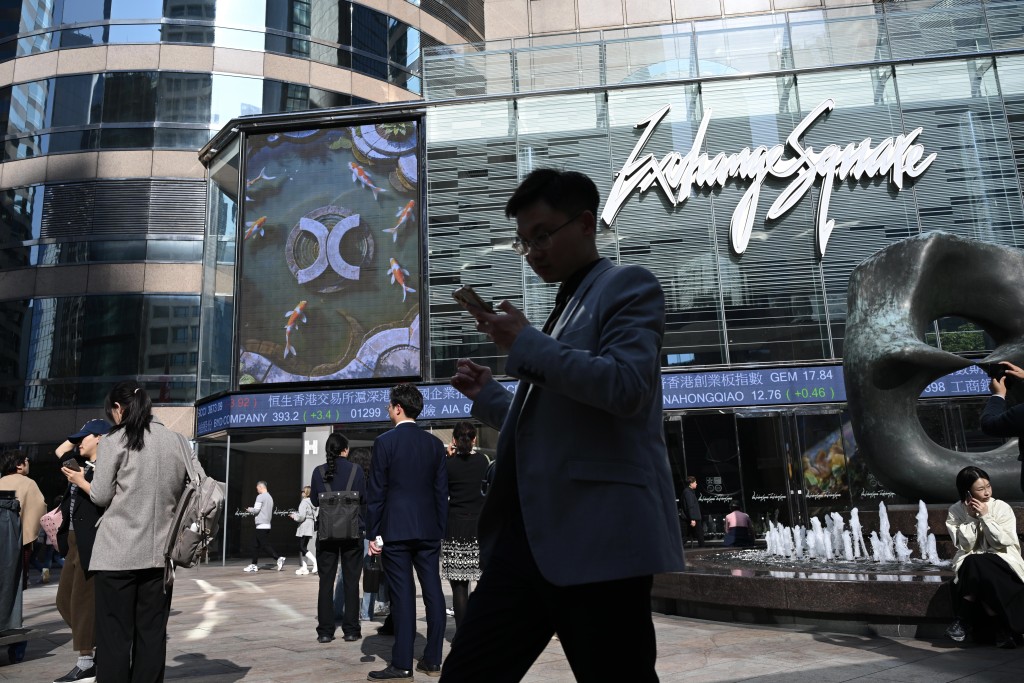
Hong Kong stocks closed lower on Tuesday as selling pressure on major technology companies weighed on the broader market, with Alibaba and Tencent among the biggest drags on the session.
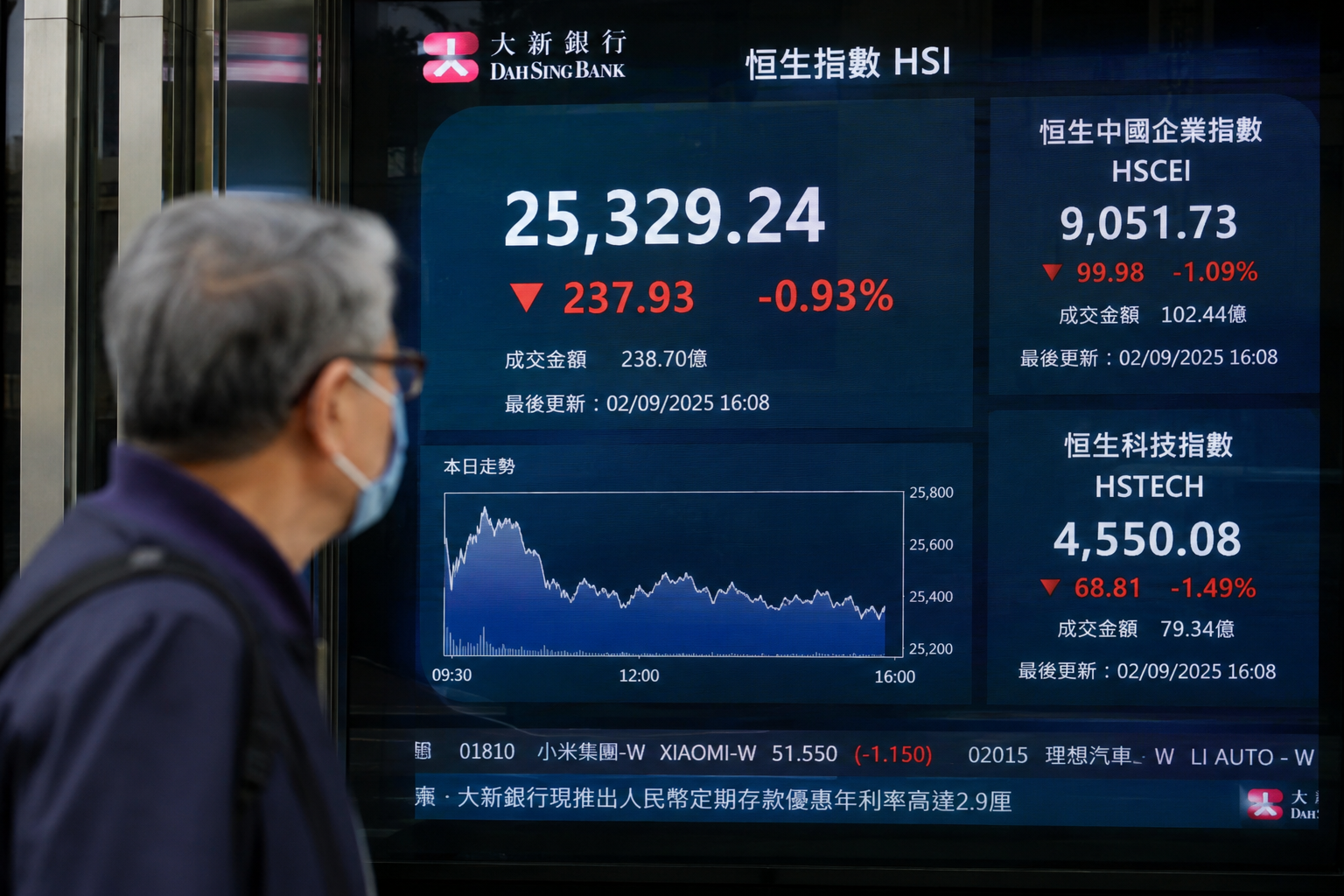
The benchmark Hang Seng Index fell 237 points, or 0.93 percent, to finish at 25,329. Trading remained active, with full day turnover reaching HK$238.7 billion, reflecting continued heavy participation in the city’s equity market.
The Hang Seng Tech Index performed worse than the broader benchmark, declining 1.49 percent to 4,550 points as investors reduced exposure to several of the market’s largest technology names.
Alibaba, Tencent and other major stocks retreat
Alibaba Group Holding was among the weakest performers. The company’s Hong Kong listed shares fell 3.3 percent, adding to the pressure on the technology sector. Tencent Holdings also declined sharply, falling 2.6 percent.
The losses extended across several other major internet companies. JD.com dropped 3.2 percent, while Meituan fell 2.9 percent. Baidu also declined 2.6 percent after its dual primary listing status became effective on Tuesday.
The broad based weakness among large technology companies meant that gains in selected stocks were not enough to offset the downward pressure from the sector’s biggest constituents.
Technology stocks have become an important component of Hong Kong’s overall market performance, meaning movements in a handful of large companies can have a significant effect on the benchmark indexes. Tuesday’s session provided another example of that concentration, with declines among the largest technology names weighing heavily on the Hang Seng Index.
Baidu falls as dual primary listing takes effect
Baidu’s decline came on the same day that its dual primary listing status took effect. The company’s move adds another development to the structure of its Hong Kong listing as it maintains its presence in both Hong Kong and the United States.
Despite the listing development, investors pushed Baidu shares lower during Tuesday’s trading session, with the stock ending the day down 2.6 percent.
The move came as technology stocks across the Hong Kong market faced broader selling pressure, leaving investors focused on individual corporate developments as well as the overall direction of the sector.
Kuaishou bucks the wider technology selloff
Kuaishou Technology provided one of the few bright spots among the major technology companies. Its shares initially surged as much as 7 percent before giving back part of those gains. The stock eventually closed the session 3 percent higher.
The move followed Kuaishou’s announcement of an investment from the government backed China Artificial Intelligence Industry Investment Fund in Kling AI, its artificial intelligence video generation business.
The announcement gave investors a fresh reason to focus on Kuaishou’s artificial intelligence operations at a time when AI related businesses have attracted significant attention across China’s technology sector.
Kling AI is associated with Kuaishou’s push into AI generated video, an area that has drawn increasing interest as Chinese technology companies compete to develop products capable of generating and manipulating visual content through artificial intelligence.
AI investment draws investor attention
The investment set Kuaishou apart from the broader weakness in Hong Kong technology shares on Tuesday.
While Alibaba, Tencent, JD.com, Meituan and Baidu all recorded declines, Kuaishou finished the session higher. Its performance showed how company specific announcements can influence individual stocks even when the wider market is under pressure.
The contrast also illustrated the selective nature of investor interest within China’s technology sector. Rather than moving uniformly, individual companies responded differently to corporate developments and expectations surrounding their businesses.
For Kuaishou, the investment in Kling AI provided investors with a fresh focus on the company’s artificial intelligence ambitions and its position in the rapidly developing market for AI generated video.
Mainland Chinese markets also finish lower
The weakness in Hong Kong was mirrored by declines on the mainland, although the losses there were more moderate in Shanghai and somewhat larger in Shenzhen.
The Shanghai Stock Exchange Composite Index fell 0.16 percent to 3,979 points. The Shenzhen Stock Exchange Component Index declined 1.02 percent to 13,872 points.
The mainland market movements added to the cautious tone across Chinese equities during the session. Shenzhen, which has a significant concentration of technology and growth oriented companies, recorded the sharper decline of the two major mainland benchmarks.
Heavy turnover reflects active trading
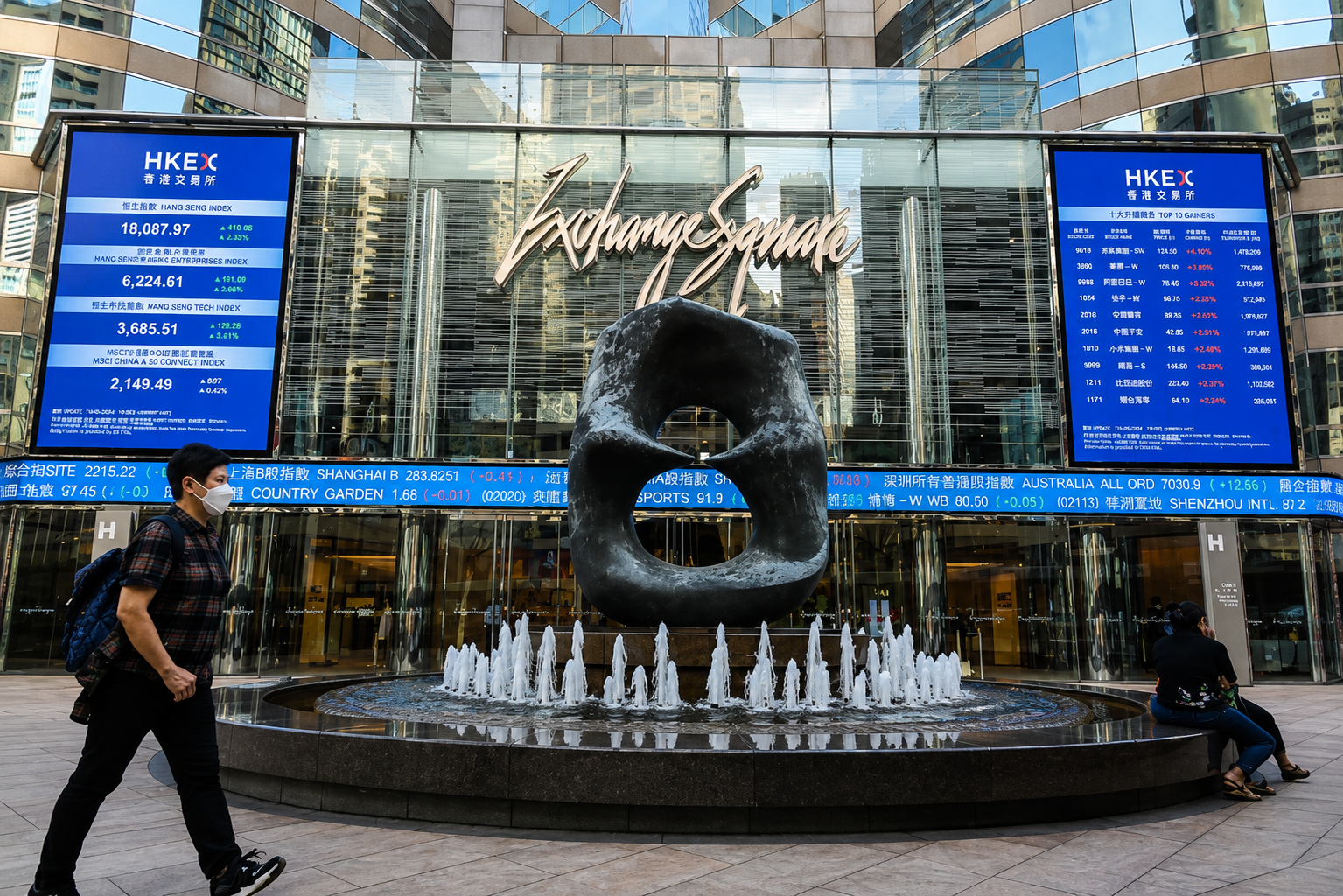
Hong Kong’s decline came alongside substantial market activity. Full day turnover reached HK$238.7 billion, indicating that investors continued to trade actively during the session.
The market’s movement was not simply a result of thin trading conditions. Instead, the level of turnover showed that investors were actively repositioning holdings as major technology stocks came under pressure.
The Hang Seng Tech Index’s 1.49 percent decline was notably steeper than the 0.93 percent fall in the broader Hang Seng Index.
The difference reflected the heavier pressure on technology shares. Companies such as Alibaba, Tencent, JD.com, Meituan and Baidu have significant influence over the technology index, so simultaneous declines among these stocks can quickly affect the wider market.
Investors focus on company specific developments
Tuesday’s trading also reinforced the importance of individual corporate announcements in determining stock performance.
Kuaishou’s gain following news surrounding its AI business stood in sharp contrast to the declines among other major internet companies. The stock’s initial 7 percent jump showed the strength of the immediate investor response before some of those gains were surrendered later in the session.
Alibaba and Tencent, meanwhile, remained under pressure. Their size and importance to the Hong Kong market meant their declines contributed significantly to the weakness in the benchmark index.
The session also demonstrated how artificial intelligence continues to influence investor expectations within China’s technology sector. Companies with clear AI related developments can attract buying interest even when the broader technology market is declining.
Hong Kong market ends firmly lower
By the close, the Hang Seng Index had fallen 237 points, or 0.93 percent, to 25,329, while the Hang Seng Tech Index dropped 1.49 percent to 4,550.
Alibaba fell 3.3 percent, Tencent declined 2.6 percent, JD.com dropped 3.2 percent, Meituan lost 2.9 percent and Baidu fell 2.6 percent.
Kuaishou was the notable exception, ending 3 percent higher after announcing the investment in Kling AI.
Mainland markets also closed lower, with the Shanghai Composite down 0.16 percent and the Shenzhen Component Index falling 1.02 percent.
The immediate focus for investors will be whether weakness among Hong Kong’s major technology companies continues into the next trading session and whether further corporate developments, particularly in artificial intelligence, can provide support for individual stocks.