

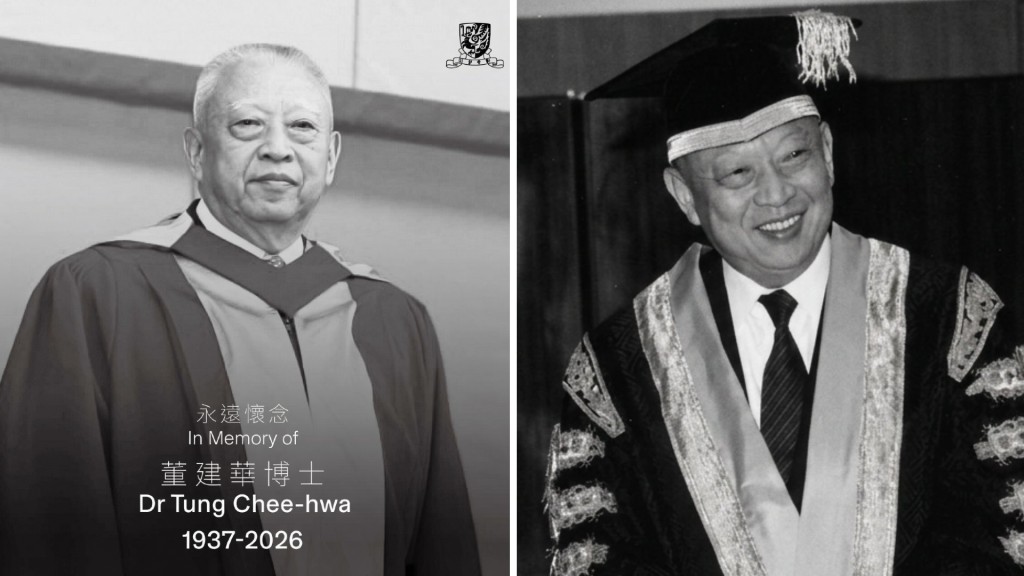
Universities across Hong Kong have paid tribute to former Chief Executive Tung Chee Hwa following his death, remembering him as a public servant who placed education, social responsibility and the development of future generations at the centre of his work.
The Chinese University of Hong Kong, the University of Hong Kong and Hong Kong Metropolitan University were among the institutions that expressed condolences to Tung’s family and reflected on his contribution to Hong Kong and higher education.
Tung served as Hong Kong’s first Chief Executive after the city returned to Chinese sovereignty in 1997. He later became Vice Chairman of the National Committee of the Chinese People’s Political Consultative Conference. His connection with the territory’s universities continued throughout his public life, including through honorary appointments, educational initiatives and philanthropic support.
Chinese University remembers former chancellor
The Chinese University of Hong Kong expressed deep sorrow over Tung’s death, describing him as a former chancellor and honorand whose contribution to the university and wider society would continue to be remembered.
CUHK had previously awarded Tung an honorary degree of Doctor of Laws, honoris causa, in recognition of what the university described as his exceptional contributions to Hong Kong, the nation and society.
The university pointed to Tung’s role during the early years after the 1997 handover, when Hong Kong was adjusting to a new constitutional and political era while maintaining its position as an international centre for business, education and culture.
CUHK also praised his commitment to the city’s long term prosperity.
The university said Tung had shown a strong commitment to education and to preparing young people for leadership. His interest in nurturing future generations extended beyond academic achievement, reflecting his broader belief that education should contribute to society and prepare students to take on public responsibilities.
His association with CUHK therefore extended beyond the honorary recognition he received. The university described his contribution as part of a wider legacy that would continue to influence future generations.
CUHK also conveyed its heartfelt condolences to Tung’s family, saying that his contributions and lasting legacy would be remembered for generations.
HKU praises his contribution to education
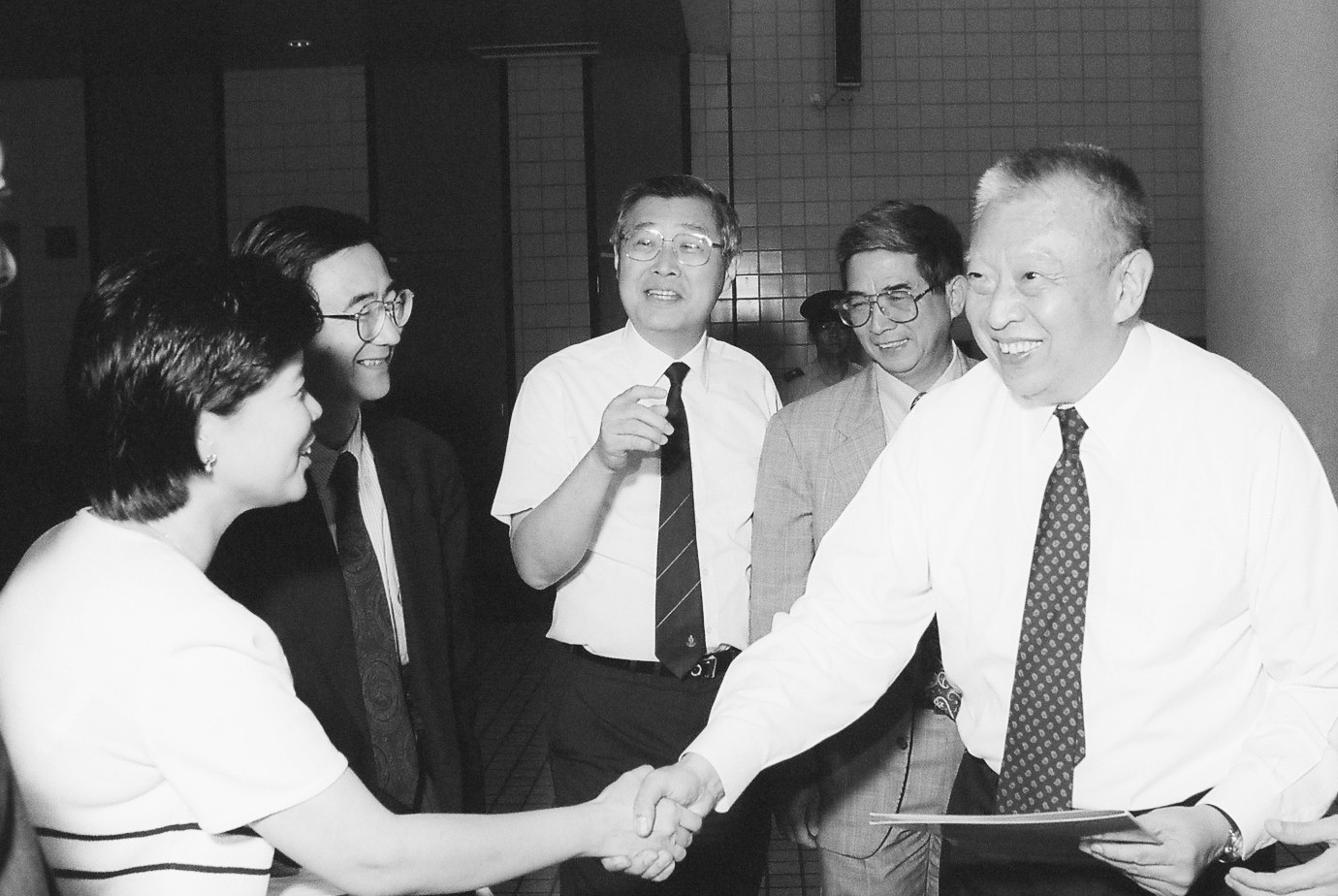
The University of Hong Kong also expressed deep sadness over the death of its former chancellor.
HKU described Tung as a champion of education, research and innovation and pointed to his efforts to bring universities, businesses and wider society into closer contact.
The university said his approach encouraged stronger links between academic institutions and the sectors that depend on research, new ideas and highly trained graduates.
One of the areas singled out by HKU was the introduction of the 3+3+4 academic structure.
The system changed the structure of secondary and university education in Hong Kong. Under the new arrangement, students moved from three years of junior secondary education to three years of senior secondary education before completing four years of undergraduate university study.
The reform represented a major change for Hong Kong’s education system. It altered the length and structure of secondary education and undergraduate degrees while giving universities greater scope to develop broader undergraduate programmes.
HKU credited Tung with adopting the reform and said it significantly strengthened the depth and breadth of the city’s higher education system.
The change also affected generations of students who entered Hong Kong schools and universities after its implementation. Universities had to redesign programmes, adjust teaching arrangements and prepare for a new undergraduate structure.
For HKU, Tung’s involvement in education was therefore closely connected with institutional change rather than limited to ceremonial support.
Tung Foundation supported HKU New College
HKU also remembered Tung for the financial support provided by the Tung Foundation to the university’s New College.
The university said it remembered with deep gratitude Tung’s service to Hong Kong and his encouragement of its work.
The foundation’s support reflected another part of Tung’s involvement with education. Beyond government policy, philanthropy allowed his family and associated organisations to contribute directly to educational institutions and student life.
Universities often rely on this form of private support to develop facilities, scholarships, colleges and research programmes. Contributions can have an effect well beyond the original donation by creating resources that remain available to students and academics over many years.
HKU linked Tung’s support to his broader interest in the university’s role in research, innovation and service to society.
The institution said his service was visionary and selfless, while acknowledging his encouragement of the university as it continued its academic mission.
HKMU recalls a life of public service
Hong Kong Metropolitan University also joined the tributes.
Conrad Wong Tin Cheung, chairman of the university’s Council, praised Tung’s lifelong dedication to the public good and his commitment to serving society.
Wong said Tung’s sense of responsibility, dedication to public service and devotion to Hong Kong and the country had earned the university community’s deepest respect.
The statement placed particular emphasis on Tung’s personal commitment to society rather than focusing only on his political positions.
Tung spent decades in public life, first becoming prominent through his involvement in business and shipping before entering Hong Kong’s political leadership. His appointment as the territory’s first Chief Executive following the 1997 handover placed him at the centre of one of the most significant political transitions in Hong Kong’s modern history.
His years in public office were marked by major policy changes and difficult political moments, but universities have chosen to focus their tributes on his commitment to education, public service and the future of Hong Kong.
HKMU President Paul Lam Kwan Sing also expressed condolences on behalf of the university.
Lam said the entire university community extended its heartfelt sympathy to Tung’s family following his death.
Education remained a major part of his legacy
The tributes from the three universities share a common theme. They present Tung not simply as a former political leader, but as someone whose influence extended into education and the development of young people.
His links with Hong Kong’s universities covered several areas, including institutional leadership, education policy, philanthropy and public engagement.
As Chief Executive, he was involved in major decisions affecting the city’s education system. His support for the 3+3+4 structure became one of the most significant educational reforms associated with his administration.
His later involvement with universities and educational foundations gave him another avenue through which to support students and institutions.
For the universities paying tribute to him, that record forms an important part of how they remember his public life.
The messages also reflect the continuing relationship between Hong Kong’s universities and the city’s political leadership. Higher education institutions have played a central role in educating professionals, conducting research and preparing successive generations of students for careers in Hong Kong and beyond.
Tung’s emphasis on education placed him within that broader history.
Tributes focus on future generations
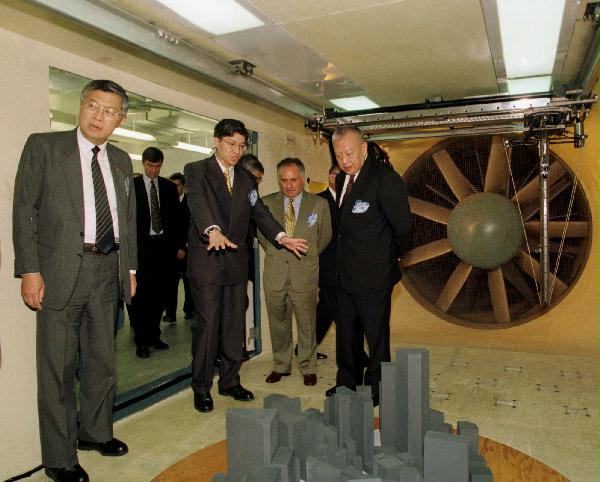
The statements from CUHK, HKU and HKMU all pointed towards the people who will carry Hong Kong forward.
CUHK stressed Tung’s commitment to nurturing future leaders. HKU recalled his support for education, research and innovation. HKMU focused on his dedication to public service and society.
Together, the tributes portray a former leader whose connection with education continued after his time as Chief Executive.
They also show why universities regarded his contribution as extending beyond government policy. His influence was felt through educational reform, university leadership, philanthropy and support for academic institutions.
For Hong Kong’s universities, Tung Chee Hwa’s death marks the passing of a former political leader whose public career was closely connected with the city’s transformation after 1997.
The institutions now remembering him have made their position clear: his record of service to Hong Kong, his support for education and his interest in preparing future generations will remain part of their institutional memory.
As universities across the city continue to commemorate his contribution, what lessons from Tung Chee Hwa’s approach to education and public service should Hong Kong’s next generation of leaders carry forward?