


A sudden voltage drop on a major power line triggered more than 200 emergency reports in Hong Kong on Tuesday afternoon, leaving people trapped in lifts and setting off fire alarms across parts of Kowloon. The Fire Services Department (FSD) recorded 179 lift entrapment cases and 39 false alarms by 3pm, with most reports concentrated in Yau Tsim Mong district.
The incidents began shortly after 1.09pm, when CLP Power detected a brief but sudden drop in voltage along a 400-kilovolt power line connecting Lai Chi Kok to Tsz Wan Shan. Although the electricity supply was not interrupted, the utility company said the fluctuation could have affected sensitive electrical equipment in parts of Kowloon and the New Territories.
The scale of the emergency placed considerable pressure on firefighters, who received dozens of reports within minutes of the incident. Four women aged between 68 and 71 also reported injuries after becoming trapped in lifts. Three were taken to hospital while conscious, while the fourth declined hospital treatment after receiving medical attention at the scene.
CLP Power said its teams were investigating what caused the voltage drop and apologised to residents for the inconvenience.
More Than 50 Lift Entrapment Reports in 10 Minutes
The first wave of emergency calls arrived quickly. According to senior divisional officer Yung Wai-ming, the Fire Services Department received 55 reports of people trapped in lifts and 22 reports of false alarms within ten minutes of the voltage drop.
The figures illustrate how a brief electrical disturbance can trigger multiple incidents across different buildings at almost the same time. Lift systems and electronic fire alarm equipment may respond differently to fluctuations in their electrical supply, depending on their design and protective systems.
By 3pm, firefighters had handled 179 lift entrapment cases and 39 false alarms. Most of the reports came from Yau Tsim Mong, a densely populated district where residential buildings, commercial premises and other properties rely on lifts to move people between floors.
The department did not provide a complete breakdown of the affected buildings or the number of people involved in all 179 incidents. The available figures also did not establish how many lifts stopped operating because of the voltage fluctuation itself or how many alarms were triggered by other equipment responses.
Nevertheless, the volume of reports required the fire service to adjust its response. Rather than dealing with isolated incidents spread across the city, emergency crews faced a concentrated series of calls during a short period.
CLP Power Reports Sudden Voltage Drop
CLP Power, one of Hong Kong's two electricity providers, detected the voltage drop at approximately 1.09pm on Tuesday along a 400-kilovolt transmission line connecting Lai Chi Kok and Tsz Wan Shan.
The company described the disturbance as brief but sudden. It said the electricity supply was not interrupted, although the voltage change could have caused lights to dim or flicker and power-sensitive electronic devices to stop operating temporarily in certain areas of Kowloon and the New Territories.
A voltage drop differs from a complete power outage. Electricity can continue flowing through a network even when voltage temporarily falls below its normal level. Some equipment may continue working, while other systems may shut down, reset or activate protective mechanisms.
The response of individual devices depends on their design, operating conditions and built-in safeguards. The reported incidents involving lifts and fire alarms were consistent with a disturbance affecting equipment that relies on a stable electrical supply, but the precise mechanism behind each case was not established in the information released.
CLP had not confirmed the underlying cause of the voltage drop. Its investigation was continuing, and the company apologised for the inconvenience caused to residents.
The utility's findings will be important in determining whether the incident originated from a fault on the transmission line or another issue affecting the network. Until the investigation establishes the cause, it would be premature to attribute the event to a specific technical failure.
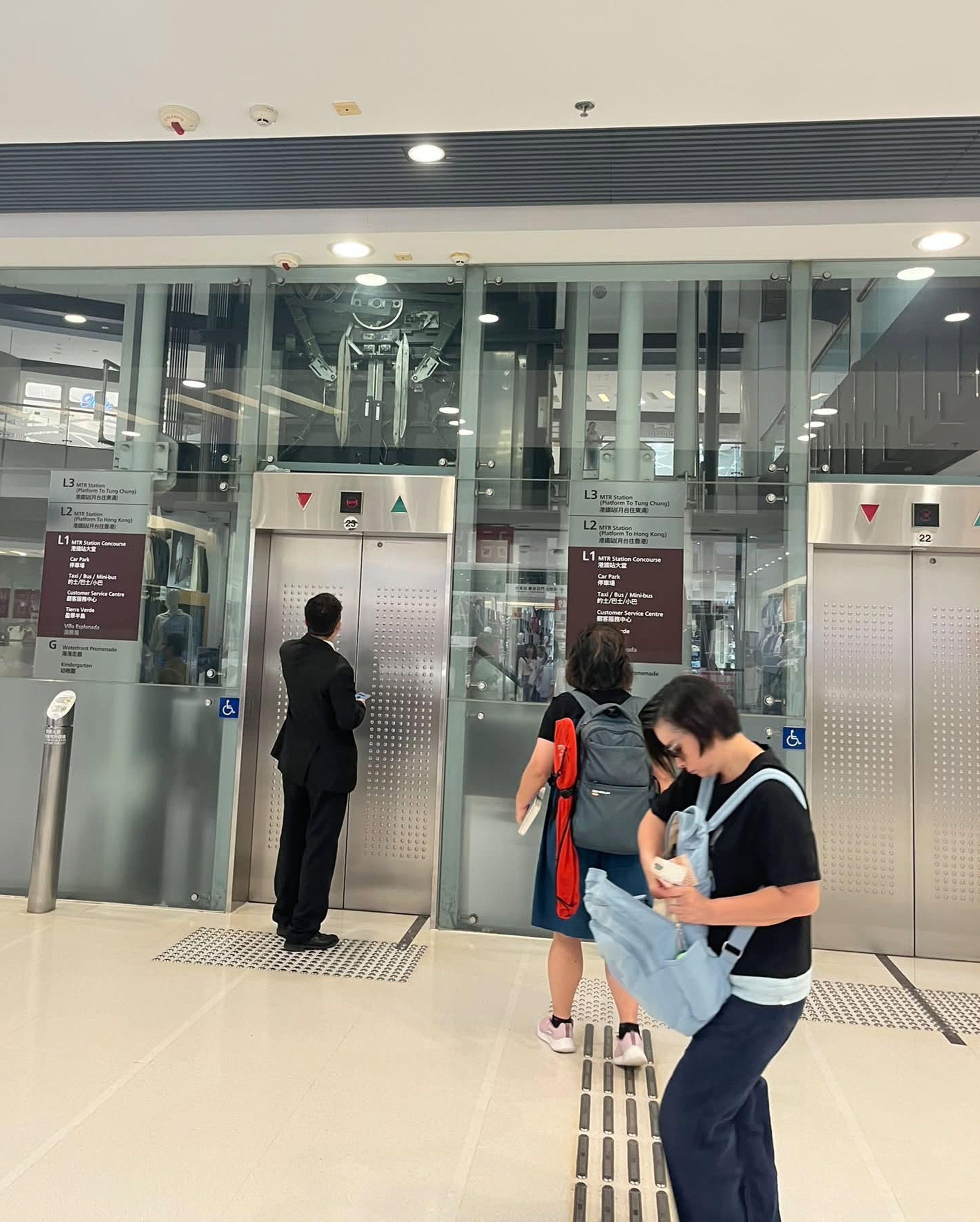
Four Women Report Injuries After Lift Entrapments
Four women aged between 68 and 71 reported injuries after becoming trapped in lifts, Yung said.
Three were taken to hospital in a conscious state after experiencing discomfort and shortness of breath. The fourth woman received treatment at the scene but refused hospital transport.
The information released did not indicate that any of the four women suffered life-threatening injuries. However, their reported symptoms show that lift entrapments can cause distress, particularly when occupants are older or experience difficulty breathing while waiting to be released.
A lift stopping between floors can leave passengers uncertain about what has happened or how long they will remain inside. Depending on the circumstances, heat, anxiety and underlying health concerns may add to their discomfort.
People trapped in a lift should generally use the alarm or emergency communication system to contact building management or the relevant emergency service. They should avoid forcing the doors open or attempting to climb out of the lift without assistance, as the lift car may move unexpectedly or the gap may present a fall hazard.
Building operators also need to follow the appropriate emergency procedures when a lift stops unexpectedly. Trained personnel can assess the situation and arrange for passengers to be released safely.
The FSD did not identify the buildings where the four women became trapped or provide further medical updates.
Fire Services Department Mobilises Extra Resources
The sudden increase in emergency calls prompted the Fire Services Department to activate a call-back mechanism and mobilise additional resources at around 2pm, Yung said.
The measures were intended to help the department manage the unusually high number of reports arriving within a short period. A call-back mechanism can help authorities gather further information from callers and reassess the scale or urgency of reported incidents as resources are deployed.
The pressure was reflected in the response times reported by the department. Yung said firefighters took as long as 49 minutes to respond to false alarms and approximately one hour and 20 minutes to handle a lift entrapment report.
These were the longest reported response and handling times, rather than the average for every incident. The figures should therefore not be interpreted as meaning that all callers waited that long.
The difference between the two timeframes also matters. A response time refers to how long it takes emergency personnel to respond, while the time required to handle an incident may include additional work at the scene. The information provided did not specify precisely how the department calculated each figure.
The incident demonstrated the operational challenge created when multiple buildings report emergencies simultaneously. Even where individual cases do not involve serious injuries, firefighters must assess each report, determine what assistance is required and allocate crews accordingly.
The concentration of calls in Yau Tsim Mong added to that workload, while the possibility of similar equipment problems elsewhere in Kowloon and the New Territories meant the disruption was not necessarily confined to a single neighbourhood.

Why a Brief Voltage Drop Can Affect Building Equipment
The absence of a complete power outage does not mean that all electrical equipment will operate normally.
Many modern systems depend on electronic controls that monitor voltage and other operating conditions. A sudden fluctuation can cause some devices to reset or enter a protective state, even if the wider electricity network continues supplying power.
Lift systems use electrical and electronic components to control movement, braking, doors and safety functions. Depending on the equipment and the nature of the disturbance, a lift may stop operating until its controls or power supply return to an acceptable condition.
Fire alarm systems can also react to electrical disturbances, although the precise response depends on the installation and the fault involved. An alarm that activates unexpectedly should not automatically be assumed to be false until the situation has been checked.
The FSD's figures recorded 39 false alarms by 3pm, but they did not establish that every alarm was caused directly by the voltage drop. Further technical findings would be needed to determine the relationship between the electrical incident and each reported case.
For residents and building managers, the immediate priority during an unexpected equipment failure is to follow established safety procedures rather than attempt repairs themselves.
Investigation Continues Into Cause of the Incident
CLP Power said its teams were investigating the sudden voltage drop and apologised to residents affected by the disruption.
The company had confirmed the approximate time and location of the fluctuation, along with its potential effects on electrical equipment. It had not, in the information provided, announced a definitive cause or detailed any corrective measures.
The Fire Services Department's response, meanwhile, involved handling 179 lift entrapment cases and 39 false alarms by 3pm, treating reports of injuries and bringing additional resources into operation as calls accumulated.
The incident affected residents and building users across parts of Kowloon and the New Territories, despite the absence of a complete interruption to the electricity supply.
Residents who encounter a stopped lift should use its emergency communication system and wait for trained assistance. Building managers should also report suspected electrical problems to the relevant utility and ensure that affected equipment is checked before being returned to normal operation.
Did you experience flickering lights, a stopped lift or an unexpected alarm during Tuesday's voltage drop? Share your experience and any confirmed updates with us.