

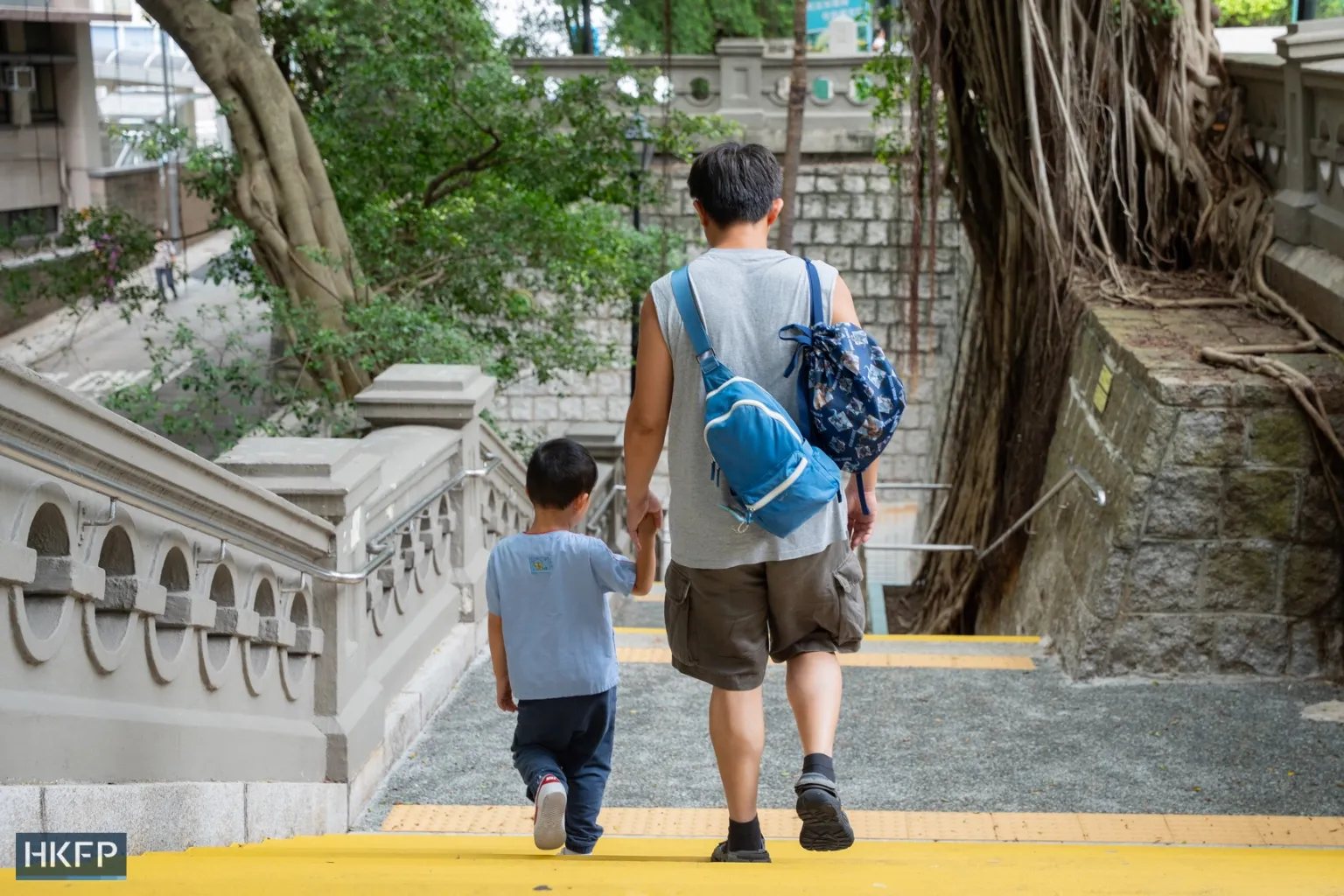
Hong Kong is considering giving civil servants up to 12 hours of family care leave each year from next year as the government expands measures aimed at supporting families and encouraging higher birth rates.
Secretary for the Civil Service Ingrid Yeung told a Legislative Council panel on Wednesday that the proposed leave would give government employees short periods away from work to handle unexpected family or household matters. Examples include a sudden school suspension, a gas leak at home or other situations that require immediate attention.
The proposal forms part of a wider package of measures introduced by the administration to make employment more family friendly while reducing some of the practical and financial pressures associated with raising children.
Yeung said the government expected the application process to be straightforward. She also said she believed most civil servants would use the arrangement responsibly rather than exploit it.
The proposal has already raised questions about how the leave would work in practice, particularly when a family member needs medical attention.
Medical appointments raise questions over leave
A lawmaker asked Yeung whether civil servants could use the proposed family care leave when accompanying relatives to medical appointments. The situation had been included among the examples of family care needs mentioned by Yeung in an earlier discussion.
Yeung suggested that employees should instead use their existing paid annual leave for such appointments because a hospital or clinic visit could occupy a significant part of the working day.
The response has added an important distinction to the proposed scheme. While the government has described family care leave as a way to deal with sudden and short term needs, not every family responsibility would necessarily qualify for the new allowance.
That could become an issue for employees caring for elderly parents or relatives who require regular medical treatment. A routine appointment can involve more than the consultation itself, particularly when travel and waiting times are included.
The proposed 12 hour allowance would therefore provide a limited pool of time rather than a general entitlement to take leave whenever a family member needs assistance.
Officials have yet to set out every operational detail of the scheme, including the precise circumstances in which employees would be able to apply and how departments would record the hours taken.

Online reaction focuses on the amount of leave
Reaction to the proposal has been mixed.
Some internet users questioned whether 10 to 12 hours a year would be enough for people who have significant responsibilities for relatives. They argued that family care can involve repeated appointments, emergencies and other demands that quickly exceed a small annual allowance.
Others focused on a different issue. They questioned why the proposed benefit would apply to civil servants rather than employees across the private sector.
That distinction matters in Hong Kong because the civil service represents only part of the city's workforce. Employees in private companies generally depend on their employers' own leave policies, subject to existing statutory employment protections.
The debate has therefore extended beyond the number of hours being proposed. It has also raised questions about how far family friendly employment policies should reach and whether similar arrangements should eventually become available to workers outside government.
Family support becomes part of fertility policy
The family care proposal follows a series of measures announced by Chief Executive John Lee as his administration seeks to address Hong Kong's low birth rate.
Lee outlined plans for family care leave for government employees in his 2026 Policy Address last week. The proposal sits alongside other measures designed to reduce the financial cost of raising children, including an extension of one off baby bonuses and higher child related tax allowances.
The government has increasingly treated employment conditions as one part of the wider discussion around fertility. The approach recognises that the decision to have children can involve more than direct financial costs. Time away from work, childcare arrangements and the ability to respond to family emergencies can also affect working parents.
Hong Kong has already introduced a separate childcare leave arrangement for civil servants.
Under a measure announced in Lee's 2024 Policy Address, civil servants with children younger than three became eligible for up to three days of childcare leave each year from early 2025.
The new family care proposal would cover a broader range of circumstances. Rather than focusing specifically on young children, it could allow civil servants to deal with other immediate family and household responsibilities.
That distinction could be particularly relevant in a city where many households have responsibilities extending across generations.
Hong Kong follows wider East Asian policy debate
Hong Kong is not alone in examining employment policies as governments across East Asia respond to declining birth rates.
Singapore announced a proposed bill in August that would expand childcare leave for parents. Under the proposal, parents with a child aged six or younger would receive eight days of annual childcare leave.
Families with two children would receive 10 days, while parents with three children would receive 12 days each year.
The Singapore proposal reflects a broader effort in the region to give working parents more time to manage childcare responsibilities alongside employment.
Hong Kong's approach differs in its current focus on civil servants and the introduction of a separate family care allowance measured in hours rather than full days.
The two policies nevertheless address a similar practical question: whether workers can be given additional time away from their jobs when family responsibilities arise.
For Hong Kong, the issue has gained added attention as authorities introduce financial incentives and other policies intended to make having children more manageable.
The limits of a short annual allowance
The proposed 12 hours could be useful for emergencies that do not require an entire day away from work. A sudden school closure, urgent household problem or brief family matter could potentially be handled without requiring employees to take a full day of annual leave.
The difficulty comes when the need is longer or recurring.
A relative's medical appointment, for example, may take several hours once travel and waiting are included. Caring for an elderly family member can require repeated commitments rather than one isolated absence. Parents can also face unexpected school closures or childcare problems that occur more than once a year.
The government's decision to create a simple application process may reduce administrative work for both employees and departments. Yeung's expectation that most staff will not abuse the arrangement also suggests that the government does not intend to impose a complicated approval system.
The effectiveness of the scheme will ultimately depend on how departments define eligible circumstances and how much flexibility employees have when genuine family needs arise.
Private sector workers remain outside the proposal
Another question concerns workers who do not work for the government.
Online criticism has focused on the gap between the proposed civil service benefit and the employment conditions available to private sector workers. Unless employers voluntarily introduce similar policies, private employees may not receive equivalent family care leave.
That creates a wider policy question for Hong Kong. If family friendly employment practices are intended to support fertility, their impact may depend on how widely those practices are adopted across the labour market.
For now, the government's proposal is directed at its own workforce. Officials are expected to work out the details before the scheme begins next year.
The administration is also continuing to expand financial support for families through measures announced in the Policy Address. Together with childcare leave already available to eligible civil servants, the proposed family care allowance would add another form of flexibility to government employment.
The next step will be to define exactly when the 12 hours can be used, whether medical care for relatives will qualify and how the government will address calls for similar support beyond the civil service.
Should Hong Kong extend family care leave beyond the civil service, and how much annual leave would working families actually need?