

Hong Kong’s Independent Commission Against Corruption has warned members of the public about fraudulent recruitment advertisements circulating on Threads that falsely use the agency’s name and branding to target jobseekers.
The anti graft agency said it had no connection with the advertisements and had not authorised any of the recruitment notices being circulated through the social media platform. The posts appear to have been designed to persuade users to click on external links, potentially exposing their personal information to unknown third parties.
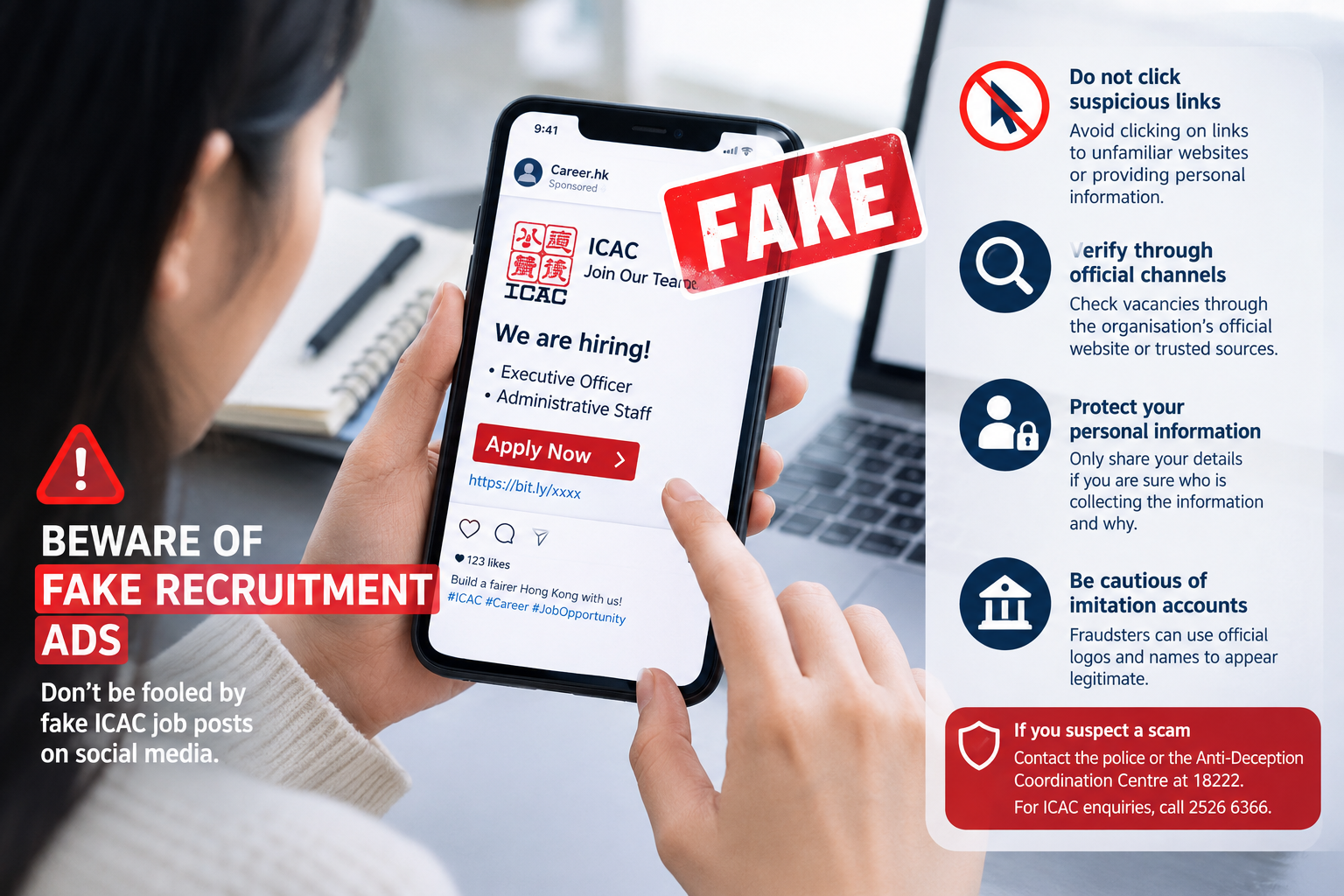
The ICAC issued the warning after identifying recruitment posts shared by accounts presenting themselves as sources of career opportunities. The advertisements used counterfeit ICAC logos and claimed that the commission was recruiting for positions including executive officers and administrative staff.
The agency said the advertisements were not genuine.
Fake ICAC Recruitment Posts Circulate Online
The fraudulent posts reportedly contained links directing users away from Threads to unidentified external websites. The ICAC warned that people who follow such links could be asked to submit personal information, creating a risk that details could be collected or misused by scammers.
The use of an official looking logo and the name of a well known public body can make fraudulent recruitment material appear legitimate at first glance. For jobseekers searching social media for employment opportunities, a post that appears to come from a government agency may seem credible without further checks.
The ICAC therefore urged members of the public not to assume that recruitment advertisements are genuine simply because they carry official branding or appear on a recognised social media platform.
The commission stressed that the recruitment notices circulating on Threads were neither authorised nor published by the ICAC.
Users who encounter such posts should avoid clicking on embedded links, particularly when those links lead to websites whose identity or ownership is unclear. They should also avoid entering names, contact details, identification information or other personal data unless they have independently confirmed who is collecting the information and why.

Warning to Jobseekers
Recruitment scams can take several forms, including false job advertisements, impersonation of employers and requests for applicants to provide personal information through unofficial websites.
In this case, the ICAC said the scammers were using the agency’s identity to promote supposed vacancies. The false advertisements reportedly claimed that the commission was seeking executive officers and administrative staff.
The ICAC did not identify the operators behind the accounts or state how many people may have interacted with the advertisements.
The warning instead focuses on preventing members of the public from being drawn further into the scheme.
For jobseekers, one of the clearest safeguards is to verify a vacancy through an organisation’s recognised official channels rather than relying solely on information posted by an account on social media. An advertisement that directs applicants to an unfamiliar external website should be treated with particular caution.
The same applies to requests for personal information. Applicants should consider whether the information being requested is genuinely necessary for an application and whether the website belongs to the organisation claiming to be recruiting.
A fraudulent looking logo does not by itself establish that an advertisement is genuine.
ICAC Urges Public Not to Click Suspicious Links
The commission has specifically advised social media users to exercise caution when encountering recruitment advertisements that appear to come from the ICAC.
Members of the public should not click on suspicious hyperlinks contained in the posts or provide personal information to accounts that have not been verified.
The warning is particularly relevant because social media platforms allow information to spread quickly and can make it difficult for users to distinguish between an official account, an imitation account and an unrelated page promoting false information.
A fraudulent recruitment advertisement can also appear convincing because it combines several familiar elements: an organisation’s name, its logo, job titles and a link presented as an application page.
The ICAC said none of the recruitment advertisements in question had been issued or approved by the commission.
People looking for employment should therefore verify recruitment information independently before proceeding with an application. If a vacancy claims to be from a government department or statutory body, applicants should confirm it through the organisation’s established communication channels rather than relying on the contact details or links supplied in a suspicious social media post.
What to Do If Personal Information Has Been Shared
The ICAC has also provided advice for people who may already have interacted with the fraudulent advertisements.
Anyone who suspects that they have disclosed personal information to a fraudulent website or an unknown third party after following one of the fake recruitment posts should contact the police immediately.
Members of the public can also seek assistance from the Anti Deception Coordination Centre through its anti scam helpline at 18222.
The helpline provides a point of contact for people who believe they may have encountered a scam or need advice about suspected fraudulent activity.
The ICAC has urged people not to wait if they believe their information may have been compromised. Early reporting can help authorities assess the incident and determine what further action may be appropriate.
People who have not suffered a financial loss should also consider reporting suspicious activity if they believe their personal information has been submitted to an illegitimate website.
How to Contact the ICAC
The commission has separately asked members of the public to contact it if they have questions about the fake recruitment advertisements or suspect that someone is impersonating an ICAC officer.
The ICAC’s 24 hour enquiry hotline is 2526 6366.
Members of the public can use the hotline to seek clarification about suspected impersonation or other activity involving people claiming to represent the anti graft agency.
The warning does not mean that all recruitment information appearing on Threads is fraudulent. Instead, the ICAC’s message is specific: advertisements claiming to recruit for the commission that were not issued through its authorised channels should not be treated as genuine.
For jobseekers, the safest approach is straightforward. Do not click first and verify later. Check the vacancy independently, confirm that the recruiting organisation actually published it, and keep personal information away from unfamiliar websites.
Anyone who has already submitted information through one of the suspected fraudulent advertisements should contact the police or the Anti Deception Coordination Centre at 18222, while questions about alleged ICAC impersonation can be directed to the commission’s 24 hour hotline at 2526 6366.