

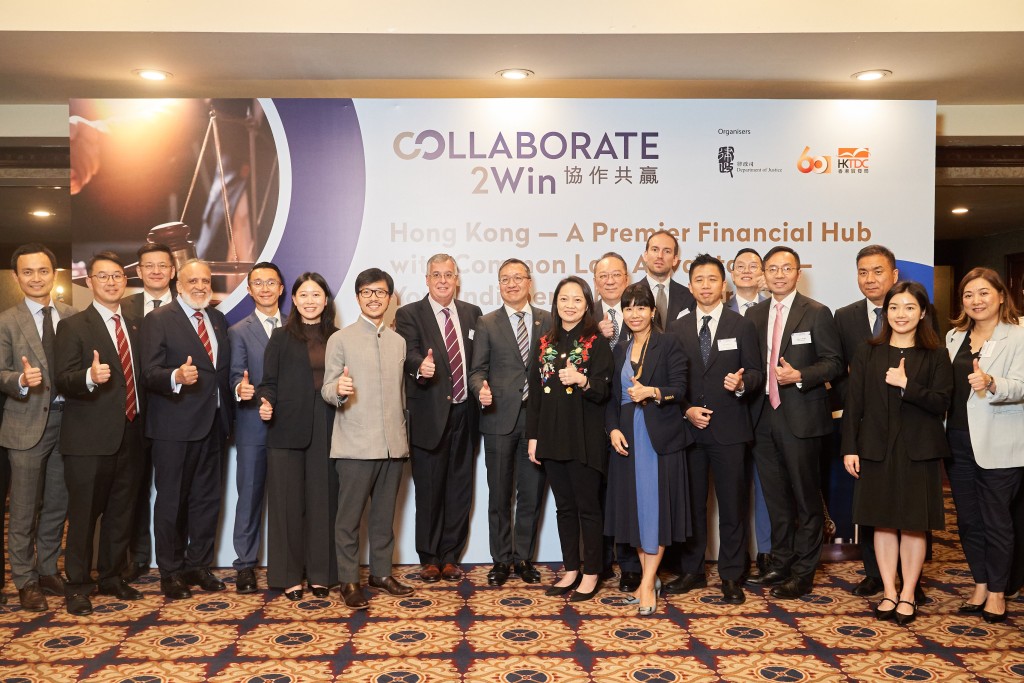
Hong Kong’s justice chief has led a five day delegation to Xinjiang, Kazakhstan and Uzbekistan, seeking to deepen legal, financial and commercial ties with Central Asian markets under the Belt and Road Initiative.
Secretary for Justice Paul Lam Ting kwok has led a high level Hong Kong delegation on a five day promotional mission to Xinjiang, Kazakhstan and Uzbekistan, highlighting the city’s common law system, international arbitration services and financial expertise as tools for businesses expanding across Central Asia.
The visit, organised under the banner “Collaborate2Win” and co organised with the Hong Kong Trade Development Council (HKTDC), brought together representatives from Hong Kong’s legal, financial and commercial sectors as well as legal professionals from Xinjiang.
The mission was intended to build on Chief Executive John Lee Ka chiu’s earlier visit to Central Asia in June and strengthen Hong Kong’s role as a bridge between Chinese and international businesses operating in the region.
The delegation held meetings with government officials, business organisations, legal professionals and educational institutions across the three destinations. Discussions covered cross border investment, dispute resolution, legal cooperation, trade facilitation and the development of professional talent.
Hong Kong promotes common law system in Kazakhstan
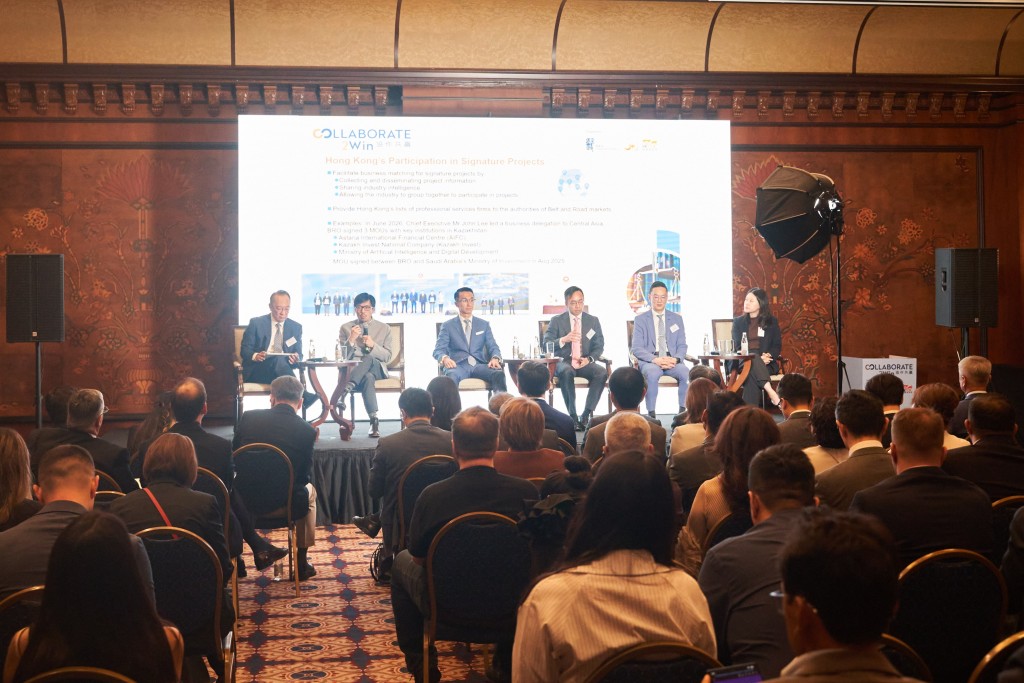
A key event during the mission was a Collaborate2Win seminar in Almaty, Kazakhstan, where Lam promoted Hong Kong as an international centre for legal and financial services.
Speaking to more than 160 government and business representatives, Lam highlighted Hong Kong’s common law system and its established position as an international financial centre.
He said Hong Kong’s legal framework and dispute resolution mechanisms could provide support to Central Asian companies seeking to expand overseas, attract investment or participate in major Belt and Road projects.
The Justice Secretary also emphasised the importance of legal certainty for businesses involved in cross border transactions. For companies operating across different jurisdictions, access to an established legal system and internationally recognised dispute resolution mechanisms can help manage commercial risks and provide greater confidence when entering new markets.
The Almaty seminar brought together senior officials and representatives from the legal and business communities in Kazakhstan and Hong Kong.
Kazakhstan’s First Deputy Prosecutor General Umiraliyev Zhandos Zhanibekovich delivered a keynote address, while Chinese Consul General in Almaty Su Fangqiu also addressed participants.
The discussions examined the potential advantages of Hong Kong’s common law framework for businesses and investors, including its application in commercial disputes, corporate transactions and international investment.
Participants also discussed taxation and financial planning, as well as ways Hong Kong could provide professional services for companies involved in Belt and Road related projects.
The event formed part of a broader effort by Hong Kong authorities to position the city as a “superconnector” between mainland China, Central Asia and international markets.
Representatives from the HKTDC said Central Asia would be a major focus of the 11th Belt and Road Summit, which is scheduled to take place in Hong Kong in September.
The summit is expected to provide another platform for government officials, investors, professional service providers and companies from the region to explore commercial partnerships.
Xinjiang discussions focus on legal cooperation
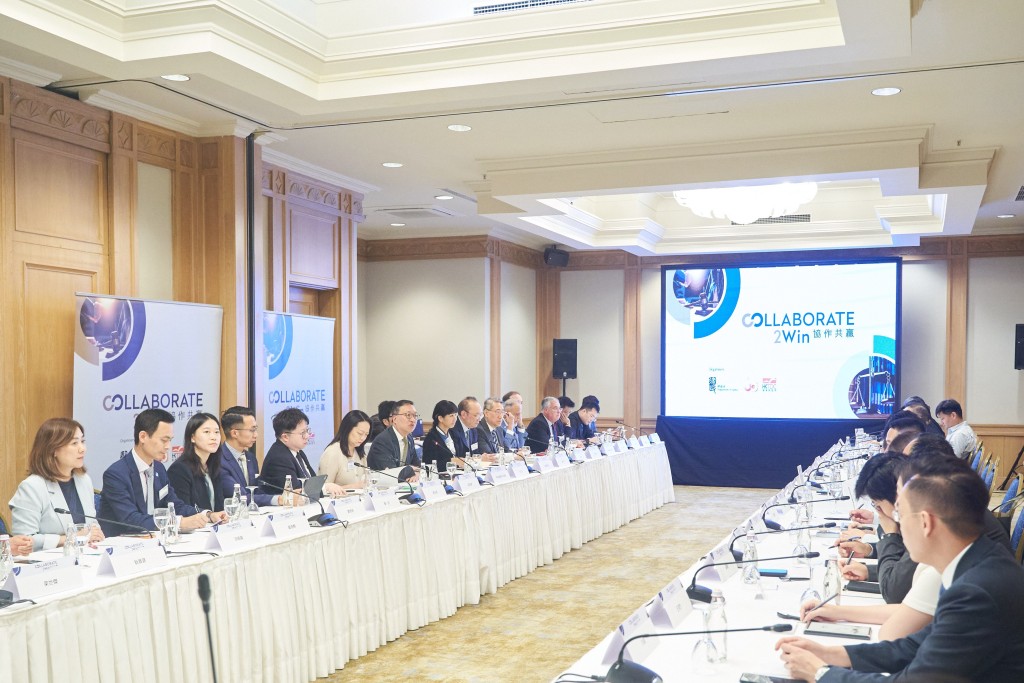
Before travelling to Kazakhstan, the delegation visited Xinjiang, where it held meetings with senior regional officials and representatives of the legal sector.
Among those meeting the delegation was Xinjiang Party Secretary Chen Xiaojiang.
The discussions focused on legal cooperation and the role of professional services in facilitating cross border trade and investment.
The inclusion of Xinjiang in the mission reflected the region’s growing importance in trade and connectivity between China and Central Asia. Xinjiang borders several Central Asian countries and has long been regarded as an important geographical link between China and markets to its west.
For Hong Kong’s legal and business sectors, greater connectivity between Xinjiang and Central Asian economies could create opportunities in areas including commercial law, arbitration, financial services and corporate advisory work.
The delegation also included legal professionals from Xinjiang, allowing participants to exchange views on legal services and cooperation between professionals in different jurisdictions.
Such exchanges are particularly relevant as companies involved in cross border projects increasingly require advice on contracts, financing arrangements, investment structures and dispute settlement.
Engagement with Chinese businesses in Kazakhstan
During the Kazakhstan leg of the mission, the delegation also visited the Shaanxi Chamber of Commerce.
The meeting provided an opportunity to speak with Chinese companies and law firms operating in the country about the legal challenges businesses can face when expanding overseas.
The discussions included the importance of obtaining appropriate legal support when establishing operations in foreign markets and managing commercial relationships across jurisdictions.
For Hong Kong, the objective is not limited to promoting its legal system. Authorities are also seeking to increase awareness of the city’s broader professional services, including finance, investment and dispute resolution.
Hong Kong’s established international connections could allow companies from Central Asia and mainland China to access legal and financial expertise while pursuing projects in other overseas markets.
Uzbekistan talks broaden cooperation
The final stop on the five day mission was Uzbekistan, where the delegation held a series of high level meetings with government officials and representatives of the country’s legal and business communities.
Among those involved in the discussions were Deputy Minister of Economy and Finance Umid Abidhadjaev and Deputy Minister of Investment, Industry and Trade Ilzat Kasimov.
The delegation also met Chinese Ambassador Yu Jun as it explored opportunities for greater cooperation involving Hong Kong, Uzbekistan and mainland China.
Uzbekistan has emerged as an increasingly important market in Central Asia, with opportunities spanning infrastructure, investment, trade and professional services.
The Hong Kong delegation held discussions with the Tashkent International Arbitration Centre and the Chamber of Advocates, focusing on legal and dispute resolution cooperation.
Arbitration is a particularly important area for Hong Kong as the city seeks to expand its role in resolving commercial disputes connected with international investment and Belt and Road projects.
Unlike court proceedings, international arbitration can provide companies with a neutral forum for resolving disputes involving parties from different jurisdictions. Hong Kong authorities have repeatedly promoted the city’s arbitration and mediation services as part of its wider international business offering.
Focus on legal talent and future investment
The delegation’s Uzbekistan programme also included a visit to Tashkent State University of Law.
The visit focused on legal education and talent development, while also providing an opportunity to discuss possible areas for bilateral investment and professional cooperation.
Developing links between legal institutions could become increasingly important as trade and investment between China, Central Asia and other international markets expand.
For Hong Kong, cultivating professional relationships with overseas legal communities can also strengthen awareness of its legal services and create channels for future cooperation.
The government has increasingly sought to promote Hong Kong’s professional services overseas alongside its traditional financial and trading strengths.
The Central Asia mission forms part of that wider strategy.
Expanding Hong Kong’s role as a regional connector
The five day tour comes as Hong Kong seeks to reinforce its position as a gateway between China and emerging markets along the Belt and Road.
Central Asia has attracted growing attention because of its strategic location between China, Europe and the Middle East, as well as its potential in areas including infrastructure, energy, logistics, finance and trade.
For Hong Kong, the challenge is to translate its established strengths in finance and professional services into practical business opportunities in these markets.
Lam’s delegation therefore focused not only on government to government relations but also on direct engagement with companies, legal practitioners, arbitration bodies, chambers of commerce and universities.
The approach reflects the increasingly interconnected nature of cross border investment. Businesses expanding internationally often require a combination of financial advice, legal expertise, dispute resolution services and access to international capital.
Hong Kong officials argue that the city is well placed to provide that combination because of its common law system, international financial markets and extensive network of professional services.
The Central Asia campaign also gives Hong Kong an opportunity to build relationships in markets where Chinese investment and Belt and Road cooperation are expanding.
With the 11th Belt and Road Summit due to take place in Hong Kong in September, the government is expected to continue its efforts to bring Central Asian governments and businesses into closer contact with Hong Kong companies and professional service providers.
For Lam and the delegation, the immediate objective of the five day mission was to strengthen those connections. The longer term goal is to turn diplomatic and professional exchanges into concrete cooperation in areas ranging from international arbitration and legal services to investment and cross border trade.
The mission underscores the Hong Kong government’s broader push to promote the city not simply as a financial centre, but as a legal and commercial platform connecting Chinese enterprises with markets beyond the mainland.