

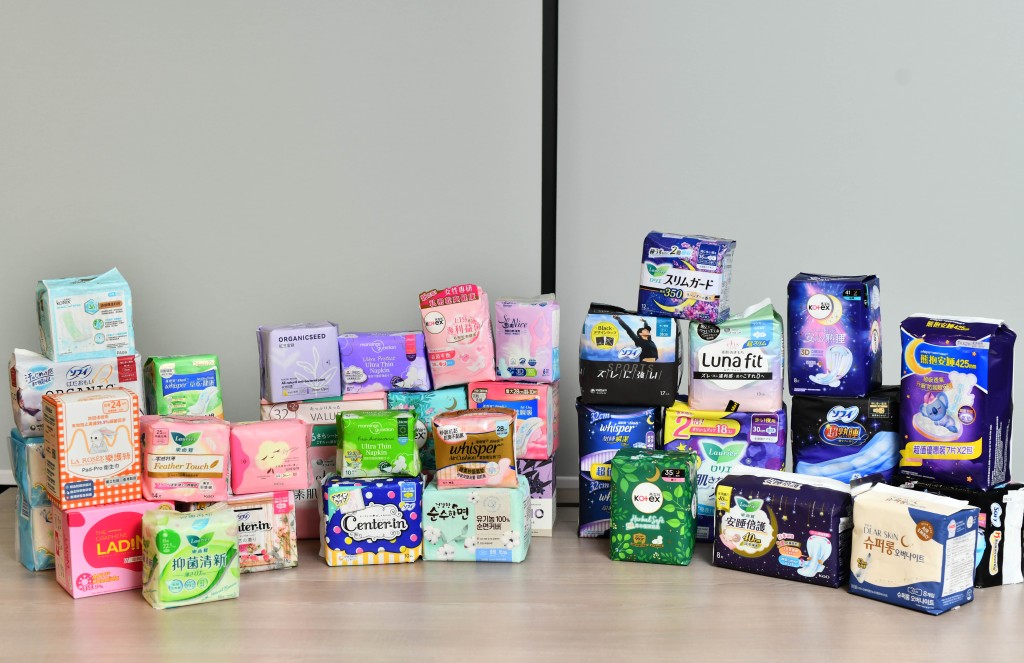
A Consumer Council test of 36 disposable winged sanitary napkin models has found major differences in product labeling and absorption performance, although all of the samples passed the safety and hygiene checks carried out by the watchdog.
The most serious performance gap involved absorption speed. While 16 of the tested products absorbed simulated menstrual blood within 10 seconds, one sample took 1 minute and 13 seconds to complete the process. That was 13 seconds longer than the mainland’s recommended maximum of 60 seconds.
The council said slower absorption could affect comfort and increase the possibility of side leakage during use.
The test also exposed widespread gaps in product information. Nineteen of the 36 models, more than half of those examined, did not state the materials used on their surface in either Chinese or English.
Absorption Performance Varies Across Products
Absorption speed is an important factor when consumers choose sanitary napkins because it affects how quickly liquid is drawn away from the surface of the product.
According to the Consumer Council’s assessment, 16 of the 36 tested models absorbed the simulated menstrual blood within 10 seconds. That means fewer than half of the products reached that benchmark during the test.
At the other end of the results, one model required 73 seconds to absorb the simulated menstrual blood. The result exceeded the mainland recommended standard, which sets a maximum absorption time of 60 seconds.
The council warned that slow absorption may leave moisture on the surface for longer and could contribute to discomfort. It may also increase the chance of liquid escaping from the sides of the sanitary napkin, particularly when the product is subjected to movement or heavier flow.
The results do not mean that the slower product was unsafe. Rather, they point to a difference in performance that consumers may want to consider when selecting products according to their individual needs.

19 Products Did Not Disclose Surface Materials
The test found an even broader problem with product labeling.
Nineteen of the 36 sanitary napkin models did not provide information about their surface materials in Chinese or English. That represents more than half of the products examined by the council.
Material information can help consumers understand what comes into direct contact with the skin and make purchasing decisions based on personal preferences or sensitivities.
The absence of such information also makes it harder for consumers to compare products before buying them. Packaging is often the main source of information available to shoppers at the point of purchase, making clear and accessible labeling particularly important.
The council's findings suggest that consumers may not always have enough information on the packaging to make a fully informed choice.
Expiry and Supplier Information Also Missing
The labeling problems extended beyond material disclosure.
One of the tested products did not provide any information related to its expiration date. Six other models displayed only their production dates without stating either the shelf life or the expiry date.
For consumers, a production date alone does not necessarily provide enough information to determine whether a product is still suitable for use.
The council also found that five products did not disclose details of their local suppliers on the packaging.
These findings mean that some products failed to provide basic information that consumers might reasonably expect to find before purchasing or using a personal hygiene product.
The council has urged manufacturers to improve the information provided on packaging and to make key details easier for consumers to identify.
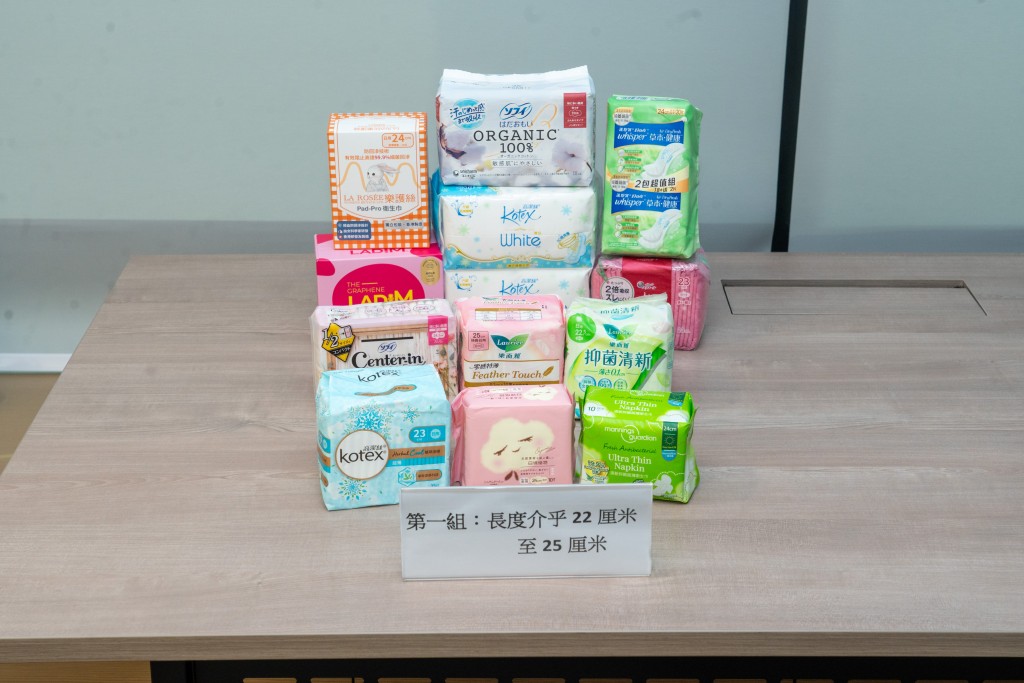
All 36 Samples Passed Safety and Hygiene Tests
Despite the differences in absorption performance and the labeling deficiencies, the overall safety results were positive.
All 36 tested models passed the safety and hygiene assessments conducted by the Consumer Council.
Every sample met the relevant requirements for pH values, with results ranging from 5.7 to 6.2. The products also passed tests covering peel adhesion and structural consistency.
Chemical and microbiological testing produced no detection of formaldehyde or migratable fluorescent substances in any of the samples.
The absence of these substances in the tested products provides some reassurance regarding the safety of the models examined. However, the council's findings also show that passing safety tests does not necessarily mean every product performs in exactly the same way or provides the same level of information to consumers.
Hong Kong Has No Specific Sanitary Napkin Standards
The findings come as Hong Kong currently has no specific legislation or standards governing sanitary napkin products.
The Consumer Council has therefore called on manufacturers to take greater responsibility for product quality and consumer information.
It urged manufacturers to strengthen quality control procedures and carry out regular testing to ensure products perform consistently. It also called for clear labeling of important information, including materials, production dates, shelf life and expiry dates.
The lack of a specific local regulatory framework makes transparent product information even more important for consumers comparing sanitary products.
Clear labeling can also help consumers identify products that are suitable for their individual circumstances rather than having to rely primarily on brand reputation or advertising claims.
What Consumers Should Check Before Buying
The Consumer Council advised consumers to consider their individual needs when selecting sanitary products rather than choosing solely on the basis of brand or appearance.
Packaging should also be checked carefully before purchase. Consumers should look for signs of damage and make sure the product packaging remains intact.
Expiry information should receive particular attention. Consumers are advised not to use products that have passed their expiry dates.
Where material information is provided, shoppers can also compare the products available and select those that best match their personal preferences.
The Consumer Council's findings suggest that consumers should pay attention not only to whether a sanitary napkin is available and affordable, but also to the information provided on its packaging and its reported performance characteristics.
Consumer Council Calls for Better Quality Control
The test has put the focus on two separate issues: product performance and the quality of information given to consumers.
All 36 samples passed the safety and hygiene tests, but one product exceeded the mainland recommended absorption time, while 19 failed to provide surface material information in Chinese or English. Other products lacked complete expiry information or local supplier details.
The council wants manufacturers to respond by improving quality control, conducting regular product testing and providing clearer packaging information.
For consumers, the message is straightforward: check the packaging before buying, pay attention to production and expiry information, inspect the package for damage and choose products according to personal needs.
With more than half of the tested products failing to disclose their surface materials, clearer labeling could give consumers the information they need to make better informed choices. When buying sanitary products, are you checking the materials, expiry date and product information, or choosing mainly by brand and price?