

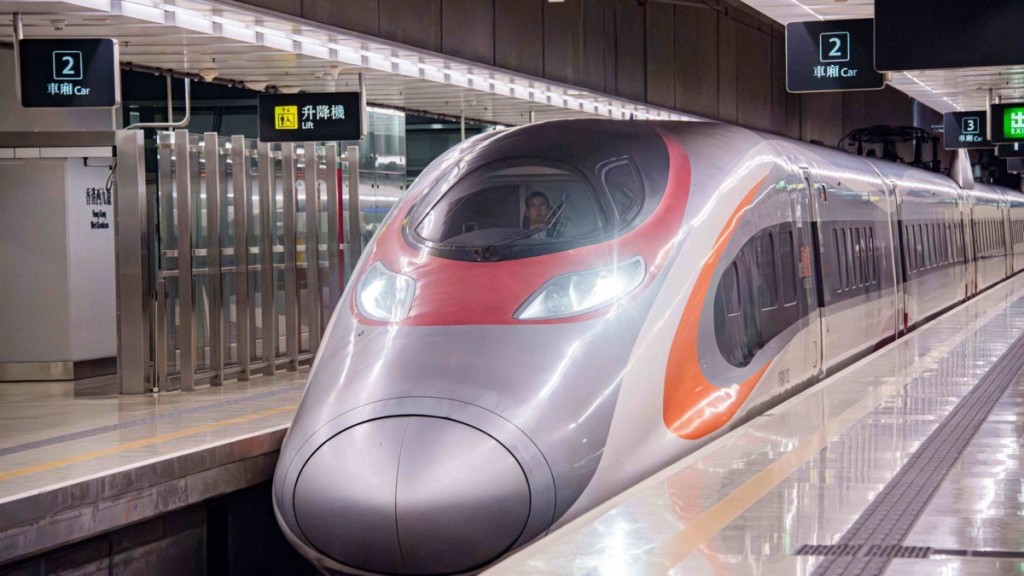
MTR Corporation has agreed to pay the Hong Kong government HK$2.25 billion in a one off settlement linked to construction delays on the High Speed Rail Hong Kong Section. The agreement also closes a separate dispute over delays to the Shatin to Central Link, where MTR Corporation has already absorbed about HK$2.8 billion in additional costs.
The arrangements announced on Friday bring years of discussion over the two major railway projects to a close. Under the agreement covering the Shatin to Central Link, neither side will pursue further claims against the other and no additional payment will be required.
The government said the settlement takes into account MTR Corporation's responsibilities for delays affecting both projects.
High Speed Rail Delays Lead to HK$2.25 Billion Settlement
The HK$2.25 billion payment relates to construction delays that occurred during the earlier development of the High Speed Rail Hong Kong Section.
The project was one of Hong Kong's largest transport infrastructure undertakings and required extensive construction work before the railway could begin passenger operations. Delays during the development process led to disagreements over responsibility, costs and the impact on the planned timetable.
MTR Corporation said the latest arrangement represents a one off settlement with the government. The agreement provides a defined financial resolution rather than leaving the two sides to pursue further claims over the earlier delays.
For the government, the settlement also provides a final position on the financial consequences associated with the delays. Rather than continuing a prolonged dispute, the two sides have agreed on a payment that reflects the circumstances surrounding the project.
The High Speed Rail Hong Kong Section eventually opened to passengers in 2018, connecting Hong Kong with the national high speed rail network through the West Kowloon terminus.
Shatin to Central Link Claims Will Not Continue
The second major project covered by the announcement is the Shatin to Central Link.
MTR Corporation has already borne additional costs of about HK$2.8 billion in relation to the project. Under the latest agreement, the government and the corporation have decided not to pursue further claims against each other concerning the delays.
That means MTR Corporation will not make another payment to the government under the Shatin to Central Link arrangement.
The decision separates the financial treatment of the two projects. The High Speed Rail dispute has resulted in the HK$2.25 billion settlement, while the Shatin to Central Link matter will be considered closed without further claims because of the additional costs already carried by the corporation.
The projects had different construction challenges and circumstances, but both became important reference points for the management of large railway developments in Hong Kong.
Government Reviews Railway Project Management
The Transport and Logistics Bureau said the settlement process also gave the government and MTR Corporation an opportunity to review what happened during the development of the two projects.
According to a bureau spokesman, both sides have introduced a series of changes over the past several years to strengthen governance, monitoring and cost management for railway projects.
The changes are intended to give government departments greater oversight of project management and improve procedures at an institutional level. The focus extends beyond individual projects and is aimed at reducing the risk of similar problems during future railway construction.
Large transport projects involve long construction periods, multiple contractors, extensive engineering work and significant public spending. Effective monitoring therefore plays a major role in keeping projects within agreed schedules and budgets.
The government said the enhanced mechanisms have already been introduced in railway projects currently under development.
These include Kwu Tung Station, the Tung Chung Line Extension, Oyster Bay Station, Tuen Mun South Extension, Hung Shui Kiu Station and the Northern Link Project.
The measures cover projects at different stages of development and form part of the city's wider expansion of its railway network.
MTR Corporation Says It Has Learned From Earlier Projects
Jeny Yeung, chief executive of MTR Corporation, said the company had reviewed the experience of the two projects and carried out further follow up based on their individual circumstances.
Yeung said MTR Corporation had worked with the relevant government departments at the time to address the issues that emerged during construction.
The corporation subsequently moved ahead with the delivery of both projects.
The High Speed Rail Hong Kong Section was completed and opened for passenger service in 2018. The Shatin to Central Link followed with different sections progressively completed and commissioned, with the project reaching passenger service milestones through 2022.
The two projects now form part of Hong Kong's established railway network.
The High Speed Rail connection has given passengers direct access from Hong Kong to mainland China's extensive high speed rail system. The Shatin to Central Link has strengthened connections between the northeastern New Territories, Kowloon and Hong Kong Island.
New Railway Projects Face Greater Oversight
The settlement comes as Hong Kong continues to invest heavily in new railway infrastructure.
Projects such as the Northern Link, Kwu Tung Station and the Tung Chung Line Extension are expected to reshape transport connections in several parts of the city. Their development will require close coordination between MTR Corporation, government departments, contractors and other stakeholders.
The government has indicated that lessons from earlier projects are now being incorporated into these developments.
Improved monitoring can help authorities identify construction problems earlier, while stronger cost management can provide clearer oversight of spending as projects progress. Greater governance can also establish clearer responsibilities between the parties involved in planning and delivering major infrastructure.
For MTR Corporation, the conclusion of the two earlier disputes removes outstanding financial uncertainty surrounding projects that were delivered years ago.
The company can now focus on its existing railway operations and the delivery of new projects, while the government can apply the revised oversight mechanisms to the next generation of infrastructure developments.
Settlement Closes Chapter on Two Major Projects
The HK$2.25 billion settlement marks a significant financial resolution between MTR Corporation and the Hong Kong government over the High Speed Rail Hong Kong Section.
At the same time, the decision not to pursue additional claims over the Shatin to Central Link closes another long running matter after MTR Corporation absorbed about HK$2.8 billion in additional costs.
Both projects eventually entered passenger service, but their construction delays prompted reviews of how major railway developments should be monitored, managed and funded.
The government and MTR Corporation now say those experiences have informed changes to railway project governance and cost management.
With several major railway projects already moving forward, the effectiveness of those new measures will depend on how consistently they are applied from planning through construction and eventual passenger operation.
Do you think the new railway project oversight measures will help prevent similar delays and cost disputes in Hong Kong's future infrastructure projects?